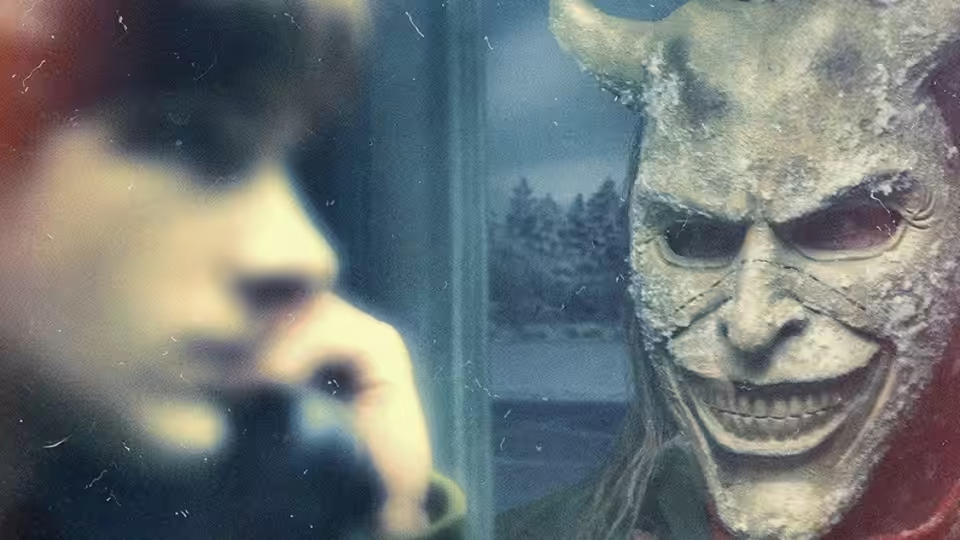
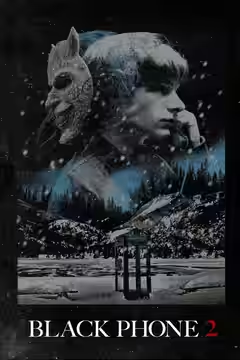
Scott Derrickson takes his dead killer out of the basement and into the snow, and the dream sequences, shot on grainy, skipping film, are the best thing in either picture. Around them sits a great deal of explaining, and a sermon we did not order.
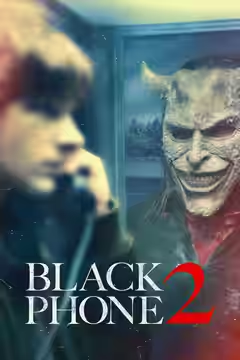
The first Black Phone (2021) was one boy, one basement and one telephone that had no business working. Scott Derrickson and C. Robert Cargill, who wrote that film and write this one, have decided they cannot simply do it again, and they are right not to try. So the Grabber is dead, the phone still rings, and the calls have moved out of the cellar and into Gwen’s sleep. The result is bigger, colder and stranger than the original. It is also a good deal more talkative.
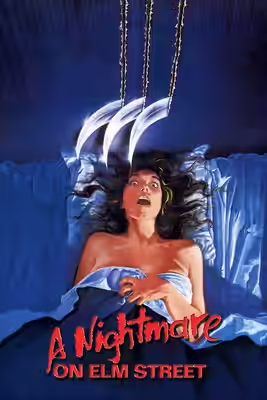
The borrowing is open. Wes Craven’s A Nightmare on Elm Street (1984) put a dead killer to work in dreams, and Derrickson takes the idea whole and adds snow. Finn (Mason Thames) and Gwen (Madeleine McGraw) follow her dreams to a Christian camp in the mountains, deep in winter, and the film settles in. Patti Podesta gives the camp low buildings, wood panelling and a great many empty bunks, and Pär M. Ekberg shoots the waking scenes in flat, overcast grey. The dreams are something else: grainy, flickering, scratched, the colour drained to rust and pale blue, cut as if the camera kept running out of film. We always know which world we are in a second before the characters do.
Atticus Derrickson scores it with a slow electronic pulse, mostly low notes, that rises when the film crosses into a dream and stops dead when it comes back, and Louise Ford cuts those crossings hard, without warning, so that a bunk room can become a snowfield between one shot and the next. This is confident, patient work, and the first hour is frightening in a way the first film managed only in bursts. Amelia Andrews dresses everyone in padded coats and woollen hats, which sounds like nothing until you notice how much it slows people down when they need to run.
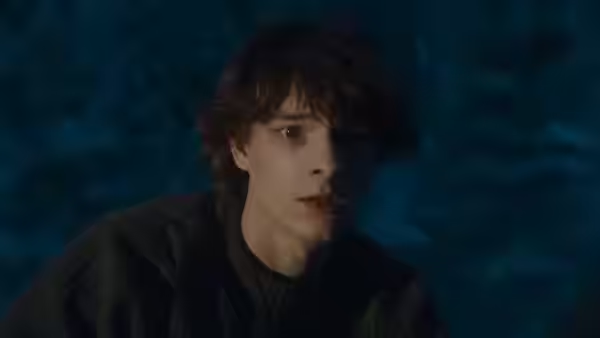
It is Gwen’s film, and McGraw is up to it. She was the best thing in the original, a small furious girl swearing at heaven, and here she carries the fear, the plot and most of the jokes without once asking for our sympathy. Thames plays Finn as a boy who got out and did not come back whole, quiet and quick to anger. Ethan Hawke is once again mostly a mask and a voice, and the voice, soft and pleased with itself, is worse than any face could be. Demián Bichir brings a tired decency to Armando, and Jeremy Davies returns as the father, Terrence, with more to do than last time.
Here is what we felt. An early dream, Gwen alone in the camp while the picture jumps and the sound drops out, had us gripping the armrest; we were frightened, properly, and glad of it. Then the film began to explain. Somewhere past the hour a grown-up sits two teenagers down to tell them how the dead work, what the phone is for and why the Grabber can do what he does, and we felt the evening leak away. It happens more than once.
That is the trouble. The first film had one rule and never stated it. This one has a dozen, states all of them, and every rule makes the Grabber a little smaller. A killer who can be anywhere is frightening; a killer with terms and conditions is a problem to be solved. The Christianity does not help either. Gwen’s praying was one of the best things in the original. Here the film keeps stopping so that someone can tell us what it means, and the last half hour has more speeches about trauma than it has scares.
Against Derrickson’s own record it sits between Sinister (2012), which also frightened us with old film stock and then over-explained it, and the first Black Phone, which knew when to stop. Against Elm Street it is the well-behaved cousin: same premise, no jokes, homework afterwards.
See it for the first hour and for McGraw, in a cinema if you can, where the dreams are large and the sound of the film skipping in the gate does its work. It runs 114 minutes and carries an 18, which the kills earn. Do not expect the basement. The film has left it, and it was right to.