Richard Linklater’s chamber drama gives Ethan Hawke room to make Lorenz Hart witty, needy and painfully human. Some speeches run too long, but we recommend it for the performances, especially Andrew Scott’s.
Richard Linklater’s Blue Moon is a rewarding chamber drama with a patience-testing man at its centre. It gives Ethan Hawke a demanding task as Lorenz Hart: make an artist’s self-pity worth listening to without pretending it is always attractive. We recommend the film because the performance keeps finding something worth our attention beneath the fluent talk. There are stretches when that talk goes on too long. Robert Kaplow’s screenplay is sharp enough elsewhere to make the repetition seem avoidable.
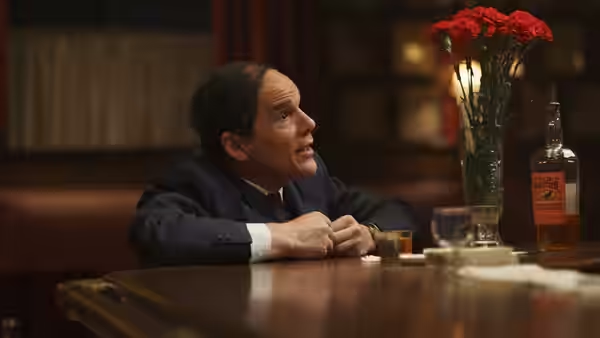
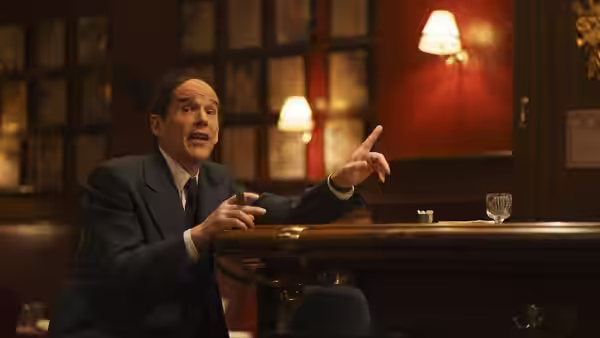
The pleasure of Ethan Hawke’s performance is how quickly admiration can give way to impatience. Hart can be funny enough to make his next interruption seem welcome, at least until he gets going. We were saddened by the loneliness in the quieter passages, because the man who has so much to say still seems unable to ask plainly for company. That is where the acting gets beyond a display of verbal skill. His neediness remains uncomfortable, and the film is better for allowing it to be.
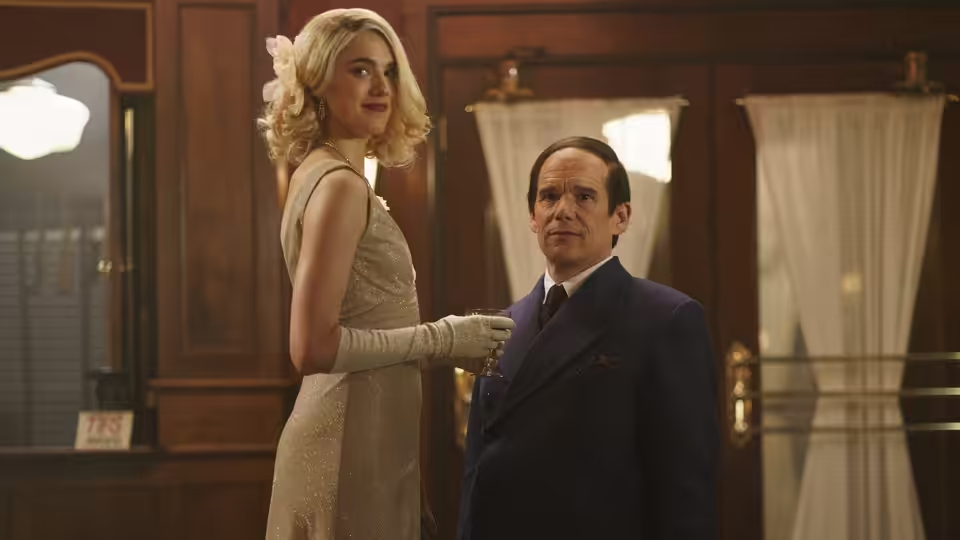
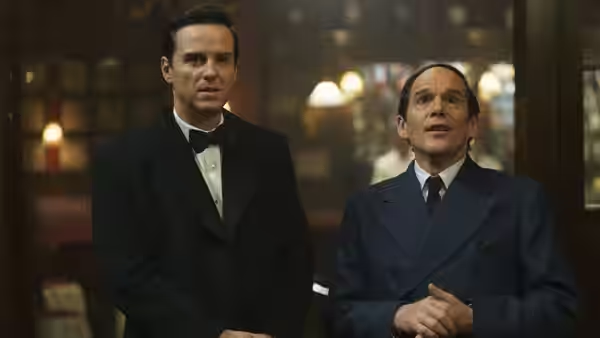
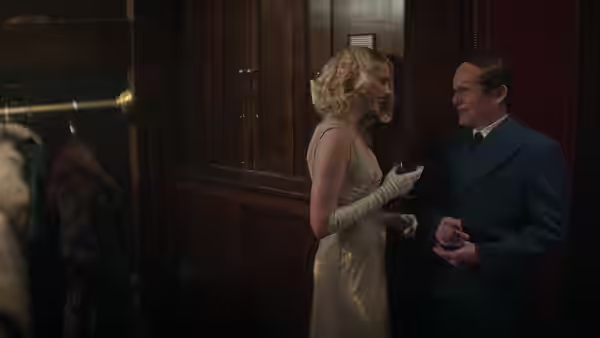
Andrew Scott, as Richard Rodgers, gives the film another person worth watching whenever Hart threatens to fill it completely. Their scenes make professional disappointment feel awkwardly personal, with an alertness that the longer solo passages sometimes lack. Margaret Qualley gives Elizabeth Weiland enough weight to resist becoming merely another occasion for Hart to feel sorry for himself. That matters in a film so strongly attached to one man’s point of view. We can care about his unhappiness without expecting everyone around him to organise their lives around it.
Shane F. Kelly’s cinematography is most persuasive in keeping our attention on the actors, though the confinement occasionally becomes wearing. Susie Cullen’s production design gives the Broadway setting a persuasive atmosphere without making the surroundings more interesting than the people. There is pleasure in a film that expects faces and conversation to hold our attention for this long. The presentation suits the material, even when we begin to feel we have been sitting there for a while.
Sandra Adair’s editing serves the conversational exchanges well; the difficulty comes when Robert Kaplow’s script finds another way to underline the same humiliation. The middle loses pace because we have understood Hart’s predicament before the film stops explaining it. Graham Reynolds’s music contributes less to the sadness than the actors’ timing, a sensible proportion in a drama so dependent on listening. At 101 minutes, the film still feels as though a few speeches could be shortened without losing much.
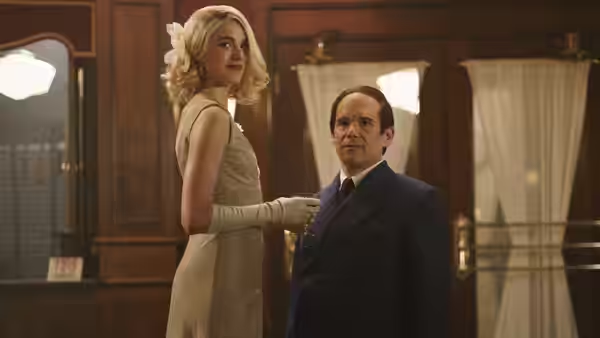
As a portrait of an artist in decline, Blue Moon earns its sympathy by allowing Hart to be difficult company. It avoids the dutiful admiration that can make a biographical drama feel like an obligation, and remains interested in what other people might find exhausting about him. Less convincing is the work done to alter Ethan Hawke’s appearance. The hairpiece and height effects occasionally draw attention to the practical problem of casting, just when the acting has made that problem unimportant.
The film is strongest when somebody else has enough room to answer Hart, and when a pause lets us stop admiring his vocabulary. Those encounters give the loneliness time to register without another speech explaining it. We would happily accept a little less eloquence for more of them. Choose it for an evening when listening to a difficult, gifted man sounds like pleasure rather than unpaid work.