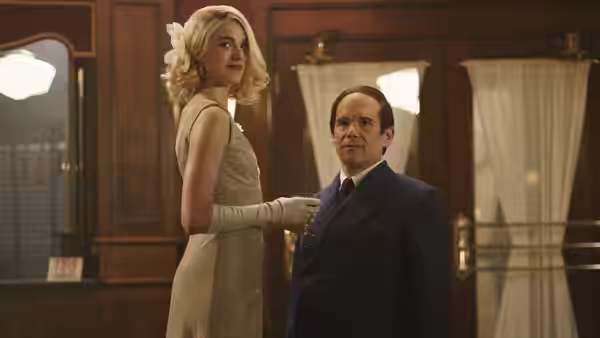
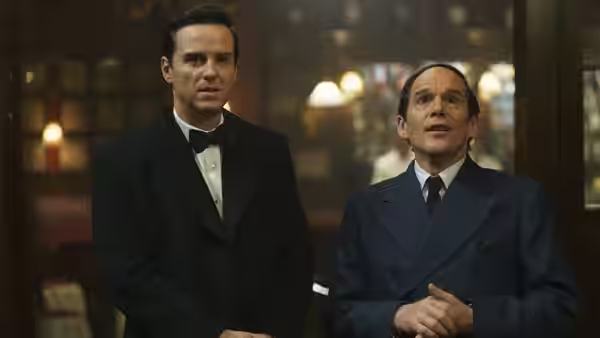
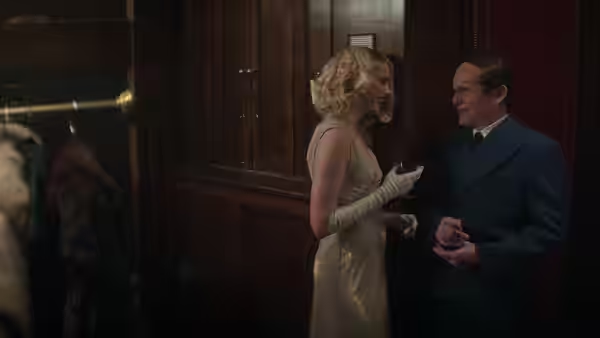
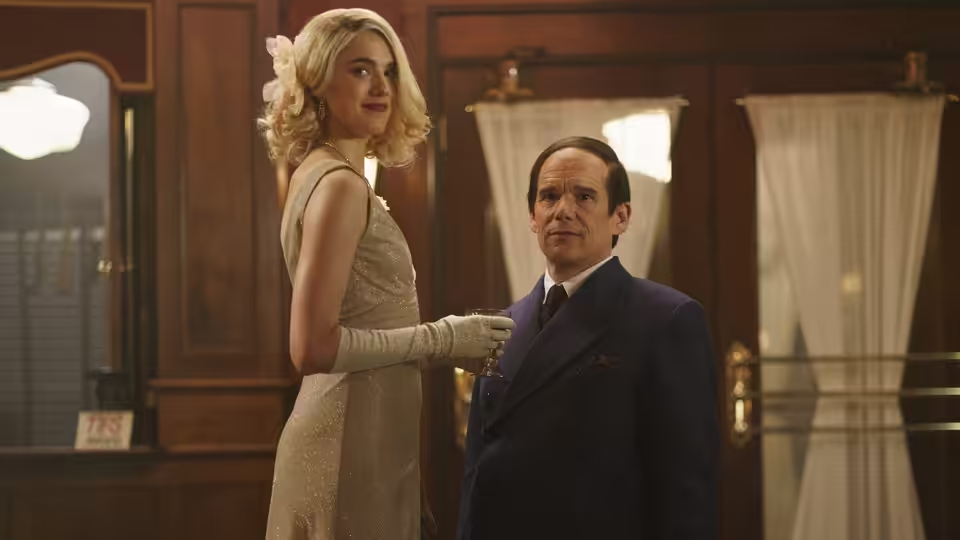
Elizabeth Weiland (Margaret Qualley) touching the arm of Richard Rodgers (Andrew Scott)
Film review

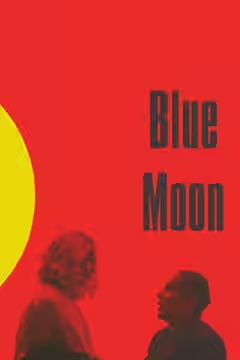
Blue Moon

2025 · Directed by Richard Linklater · 1h 41m

In a sentenceEthan Hawke talks so well that we almost forgive him for not stopping

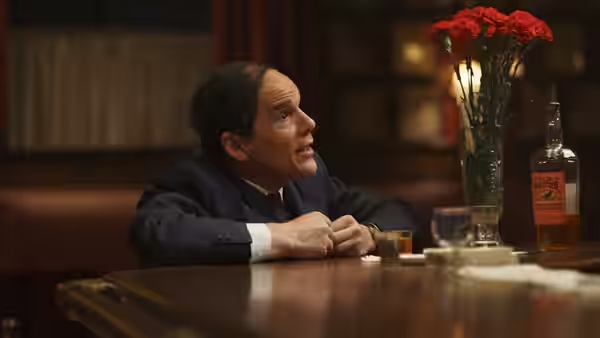
In New York’s Broadway circles, lyricist Lorenz Hart (Ethan Hawke) faces professional disappointment and wants reassurance that his talent still matters. Richard Rodgers (Andrew Scott) belongs to that professional life; Elizabeth Weiland (Margaret Qualley) occupies his hopes for companionship. Hart talks, jokes and measures himself against a world that seems to be moving away from him. His wit keeps people listening, but his need for their attention puts pressure on the conversations. Professional insecurity and romantic longing become difficult to separate as he tries to find someone who will give him the answer he wants.

Plays from YouTube when you press play; nothing loads from them until then.

Fi1m review

Richard Linklater’s chamber drama gives Ethan Hawke room to make Lorenz Hart witty, needy and painfully human. Some speeches run too long, but we recommend it for the performances, especially Andrew Scott’s.

Richard Linklater’s Blue Moon is a rewarding chamber drama with a patience-testing man at its centre. It gives Ethan Hawke a demanding task as Lorenz Hart: make an artist’s self-pity worth listening to without pretending it is always attractive. We recommend the film because the performance keeps finding something worth our attention beneath the fluent talk. There are stretches when that talk goes on too long. Robert Kaplow’s screenplay is sharp enough elsewhere to make the repetition seem avoidable.

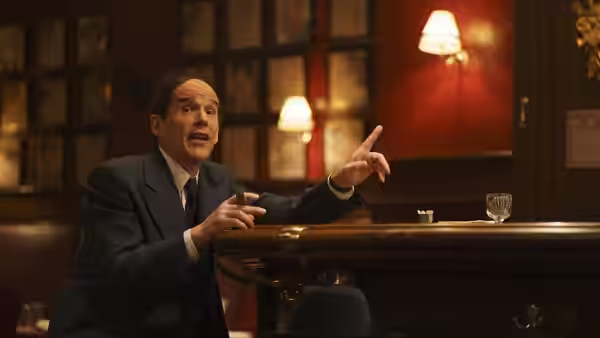
The pleasure of Ethan Hawke’s performance is how quickly admiration can give way to impatience. Hart can be funny enough to make his next interruption seem welcome, at least until he gets going. We were saddened by the loneliness in the quieter passages, because the man who has so much to say still seems unable to ask plainly for company. That is where the acting gets beyond a display of verbal skill. His neediness remains uncomfortable, and the film is better for allowing it to be.

Andrew Scott, as Richard Rodgers, gives the film another person worth watching whenever Hart threatens to fill it completely. Their scenes make professional disappointment feel awkwardly personal, with an alertness that the longer solo passages sometimes lack. Margaret Qualley gives Elizabeth Weiland enough weight to resist becoming merely another occasion for Hart to feel sorry for himself. That matters in a film so strongly attached to one man’s point of view. We can care about his unhappiness without expecting everyone around him to organise their lives around it.

Shane F. Kelly’s cinematography is most persuasive in keeping our attention on the actors, though the confinement occasionally becomes wearing. Susie Cullen’s production design gives the Broadway setting a persuasive atmosphere without making the surroundings more interesting than the people. There is pleasure in a film that expects faces and conversation to hold our attention for this long. The presentation suits the material, even when we begin to feel we have been sitting there for a while.

Sandra Adair’s editing serves the conversational exchanges well; the difficulty comes when Robert Kaplow’s script finds another way to underline the same humiliation. The middle loses pace because we have understood Hart’s predicament before the film stops explaining it. Graham Reynolds’s music contributes less to the sadness than the actors’ timing, a sensible proportion in a drama so dependent on listening. At 101 minutes, the film still feels as though a few speeches could be shortened without losing much.

As a portrait of an artist in decline, Blue Moon earns its sympathy by allowing Hart to be difficult company. It avoids the dutiful admiration that can make a biographical drama feel like an obligation, and remains interested in what other people might find exhausting about him. Less convincing is the work done to alter Ethan Hawke’s appearance. The hairpiece and height effects occasionally draw attention to the practical problem of casting, just when the acting has made that problem unimportant.

The film is strongest when somebody else has enough room to answer Hart, and when a pause lets us stop admiring his vocabulary. Those encounters give the loneliness time to register without another speech explaining it. We would happily accept a little less eloquence for more of them. Choose it for an evening when listening to a difficult, gifted man sounds like pleasure rather than unpaid work.

Critical consensus AI synthesised

76
Positive
19
Mixed
5
Negative
0

Most critics welcome Blue Moon as a witty, melancholy portrait of Lorenz Hart, with praise centred on Ethan Hawke’s performance. The reviews repeatedly credit him with making Hart’s brilliance, neediness and loneliness visible beneath the talk, while several also commend Andrew Scott and Margaret Qualley. Richard Linklater’s sensitive direction and the sharp dialogue earn approval for keeping professional decline and romantic disappointment affecting without becoming excessively mournful.

The spread runs from enthusiasm to qualified approval, with no outright negative reviews. Reservations concern the chamber drama’s momentum: some find the speeches exhausting, the middle slack or the humiliations overworked. The Independent finds the film increasingly claustrophobic despite Hawke’s compelling performance, while Variety admires the layered writing but considers him miscast, distracted by the hairpiece and physical adjustments. Hawke is therefore both the clearest point of agreement and the subject of a smaller, pointed dispute over his suitability for Hart.

Evening Standard
28 November 2025 · ★★★★★ · Hannah Pettit
100

Pettit finds the chamber drama poignant and compelling, with a sadness that avoids becoming overly melancholic. She particularly praises the performances, singling out Margaret Qualley’s scene about a confusing college fling.

Read the full review →
Los Angeles Times
17 October 2025 · Tim Grierson
90*

Grierson finds the film an understated, profound elegy for an artist confronting his decline. He especially praises Ethan Hawke’s vulnerable and egoless portrayal of Lorenz Hart.

Read the full review →
Sight and Sound
28 February 2025 · festival review · BFI
85*

The critic finds the film witty, poignant and finely nuanced. Hawke’s energetic performance and Linklater’s sensitive direction are singled out for praise.

Read the full review →
IndieWire
14 October 2025 · B+ · David Opie
83

Opie finds the film a vibrant, witty portrait that brings viewers closer to Hart, though it does not fully succeed and sags somewhat in the middle. He especially praises Ethan Hawke’s commanding, nuanced performance and his chemistry with Andrew Scott.

Read the full review →
Little White Lies
25 November 2025 · 3/4/3 · David Jenkins
80

Jenkins finds the film handsome but slight, meandering, and lacking purpose. He praises Ethan Hawke’s immersive, appealing portrayal of Hart, while criticizing the piling up of humiliations and predictable foreshadowing.

Read the full review →
The Hollywood Reporter
18 February 2025 · festival review · David Rooney
80*

The critic finds the film beautifully executed, fascinatingly nuanced, and a satisfying addition to Linklater and Hawke’s collaboration. Hawke’s performance is singled out for capturing Hart’s razor-sharp wit alongside the damage and loneliness beneath it.

Read the full review →

Straight answers AI written, from our review

Is Blue Moon worth watching?
Blue Moon is worth watching for its performances and sharp conversation, particularly if we enjoy intimate dramas about difficult people; we score it 78 out of 100. Ethan Hawke makes Lorenz Hart’s loneliness matter, and Andrew Scott gives him someone worth listening to, though repeated speeches slow the middle.
How long is Blue Moon, and what is it rated?
Blue Moon runs 1h 41m. It is a music and history film.
Where can I watch Blue Moon in Slovakia?
Blue Moon is not on any streaming or rental service in Slovakia at the moment. It is available in 38 other countries; change your country at the top of the page to see where. Availability is checked daily.
How violent or frightening is Blue Moon, and is it suitable for children?
Blue Moon carries a UK 15 certificate, so it is not suitable for children under 15. We would steer older teenagers towards it for an interest in adult relationships and professional disappointment, rather than thrills; the certificate alone does not establish how much violence or frightening material it contains.
How does Blue Moon compare to All About Eve?
Blue Moon is the more intimate portrait of loneliness, while All About Eve is our stronger choice for cruelly funny theatre satire and professional jealousy. We recommend both for their writing and performances, but Hawke’s extended speeches test patience in Blue Moon, whereas the reservation with All About Eve is its occasionally stiff flashback structure.
What should I watch after Blue Moon?
After Blue Moon, try All About Eve (1950, Fi1m 90): More professional jealousy, with conversation sharp enough to leave lasting damage. Then The Dresser (1983, Fi1m 80): For the exhausting work of keeping a difficult performer on his feet; and Before Sunset (2004, Fi1m 91): Conversation carries the feeling, and the pauses matter as much as the words.

Cast

Awards

Berlin International Film Festival, 2025

Won
Best Supporting Performance

If you liked this, try…

  1. All About Eve (1950, Fi1m 90)More professional jealousy, with conversation sharp enough to leave lasting damage.

  2. The Music Room (1958) · not on Fi1m yetAnother proud man struggles to accept that his cultural world has changed.

  3. The Dresser (1983, Fi1m 80)For the exhausting work of keeping a difficult performer on his feet.

  4. Before Sunset (2004, Fi1m 91)Conversation carries the feeling, and the pauses matter as much as the words.

  5. Clouds of Sils Maria (2014) · not on Fi1m yetAn actress confronts changing status while an unequal companionship grows increasingly complicated.