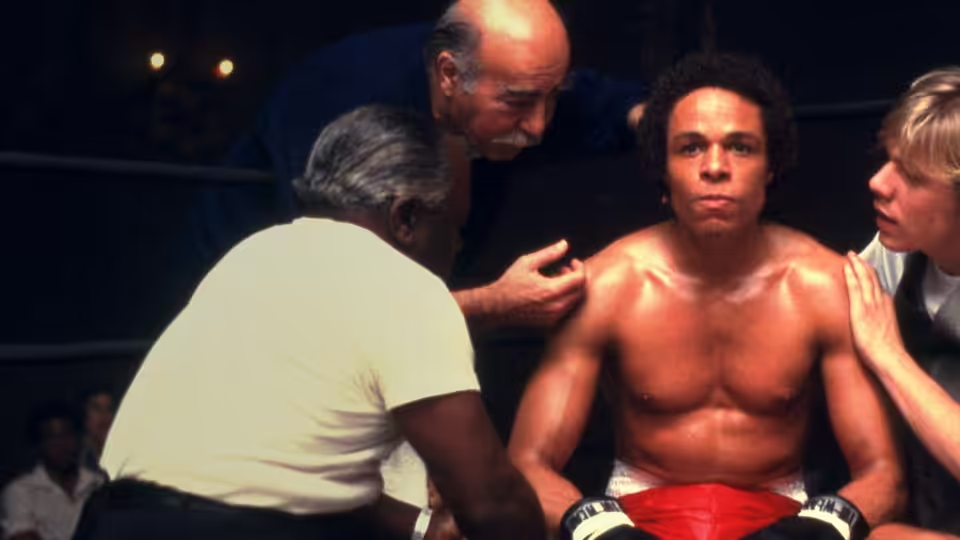
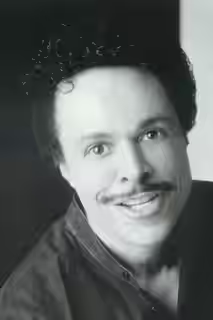
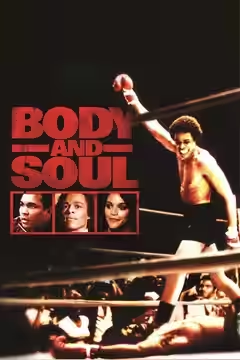
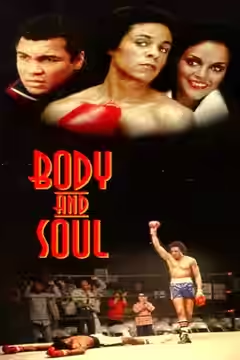
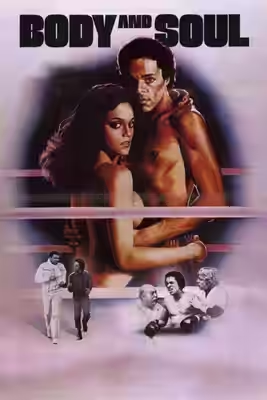
Leon Isaac Kennedy wrote himself a star vehicle out of a 1947 classic, and George Bowers directed it. The result is likeable, lazy and loud, with a lead worth watching, a villain nobody could fear and fights that never land.
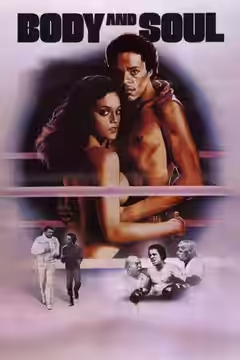
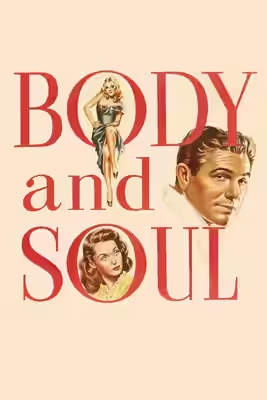
In 1947 Robert Rossen made Body and Soul with John Garfield as a fighter who sells himself to the men who fix the game and has to work out, round by round, what he has left. Thirty-four years on, Leon Isaac Kennedy wrote himself a remake, Menahem Golan and Yoram Globus produced it, and George Bowers directed. They kept the title, the ring and the outline of the story, and traded the original’s bitterness for montages and a disco horn section. It is not a good film. It is not quite a bad one either, and the difference is almost entirely the man in the middle of it.
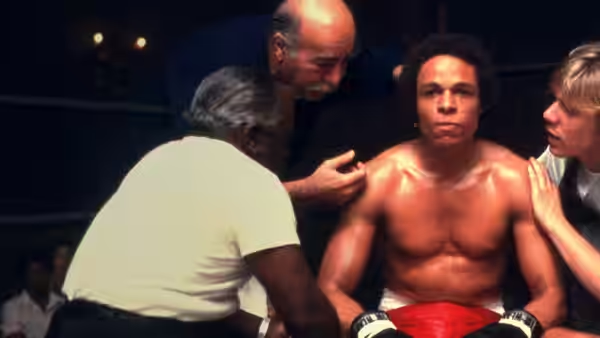
Kennedy the actor is easy to like. He moves well in the ring, he can play a quiet scene without pleading for our sympathy, and when he grins at a reporter who has just insulted him we grinned back. Kennedy the writer is his own worst corner man. He has given Leon Johnson every virtue going and then arranged the plot so that none of them costs him anything for the first hour. A hero who is never tempted for long is a hero we stop worrying about, and by the midpoint we had.
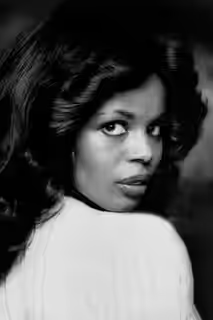
Jayne Kennedy, as Julie Winters, is poised and photographed with care, and she has been handed a character made of two questions and a look. The scenes between the two Kennedys are easy enough, but the script gives them nothing to disagree about, so the romance has no weather in it. Perry Lang, as Charles Golphin, does the eager-kid routine with some charm and is asked to carry more comic relief than any one person should.
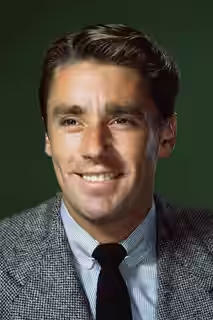
The oddest thing in the film is its villain. Peter Lawford’s Big Man is meant to be the money that comes with strings, and Lawford plays him as a tired host at a party he would rather have cancelled. He murmurs his threats as if apologising for them. We laughed, twice, in scenes built to frighten us, and then felt a little mean about it, because the fault is in the writing and the direction, not in a man who turned up and did what he was told. Azizi Johari, Rosanne Katon and the rest of the women of the fast-life scenes exist to be looked at and then left.
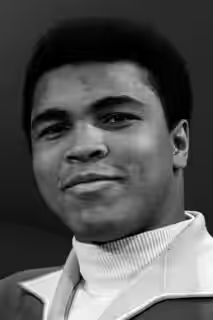
Muhammad Ali appears as himself, and for the few minutes he is on screen the film has a real person in it. He talks to Leon the way a champion talks to a boy who has not yet been hurt, half joke and half warning, and everyone else on screen goes quiet around him. It moved us more than we expected, because nobody else in the picture is allowed to be that plain. Then he leaves and the film goes back to being a film.
James Forrest shoots the fights from ringside under flat, hard light that shows every drop of sweat and none of the danger. Skip Schoolnik and Sam Pollard cut round the punches rather than through them, so a blow is a wind-up, a cut to the crowd, and a man already on the canvas. Webster Lewis supplies a score of strings, brass and a title song that would do nicely on a dance floor and does less under a man being beaten. The training montages are shot and cut exactly as Rocky (1976) taught everyone, and five years on they already look borrowed.
The 1947 film ends with a man who has lost things, and the loss is the point. This version is afraid of loss. Every hard choice is softened, every bad night has a good morning after it, and the picture runs 109 minutes without letting its hero be wrong for longer than a scene. The reviews so far put it in the mid-sixties, and we think that is generous: a boxing film in which the fights do not hurt and the villain does not frighten has given away the two things the genre runs on.
If you want a warm, slightly daft boxing picture with a good cameo and a soundtrack you can clear the table to, this will pass an evening. Keep the original for another night, and watch it second.