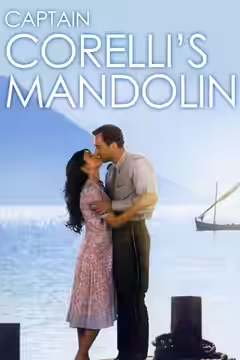
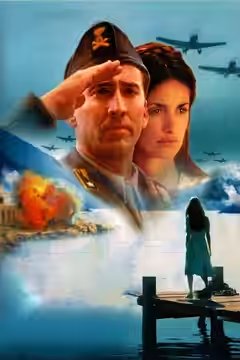
John Madden’s film of Louis de Bernières’ novel has a beautiful island, a fine John Hurt and a war that arrives too late to help. Between them, a romance in which Nicolas Cage is more at ease with the mandolin than with Penélope Cruz.
John Madden’s film of Louis de Bernières’ novel runs 131 minutes and spends most of them on a Greek island in wartime, waiting for two people to fall in love. The island does its part. The people do not, and that is the whole of the problem. There is a good deal here to look at, a fine performance from John Hurt, and a stretch near the end when the film remembers it is set in a war; none of it is enough to carry a romance that never catches.
Shawn Slovo’s screenplay keeps the bones of the book: Cephalonia under Italian occupation, a doctor’s daughter, the officer billeted in her father’s house, the fisherman fiancé away at the front. What it cuts is nearly everything else, and the film it leaves behind is a love story with a war in the next room. Madden is plainly after a serious subject carried lightly. Here the lightness reads as a lack of weight.
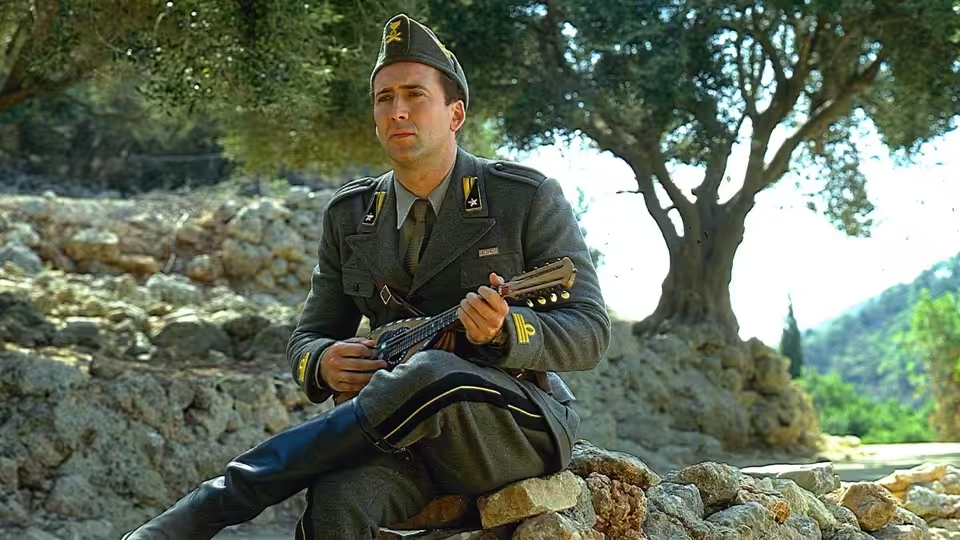
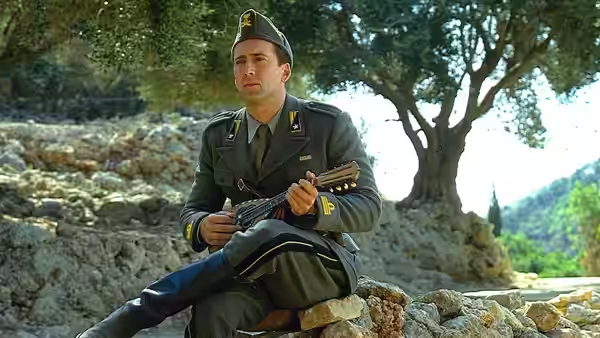
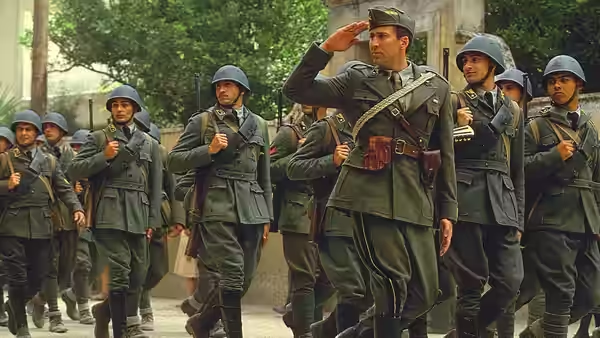
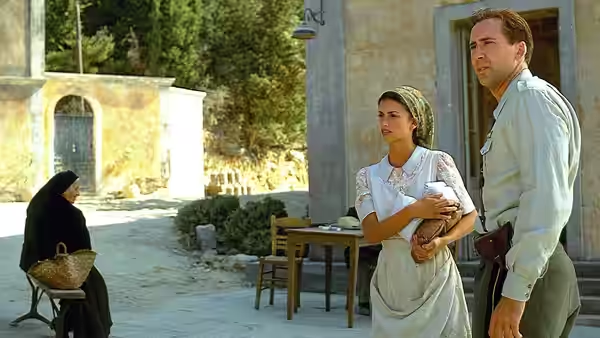
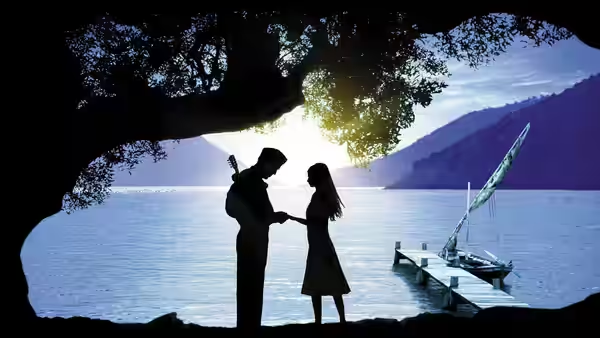
John Toll photographs Cephalonia as a place you would want to be. He shoots the harbour early, with the water flat and the limestone behind it pale, and the village square at midday in hard shadow and whitewash. Jim Clay’s production design gives the doctor’s house a courtyard that looks lived in, with the surgery opening off it, and Alexandra Byrne keeps the Italian uniforms creased and sun-faded rather than pressed for the camera. Stephen Warbeck threads a mandolin through the strings and, when the soldiers sing, has the sense to let the voices carry on their own. This is careful work, and for a while it is enough to be going on with.
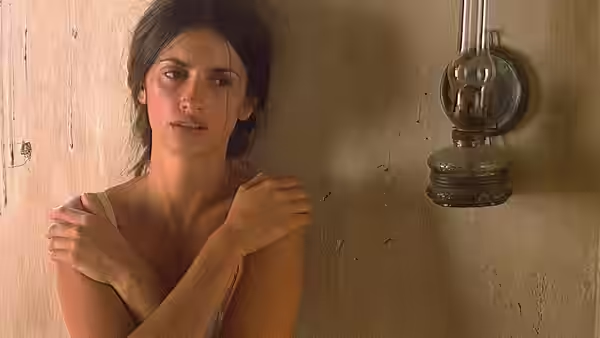
John Hurt is the reason to stay. His Dr. Iannis is a dry, tired man who treats the occupiers as he treats everyone, as patients first and nuisances second, and he gets the best scenes, haggling for morphine and watching his daughter with a face that already knows how this goes. Penélope Cruz plays Pelagia as someone holding something down, and her face does more of the film’s work than the script gives her words for. David Morrissey’s Captain Günther Weber is a decent man who likes the singing, and Morrissey plays the decency so plainly that he becomes the film’s one real source of unease. Christian Bale’s Mandras goes to the front in the first act and comes back changed, and the film seems faintly embarrassed to have him in the house.
Then there is Nicolas Cage. He plays Corelli as a man who has decided to be delightful and will keep at it until everyone agrees, and the accent, which sits somewhere between an Italian waiter and a man impersonating one, makes the decision hard to sit through. We did not believe for one minute that these two were in love, and the reason is on the screen: Cage plays every scene to the back of the square while Cruz plays hers to the person in front of her, and the two performances never meet. When he picks up the mandolin he is likeable. When he puts it down he is a tourist.
Mick Audsley cuts the middle hour at one unhurried pace, and it is the wrong one. Scene after scene has the same shape: a walk, a look, a line about the war, a meal. We found ourselves watching the light move on the hills and counting goats, and felt slightly guilty about it, because the film so obviously wants us watching the lovers. Then the war arrives, in a turn we will not describe, and the film wakes up. Toll and Audsley stage the fighting in daylight, clearly, so that you always know where everyone is, and Hurt and Morrissey are given something to do. It is the best passage in the picture and it comes late.
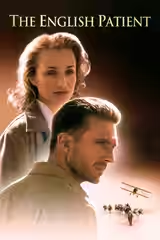
Set beside the wartime romances it is modelled on, The English Patient above all, it is shorter, prettier and far less sure of what it is about. That film made you wait and paid you for waiting. This one makes you wait and shows you the sea. Most critics landed near where we have, and their complaints cluster where ours do: the accent, the pairing, the trimming of the novel.
Watch it on a grey evening if what you want is an island, a doctor and a mandolin; the 15 certificate is earned by the last act rather than the love scenes. At home it makes a decent travel programme about Cephalonia, interrupted every so often by a love story.