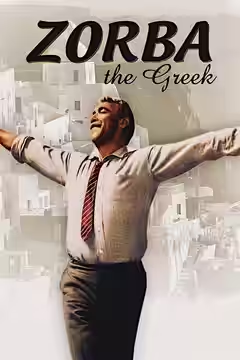
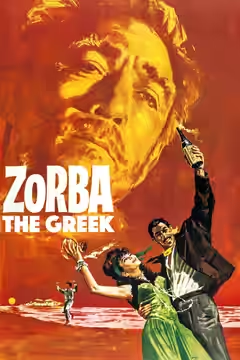
Michael Cacoyannis’s film of the Kazantzakis novel is superbly shot and remembered for a dance, and Anthony Quinn’s Zorba is both its selling point and its biggest problem. The film worth seeing is the one behind him, with Irene Papas and Lila Kedrova.
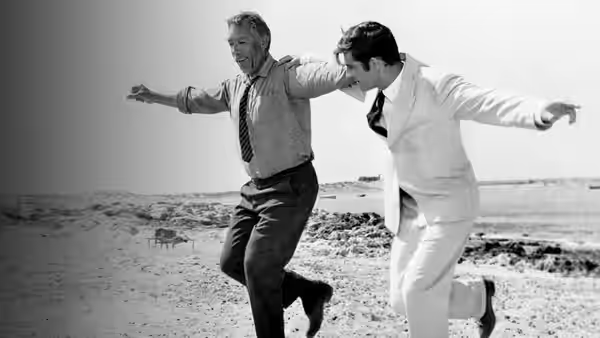
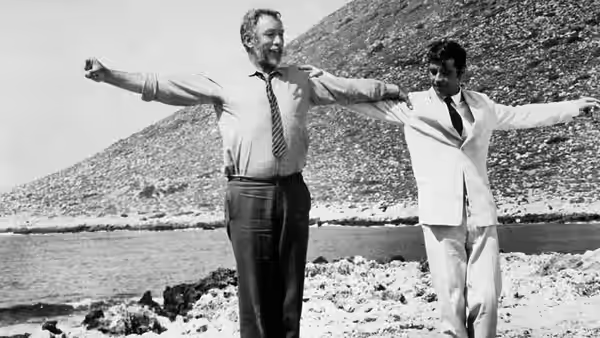
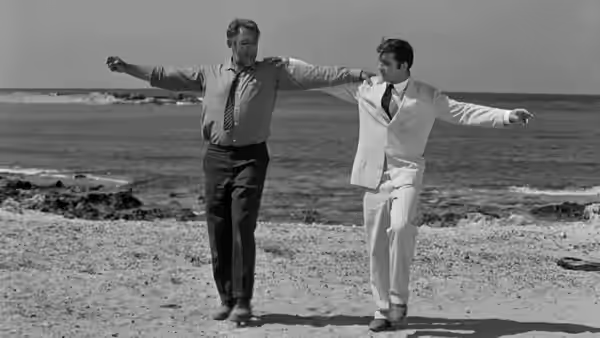
Zorba the Greek is remembered for a dance and a tune. Michael Cacoyannis, working from Nikos Kazantzakis’s novel, has made 142 minutes about a bookish young man taught how to live by a loud old one, and the loud old one is the trouble. There is a good film here, at times a fine one. It is not the film with Zorba in the middle of it.
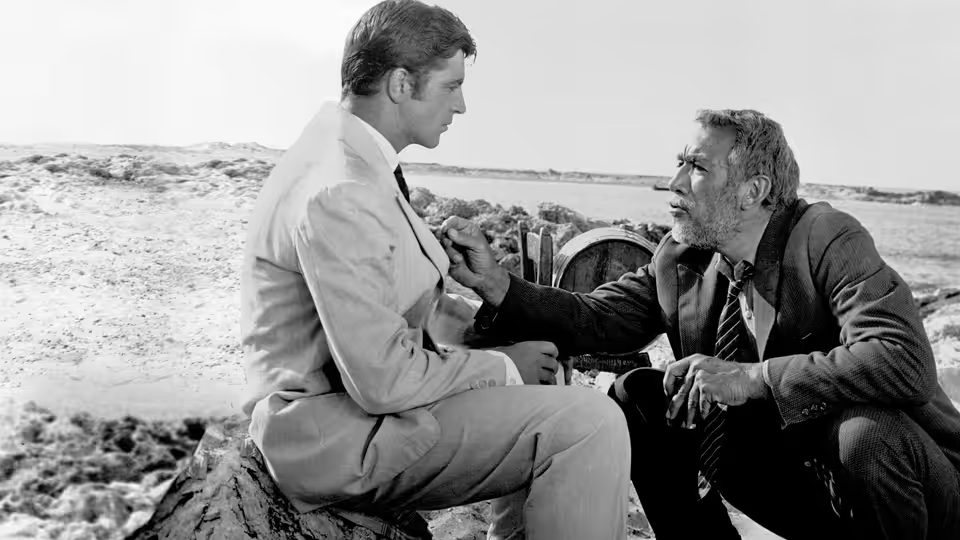
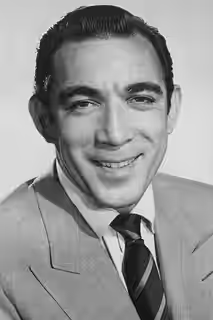
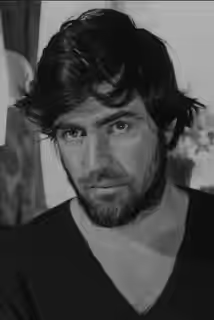
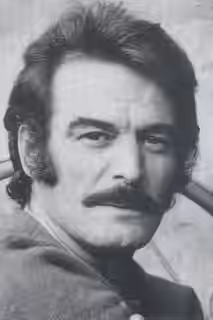
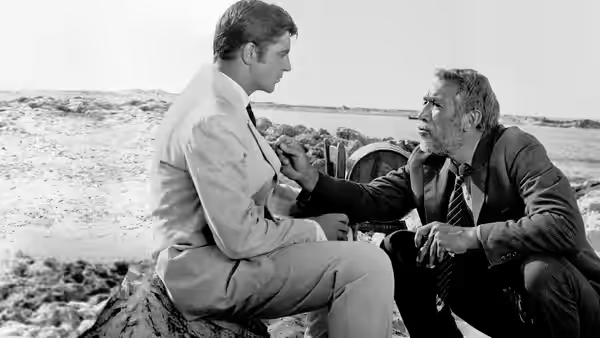
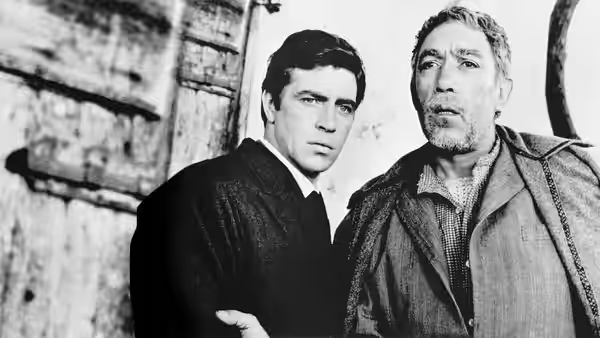
Anthony Quinn plays Zorba as if the back row were hard of hearing. He roars, weeps, grabs, dances, and tells Basil at regular intervals that a man needs a little madness, in case we had not gathered it from the previous two hours. Some of it lands. Asked to play the instrument he carries about in a bundle, he refuses because he is not in the mood, and Quinn makes us believe the man would rather starve than play to order. But the film keeps stopping to admire him, and the admiring goes on long after the point has been made. Alan Bates underplays Basil, which is the part; a part written as a listening post gives an actor little to do except look faintly alarmed, and Bates does that well and often.
Walter Lassally shoots the island in hard black-and-white, and it is the best thing in the film. The whitewashed walls burn in the sun and the village women in black stand against them like cut paper. The hills are stone and scrub, the sea is a flat grey sheet behind everything, and the café where the men sit is lit so that every face reads. Mikis Theodorakis’s score is sparer than its reputation; the tune everybody knows is held back for a long while, and it is stronger for the wait.
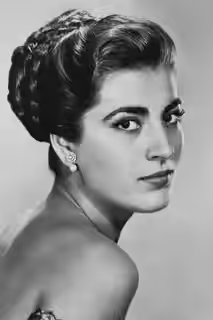
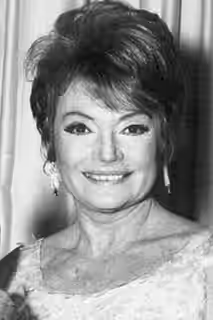
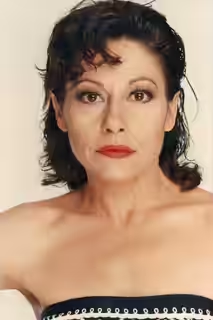
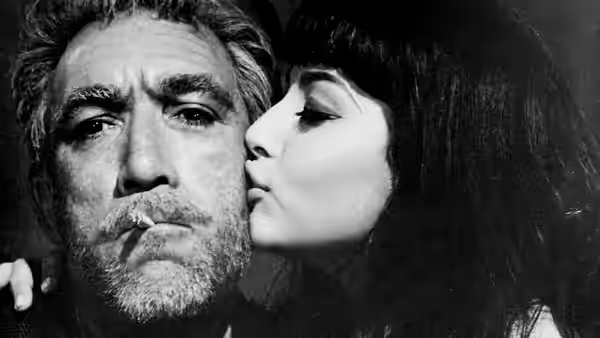
Irene Papas, as the widow, barely speaks. She walks through the village and Cacoyannis cuts not to her but to the men watching her, one face after another, and then to the boy Pavlo (Yorgo Voyagis) following at a distance. Nobody has done anything yet, and we felt sick. Papas plays the whole part in her shoulders and her eyes, a woman who has decided that the only defence available to her is to give the village nothing, and every scene she is in is charged in a way the Zorba scenes never are. Her strand is the reason to sit through the rest, and the second half takes it somewhere we will not describe.
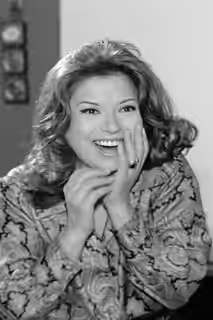
Lila Kedrova’s Madame Hortense moved us more than we expected. She is rouged, plumed and absurd, forever recalling the admirals she says she once kept company with, and for a while the film invites us to laugh at her. Then Zorba courts her, half in jest and half not, and Kedrova lets us see a woman who knows exactly how ridiculous she is and has chosen to be it on purpose. It is the one place where Quinn’s bigness meets something its own size, and the film briefly stops shouting.
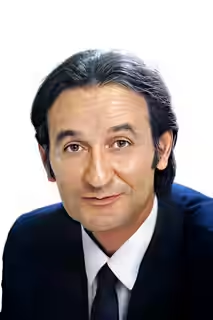
Cacoyannis wrote, produced, directed and cut the film himself, and the cutting is where a second opinion would have helped. Scenes begin without warning and end when he has had enough of them. A saint’s day, a visit to a monastery, a mishap at the mine: each arrives, makes its noise and is gone, and the friendship the film is supposedly about is the thread developed least. Sotiris Moustakas’s Mimithos, the village simpleton, is used as a chorus and then forgotten. By the last half hour we were watching the clock, and the clock was watching us back.
Cacoyannis had already made Electra (1962) with Papas, and that film knew what to do with her stillness. Here he has two actresses giving performances of real weight and a star who keeps walking in front of them. See it for Papas, for Kedrova and for Lassally’s Crete, and take a breath when Zorba starts to dance. It runs 142 minutes and carries a PG.