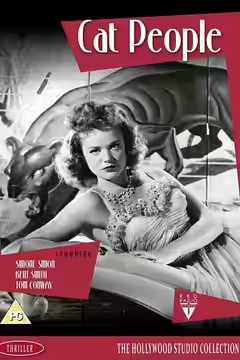
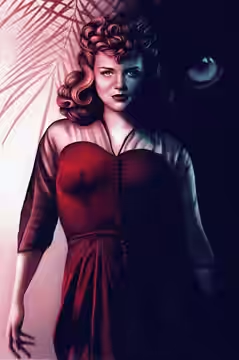
Cat People is a quietly frightening horror film, carried by Simone Simon and Nicholas Musuraca’s shadows. Some stiff supporting performances and an occasionally vague script matter, but they do little to loosen its grip.
Jacques Tourneur’s Cat People is frightening because it takes Irena Dubrovna Reed seriously enough to stay with her unease. The romance matters, and so does the possibility that desire might bring something terrible with it. Produced by Val Lewton and written by DeWitt Bodeen, it asks us to spend time with uncertainty without immediately demanding an explanation. We recommend it warmly, with a warning that some of the supporting acting is considerably less subtle than the horror.
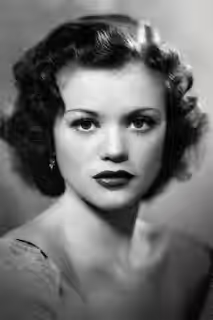
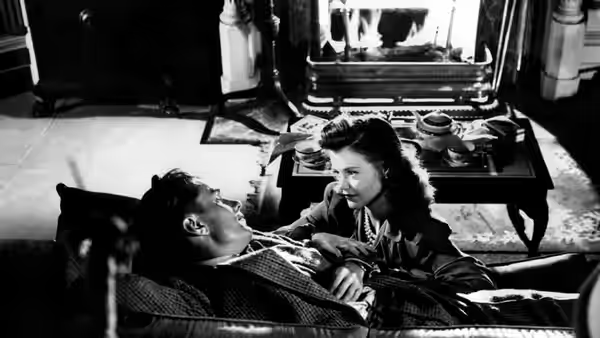
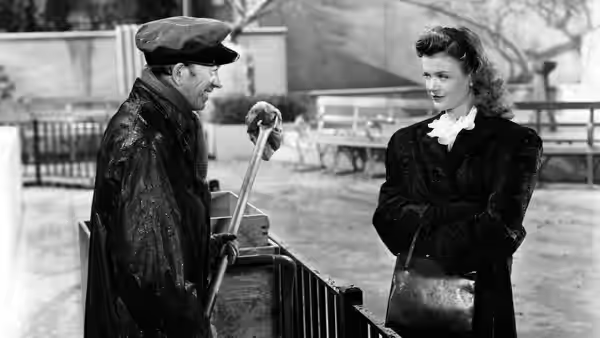
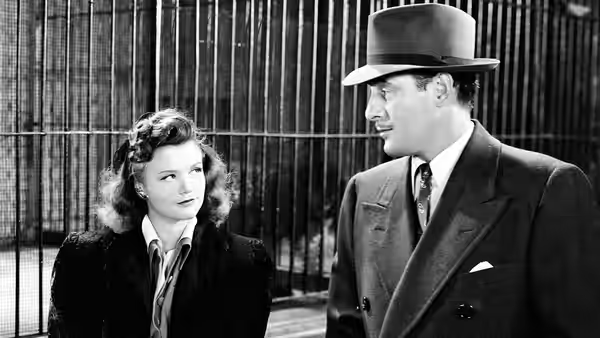
Simone Simon supplies the emotional reason to keep watching through those uncertainties. As Irena Dubrovna Reed, she makes menace and vulnerability seem possible in the same person, without making either feel like a trick played on the audience. We can be apprehensive about her and still want her to be understood, which gives the romantic material a discomfort that the shadows alone could never provide. Her performance keeps the fear personal, even when the writing is vague about what we are meant to understand.
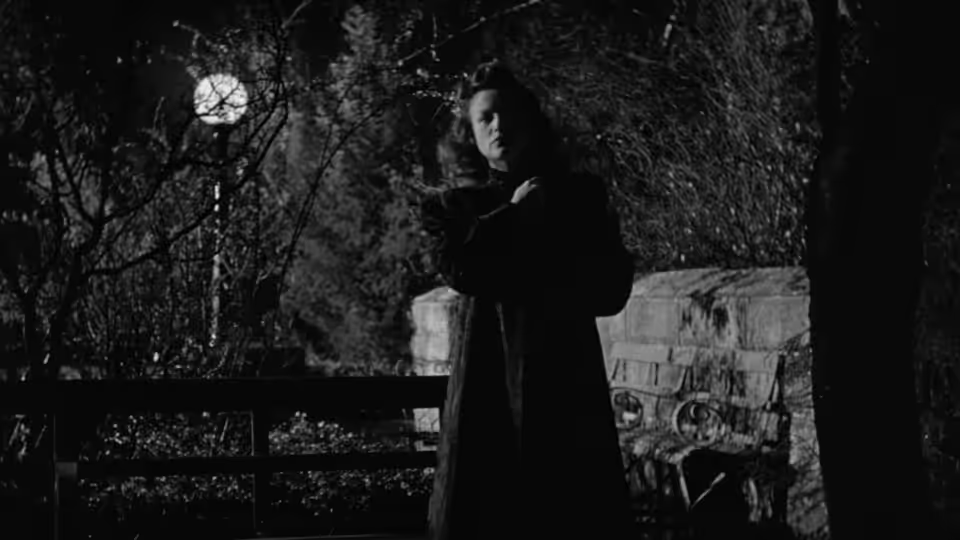
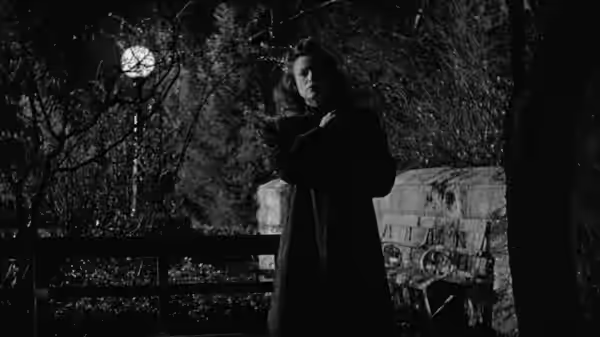
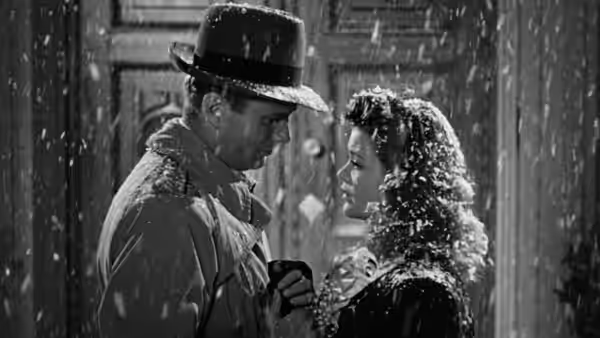
Nicholas Musuraca’s cinematography makes darkness difficult to read, especially in the stalking sequences. The contrast between light and shadow lets an ordinary stretch of darkness become something we study, looking for enough information to feel safe. We were frightened by those passages because we kept searching the shadows and could not settle on what they contained. The photography gives the eye somewhere to look, then leaves enough concealed to make us uncomfortable about continuing to look there.
Mark Robson’s editing allows that looking to take time, a useful discipline in a film lasting only 73 minutes. The stalking passages do not feel hurried towards the next event, and their patience makes the surrounding uncertainty easier to share. Roy Webb’s score has less hold on us than the stretches of silence, when the lack of reassurance becomes oppressive. We think the sound is most effective when it leaves the images alone; there is already plenty in them to keep us occupied.
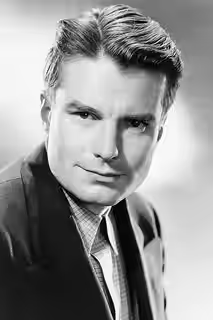
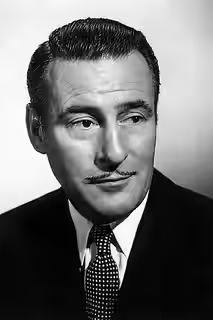
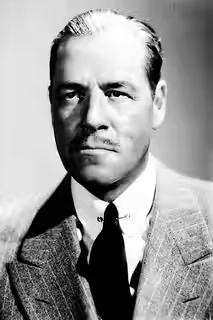
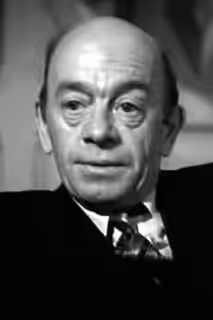
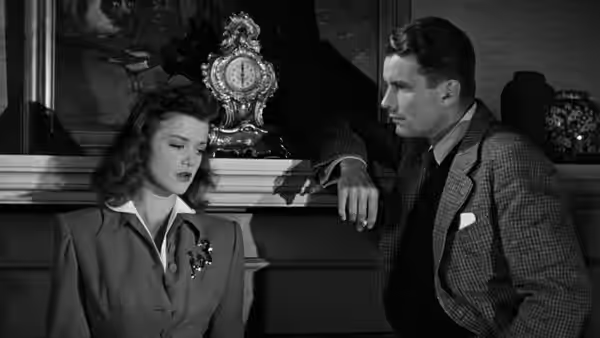
DeWitt Bodeen’s script is less secure when the uncertainty starts to feel like missing information. There are passages in which we want a firmer sense of the people involved, and mystery is not much compensation for that lack. Kent Smith, as Oliver Reed, and Tom Conway, as Dr. Louis Judd, do not always make the dialogue feel lived in; their stiffness can leave Simone Simon doing too much of the emotional work. These are noticeable weaknesses in a film whose fears depend so heavily on taking its people seriously.
As horror, Cat People asks for the kind of attention usually reserved for a troubled romance: watching a person closely and wondering how far sympathy can take us. Its interest in sexual fear gives the suspense a troubling intimacy, even when the details remain hazy. That also limits its appeal as a straightforward creature film, since much of the pleasure lies in watching and listening for something difficult to identify. Go in wanting carefully sustained unease, and the occasional wooden exchange is a price worth paying.