Aronofsky’s lightest film in years is a fast, dirty, frequently funny chase round a 1998 New York that looks lived in rather than dressed. Austin Butler makes a likeable punchbag. It is good company for 107 minutes and gone by morning.
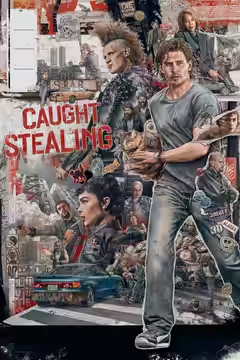
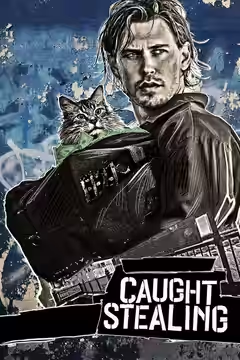
Darren Aronofsky has made a film in which nobody is trying to reach God, become a swan or eat themselves to death. Caught Stealing, adapted by Charlie Huston from his own novel, is a wrong-man crime comedy: a bartender agrees to feed a cat, and by the end of the week half the criminals in lower Manhattan want a word. It is brisk, it is bloody, and it is the first Aronofsky film we can remember where the point seems to be a good night out. Mostly it gives you one.
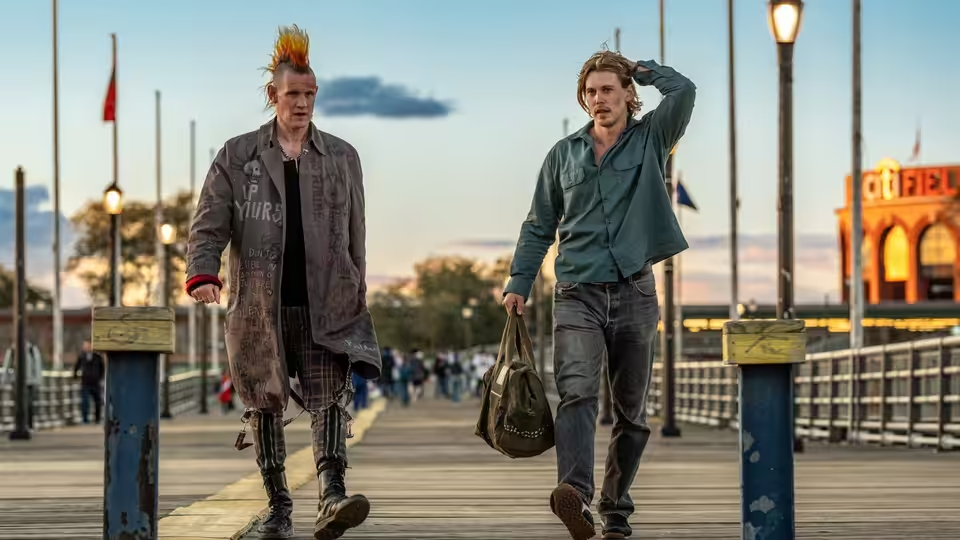
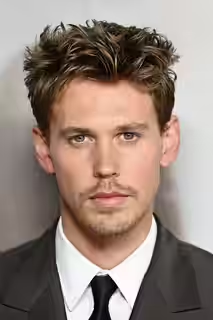
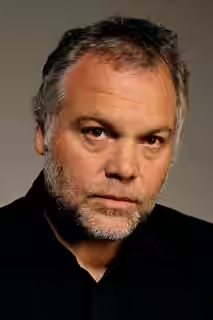
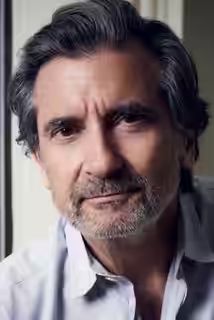
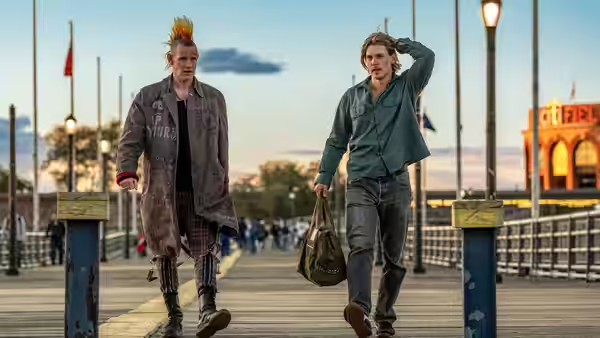
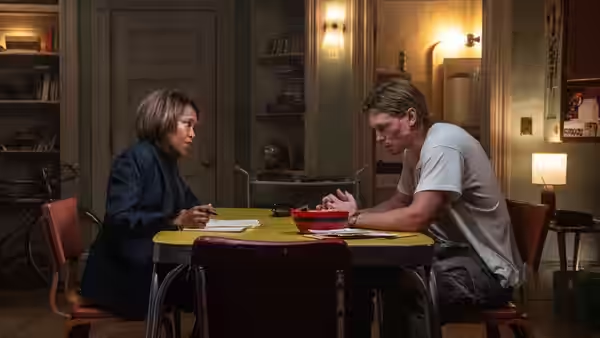
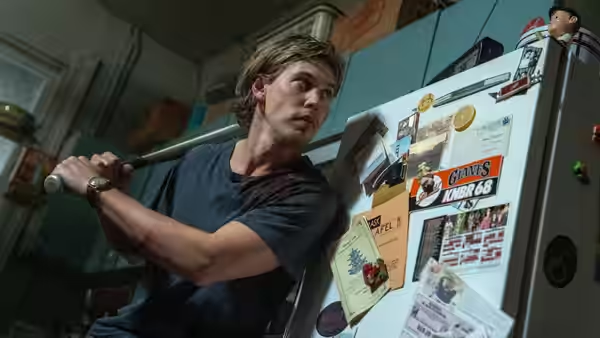
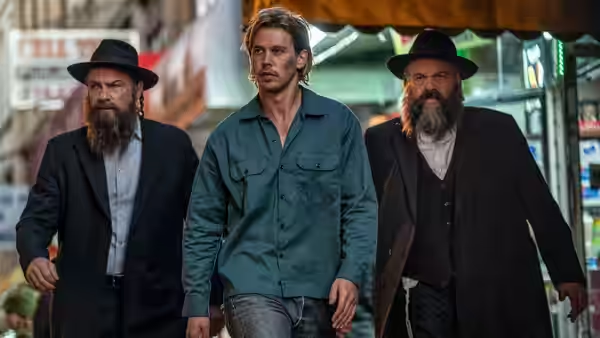
Austin Butler plays Hank Thompson as a man who has stopped expecting much and is still surprised when things get worse. It is a passive part by design, the plot happens to him rather than through him, and Butler carries it by being funny in the gaps: the pause before he opens a door, the way he keeps apologising to people who are hitting him. Matt Smith’s Russ, all mohawk and borrowed swagger, sets the trouble going and then leaves Hank holding the cat. Liev Schreiber and Vincent D’Onofrio, as the brothers Lipa and Shmully, are the film’s best invention, two large men who discuss kosher dietary law with the same care they bring to breaking fingers. Regina King’s Detective Roman is the one adult in the film, and King plays her tired rather than tough.
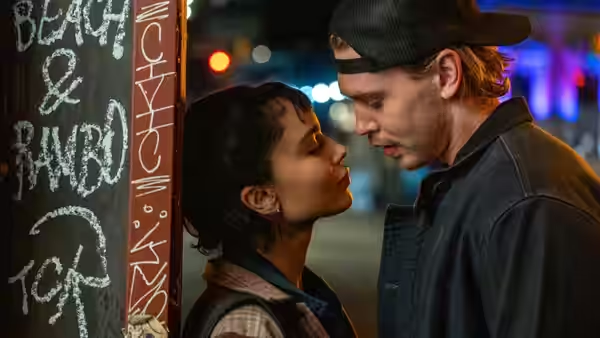
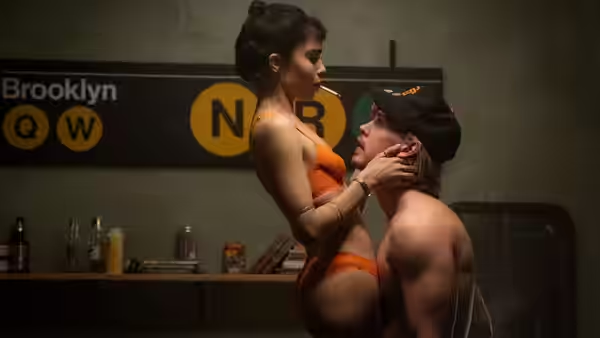
Zoë Kravitz has less to do than she deserves and does it well. Her scenes with Butler are loose and warm, two people who like each other and know the timing is bad, and they give the film a reason to want Hank to survive. Nikita Kukushkin and Yuri Kolokolnikov, as the Russians Pavel and Aleksei, are given one note apiece and hit it hard. Bad Bunny turns up as Colorado and is exactly as menacing as the film needs and no more.
Matthew Libatique shoots the city at street level, in bar neon and sodium streetlight, and keeps the camera close enough to Butler’s face that every new bruise registers. Mark Friedberg’s production design is the film’s quiet achievement: the apartments are small, the walls are the colour of old smoke, the bar has a floor you would not want to touch. Nothing looks like a set. Amy Westcott puts Russ in leather and safety pins and Hank in the same two shirts for the whole film, which is correct. Andrew Weisblum cuts fast and clean, and the running time never feels padded. Rob Simonsen’s score sits under a soundtrack of loud guitars, and the film is at its best when it lets the songs do the work.
Here is what we felt. For the first half hour we laughed, freely and often, mostly at Schreiber and D’Onofrio, and we settled in for a caper. Then Hank takes a beating, early, that Aronofsky films without cutting away, and the sound of it stayed with us for the rest of the film. That is a choice, and a defensible one: the violence in this film hurts, which is more than most crime comedies manage. But there is a moment past the halfway point, which we will not describe, that took the laugh back entirely, and the film did not seem to notice it had happened. We spent the last half hour waiting to be let back in and were not.
That is the trouble, and it is a trouble of tone rather than craft. Huston’s script wants the film to be a lark and a tragedy in alternate scenes, and Aronofsky, who has never in his life made a lark, cannot quite hold both. When the film is cruel it is convincing; when it is jolly it is convincing; the joins show. A few of the wisecracks land as if they had been written for a different, sillier film, and one or two of the twists arrive because the plot needed them rather than because anyone earned them.
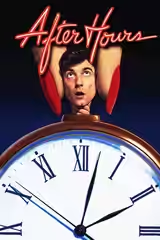
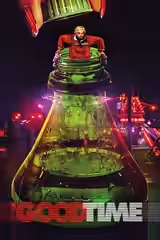
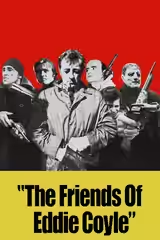
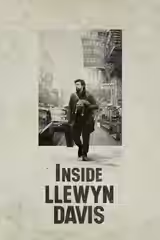
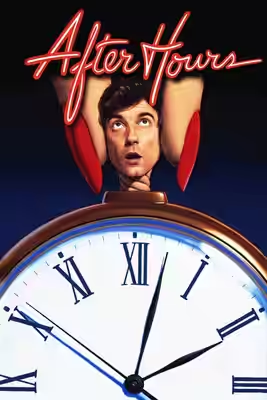
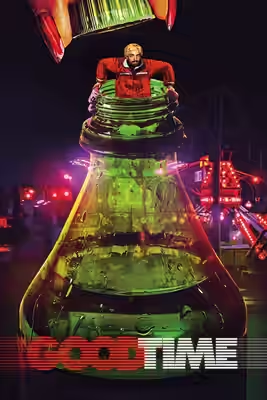
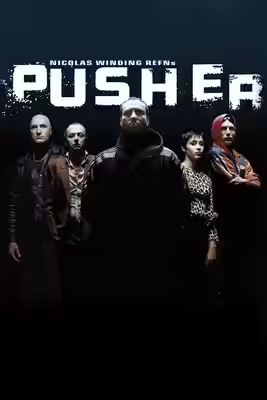
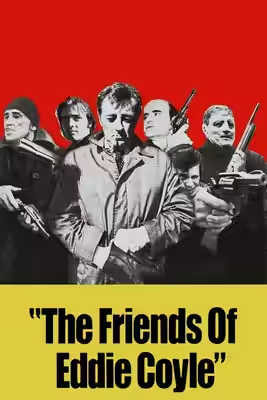
Against Aronofsky’s own record this is a holiday, and it is a relief to see him take one. Against the New York-after-dark films it plainly loves, it is a good imitation rather than a new thing. Most critics have enjoyed it about as much as we did, and a few have loved it; we think the affection is fair and the love is generous.
See it with company and a drink, in a cinema if you can, where the beating lands harder and the jokes land louder. It runs 107 minutes and carries a 15. Whatever else, the cat is fine.