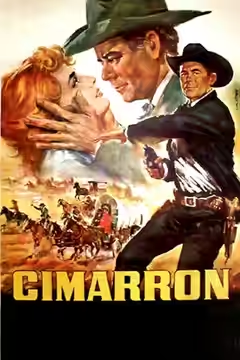
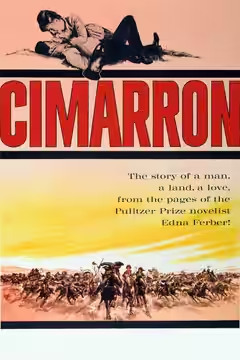
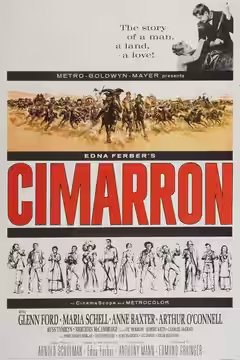
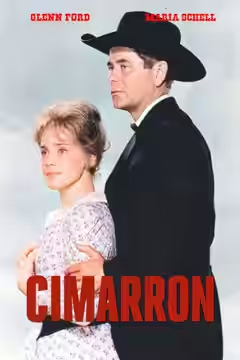
Anthony Mann stages the Oklahoma land rush as well as anyone has ever staged anything on horseback, and then spends two hours on a marriage that goes round in circles. Worth an evening for the opening; the rest is patient, handsome and slow.
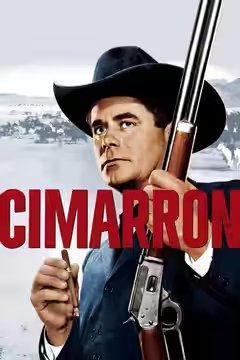
Anthony Mann’s Cimarron is a 147-minute adaptation of Edna Ferber’s novel, written for the screen by Arnold Schulman, and it means to cover the making of Oklahoma from the land rush of 1889 to the age of oil. It is the second time the book has been filmed; the first was in 1931. This one is bigger, better shot and, for its first quarter of an hour, close to thrilling. After that it becomes a long, decent, slightly weary account of a woman waiting for her husband to come home, and we found ourselves waiting with her.
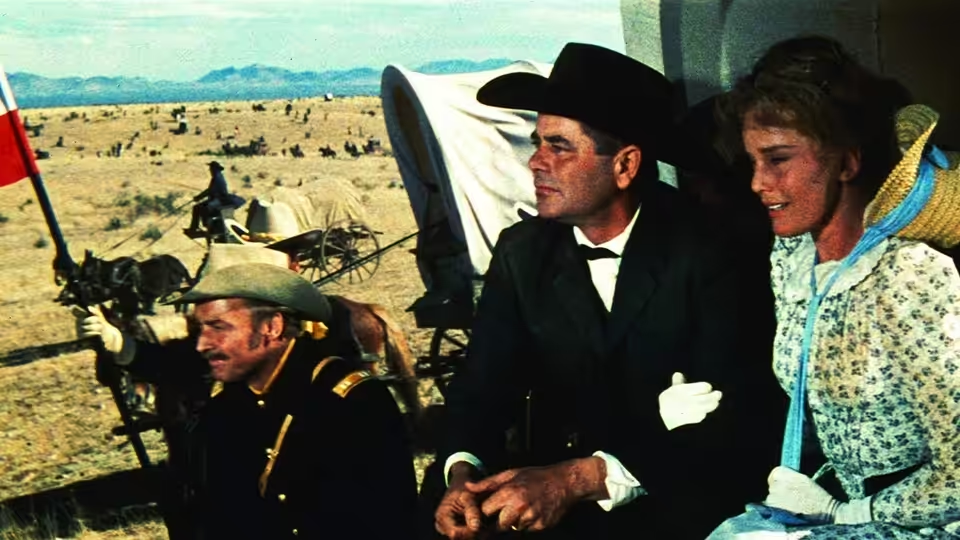
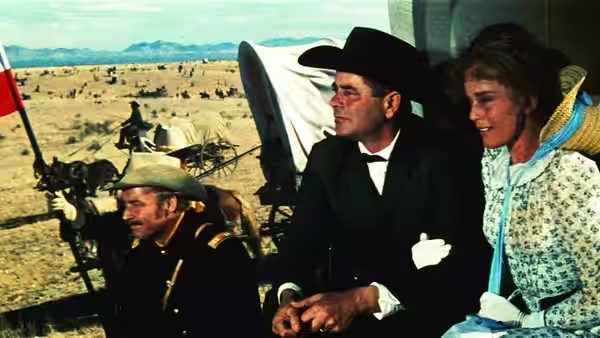
The rush is the reason to see it. Mann and Robert L. Surtees put the camera low and wide and let the line of wagons stretch to both edges of the frame, so that when the gun goes off the whole horizon seems to lurch forward. Buckboards overturn, a wheel comes off, riders go down under other riders, and Surtees keeps the dust in front of the lens so we lose sight of people just as they lose sight of each other. John Dunning cuts it fast but never so fast that we cannot tell whose horse is whose, and Franz Waxman’s brass is loud, plain and exactly right. We sat up, which at our age takes some doing, and for ten minutes we would have followed the film anywhere.
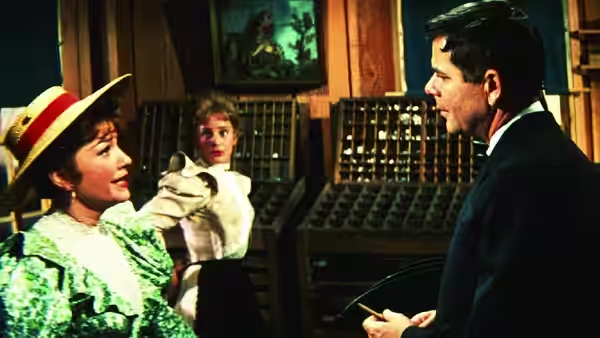
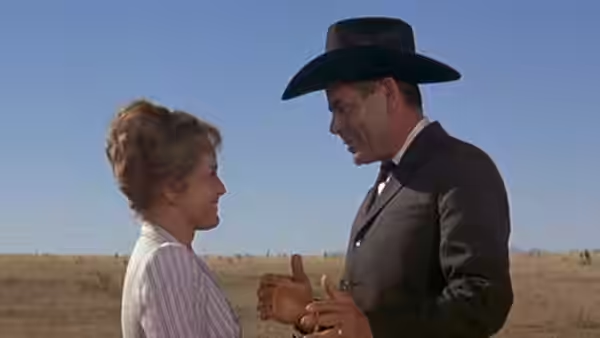
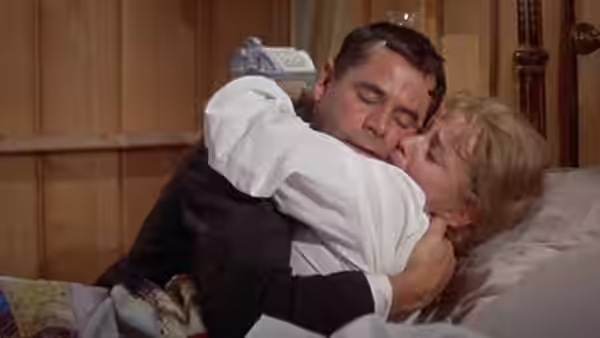
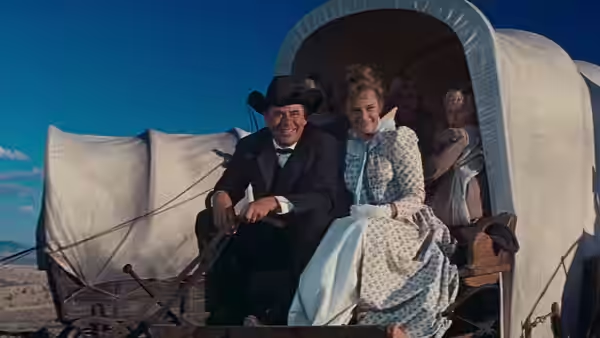
Then it stops in Osage and stays there. Glenn Ford plays Yancey as a good man who cannot bear to be in a room for long, courteous to everyone and reliable to no one, and Ford is honest enough not to make that charming. Maria Schell has the harder part, because Sabra is the one who does not leave, and Schulman’s script asks her mainly to stand in doorways and be disappointed. Schell plays it with more steel than the writing offers; when she takes over a task Yancey has abandoned, her face does not soften and we liked her for it. The scenes between the two are civil, well lit and repetitive.
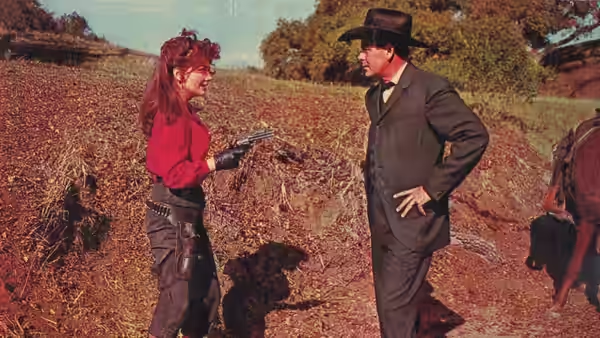
The town around them is better company. Arthur O’Connell and Mercedes McCambridge play the Wyatts as a comedy of stubbornness, a farmer who wants nothing and a wife who wants everything, and they are the only pair in the film whose arguments we looked forward to. David Opatoshu gives Sol Levy a quiet dignity the script does not always earn. Anne Baxter’s Dixie Lee is set up as a rival and then left mostly on the shelf. Russ Tamblyn makes the Cherokee Kid a grinning, jittery boy with a gun, and Vic Morrow and Charles McGraw, as Wes Jennings and Bob Yountis, supply the meanness the town otherwise lacks.
The trouble is shape. Schulman moves the story forward in captions, and each caption lands us in a slightly larger Osage with slightly grander problems, so that Walter Plunkett’s costumes end up doing the work of narrative: Sabra’s dresses go from calico to bustles to something approaching Edwardian, and that is how we know time has passed. Yancey rides off, comes back, rides off. The second half takes turns we will not describe, but we can say the pattern does not change, and somewhere in the third repetition we were bored, and then irritated at being bored by a film that had shown us it knew how to move.
Mann’s own Westerns of the 1950s, the ones with James Stewart, were about a single man who wanted one thing and was prepared to be ugly to get it. That is what he is good at: pressure inside a frame. Ferber’s book is the opposite kind of thing, a chronicle in which a whole territory grows up, and Mann handles the crowd scenes with a mastery the domestic scenes never approach. It is the wrong director for the material, or the wrong material for a very good director, and either way the film knows it only in its first reel.
The few critics who wrote about it at the time were split, with one calling it rousing and the others calling it dull, and we land between them, closer to dull. See it for the land rush, which belongs on the largest screen you can find; at home it shrinks and the marriage grows, and you will be surprised how long forty years can take.