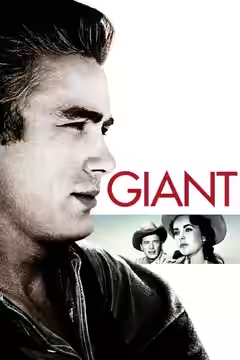
George Stevens’s Texas saga is an hour too long and spends much of that hour telling us what it means. Before then it is a fine, large film about a marriage, with James Dean lit up in the corner of it.
George Stevens took Edna Ferber’s novel about Texas and made a film 201 minutes long, and the length is the first thing anyone says about it: it is an hour too much. Fred Guiol and Ivan Moffat’s screenplay follows one marriage on one cattle ranch while Texas turns from cows to oil, and it wants to say something about who the state belongs to and who it treats as hired help. It is handsome, earnest and too long, and the first two hours are good enough that we forgave it more than we should have.
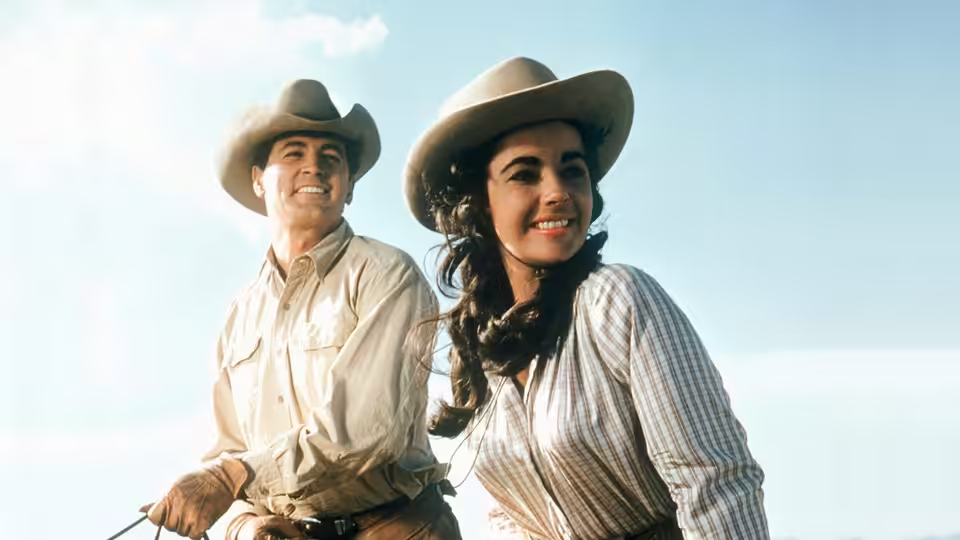
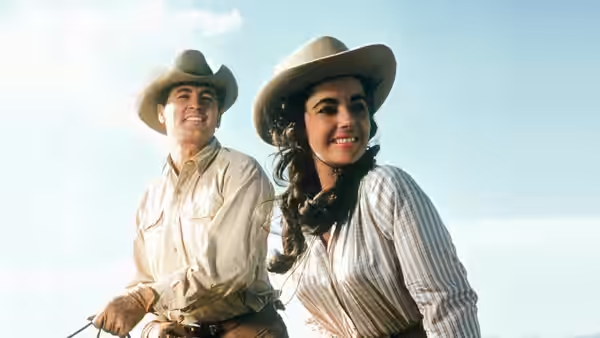
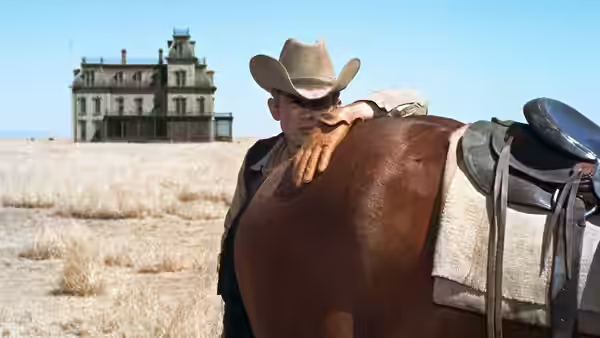
It looks tremendous. William C. Mellor shoots Texas flat and wide, the horizon a ruled line, and Boris Leven puts Reata, the Benedict mansion, alone in the middle of it. Mellor keeps the camera far back, so the house looks like something left on a table and the people around it are the size of pins. When years have to pass, Stevens and his editor William Hornbeck stack dissolves one over another, a child, a horse, a fence, and a decade is gone in a minute. Dimitri Tiomkin’s score is brass and drums, and it announces every wide shot as if Texas might otherwise have gone unnoticed.
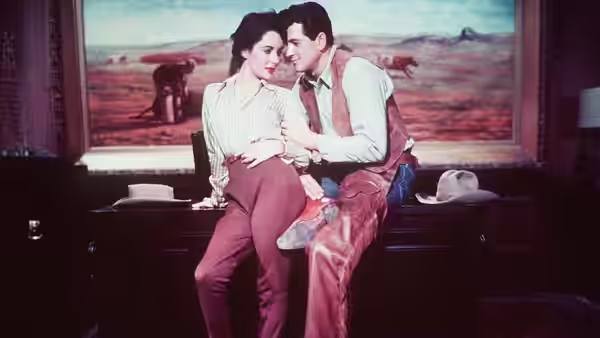
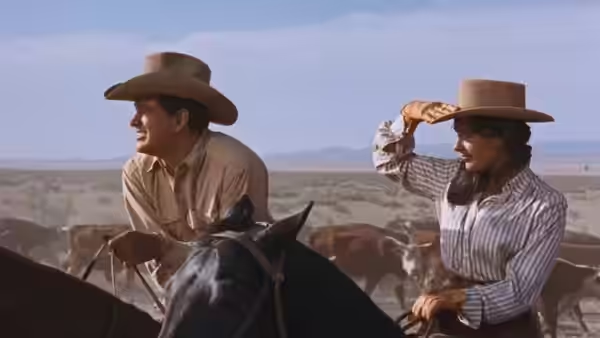
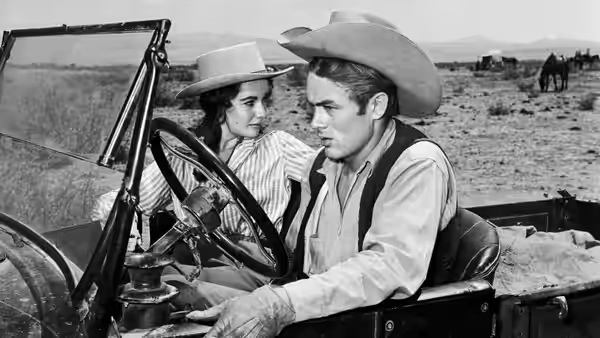
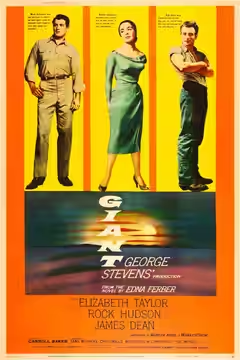
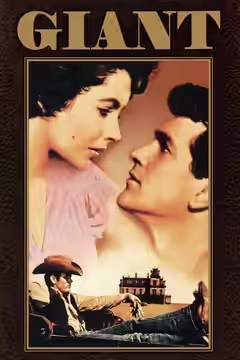
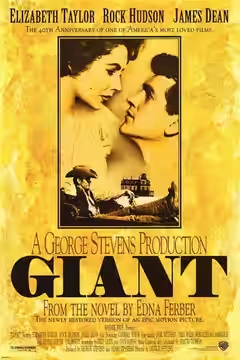
The marriage holds it together. Elizabeth Taylor plays Leslie as a woman who has read a newspaper and does not see why that should stop at the state line, and Rock Hudson plays Bick as a decent, slow man who is wrong about most things and takes years to find out. Early on she walks into a room where the men are talking politics, is told to go and rest with the women, and declines; we bristled along with her, and so, for a moment, does Bick. Their quarrels are about small things, a chair at a table, a doctor for a sick baby, and every one of them is about the same large thing. Watch Hudson listen to her, and lose, and pretend he has not.
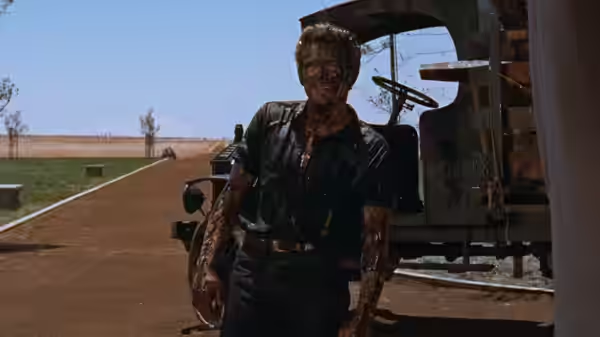
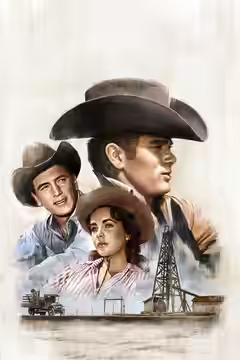
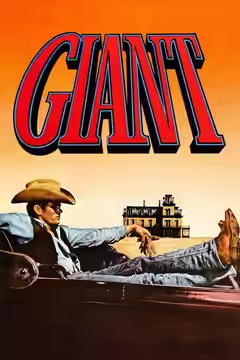
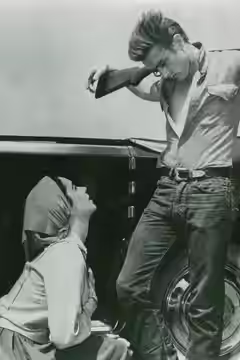
Then there is James Dean as Jett Rink, a ranch hand who hates the Benedicts and wants what they have. Dean mumbles, keeps his hat low and sits with his knees up like a boy, and every scene he is in tilts towards him. His one scene alone with Taylor, serving her tea in a shack full of junk, is the best acted thing in the film, two people being polite about the fact that neither belongs where they are. He also has the picture’s one indelible image, a man drenched black from head to foot, laughing on a porch, and we grinned at it as if we had struck the oil ourselves. He plays Jett into middle age with a rasp and a slump, and it half works.
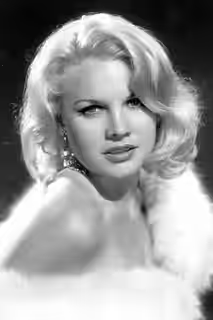
The last hour is where it goes wrong. The children grow up, Carroll Baker and Dennis Hopper as the young Benedicts, Sal Mineo as Angel Obregón, and the screenplay hands each of them a subject rather than a life. Racism, which the first half showed us in a kitchen and in a doctor’s refusal, becomes a topic, and the film starts telling us what it thinks in case the earlier scenes had not managed it. They had. Somewhere past the two-hour mark we were bored, and then irritated, because the first ninety minutes had been so sure of themselves. Stevens, who made Shane three years earlier and knew when to stop, seems to have kept everything.
Most critics have split between calling it a great screen epic and a long yawn, and the consensus has settled in the middle. We are a little warmer. A film about a marriage does not usually get this much land, money or time, and Taylor and Hudson use nearly all of it. The speeches are the part they cannot save.
Watch it at home, where the wide shots lose something and the kitchen arguments lose nothing, and give it the whole evening; the last hour only makes sense if you have lived with these people through the first two. It runs 201 minutes, carries a PG, and reached British cinemas on 3 January 1957.