George Stevens’s Western about a drifter who takes work on a homestead is slower and more solemn than its admirers admit, and better than its detractors allow. Loyal Griggs’s mountains, Van Heflin’s decency and a small boy’s worship carry it past Alan Ladd’s stillness.
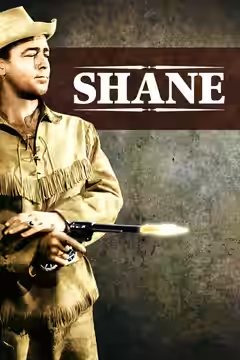
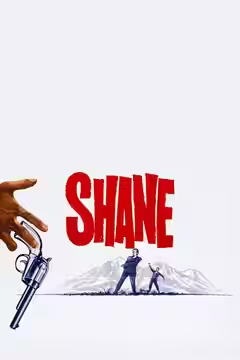
Shane rides down out of the hills to the Starrett homestead and asks for water. Joe Starrett (Van Heflin) takes him for one of Rufus Ryker’s men and orders him off, until Ryker’s riders arrive to lean on Joe about his fences. George Stevens, directing from A.B. Guthrie Jr.’s screenplay of Jack Schaefer’s novel, is trying to make the Western that would stand for all the others. The poster called it the greatest story of the West ever filmed, and the film carries itself as though it believes that. We recommend it, with the warning that it takes its time and knows it.
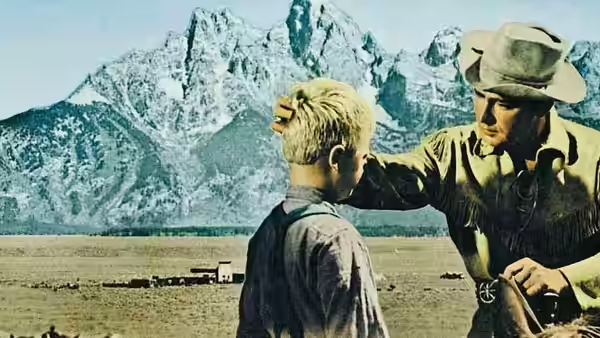
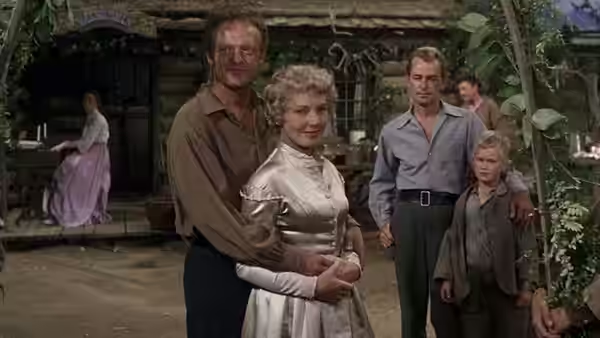
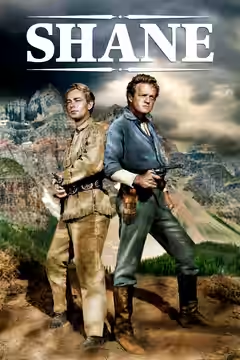
Loyal Griggs puts the mountains behind everything. They sit so close behind the cabin they look painted. The valley is Technicolor green; the town is mud. The scene most people remember is two men pulling a stump. Joe has been at it for years, Shane picks up an axe, and Joe refuses to fetch the horses because he wants it done by hand. Stevens and his editors, Tom McAdoo and William Hornbeck, cut between the axes, the men’s faces and Marian (Jean Arthur) at the window. It moved us more than a stump has any right to. Two men decide to like each other by working, and the film has not yet mentioned a gun.
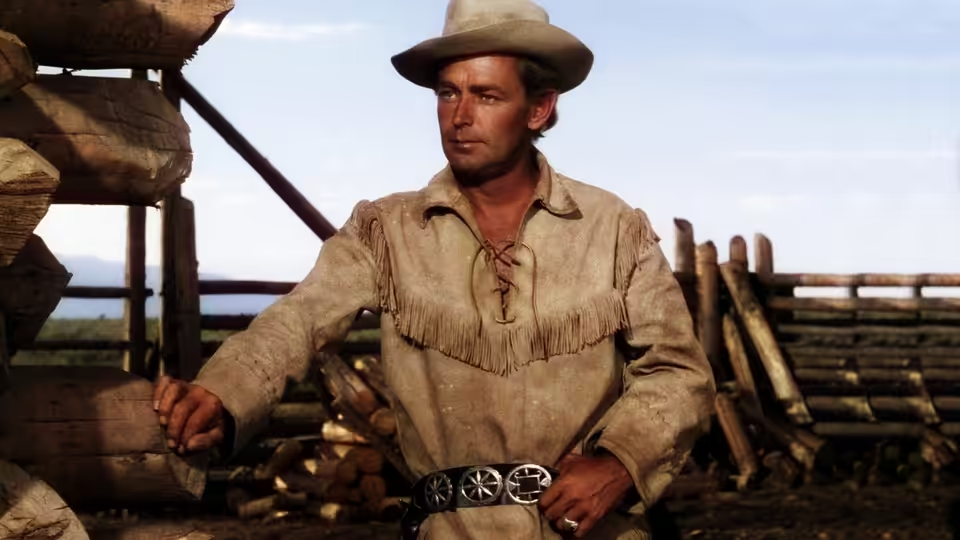
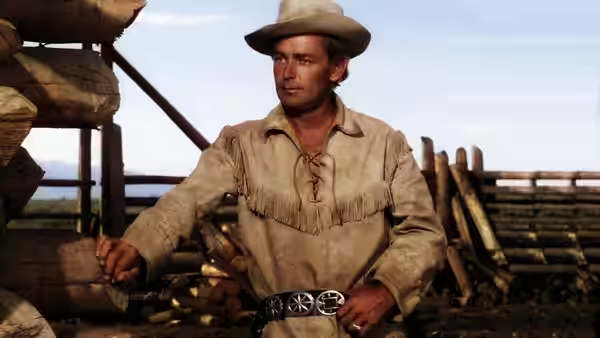
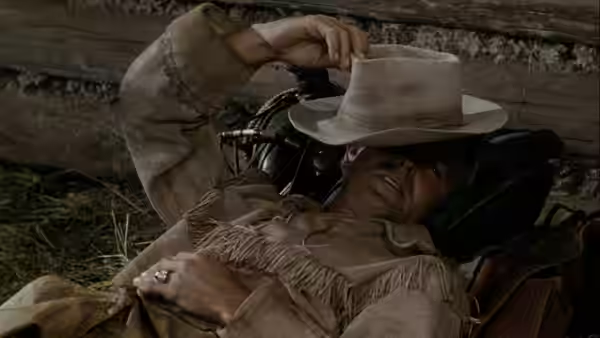
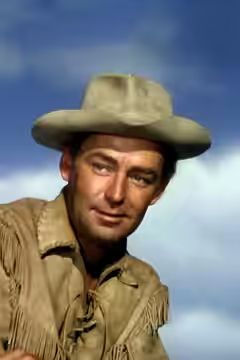
Alan Ladd plays Shane almost entirely still. Edith Head dresses him in pale fringed buckskin so that among Ryker’s men in dark wool he looks like he rode in from another film. Sometimes the stillness looks like a man holding something down; sometimes it looks like nothing at all. When Chris Calloway (Ben Johnson) throws a whisky over him at the bar and jeers him out of the door, we felt the humiliation land, then wondered whether Ladd had. That blankness pays off in the return visit, a brawl Stevens lets run long and ugly through the shelving until Heflin wades in, and we winced at every chair.
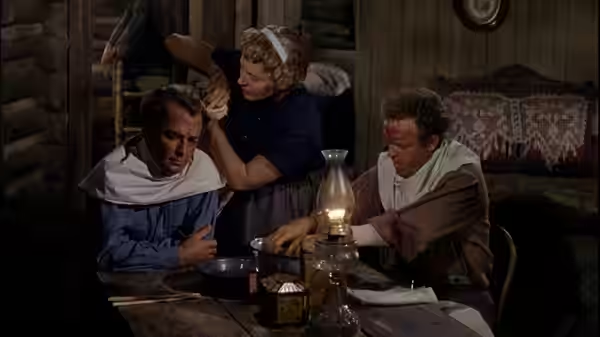
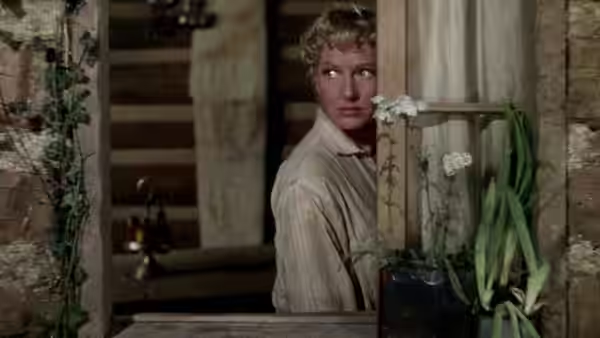
Heflin is the best thing in it. Joe is stubborn and decent and a little slow, and he knows what his wife is looking at when the hired man washes at the pump, and trusts her anyway. Arthur, in plain calico, never says a word about Shane she could not say in front of her husband, and yet the kitchen table is the film’s real plot, not the fences. When she asks Shane not to teach Joey about guns, he tells her a gun is only a tool, and Stevens lets her look unconvinced. She is right.
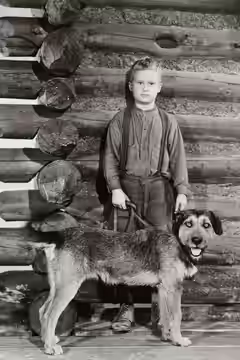
Brandon deWilde’s Joey is the film’s eyes and, for some, its problem. He trails Shane with a wooden rifle, peers under saloon doors and calls his name more often than any child should be allowed to. We do not mind; the worship is the subject, and deWilde plays it without cuteness. Guns are fired half a dozen times in two hours. Each shot is louder than anything else on the soundtrack and the person hit goes backwards as if kicked by a horse. We flinched, and Stevens meant us to. Ryker (Emile Meyer) sends for a gunman, Jack Wilson (Jack Palance), who arrives in black and says almost nothing, and the film gets more from Palance pulling on a glove than most Westerns get from a shootout.
It is slow and solemn, and the solemnity wears thin. Victor Young’s score swells every time Joey looks at Shane and again for the mountains, which do not need the help. Ryker gets one speech about fighting for this country before the farmers came with their fences, and it is a better argument than the film wants, because nobody answers it. Elisha Cook Jr., as the mouthy Southerner Torrey, and Edgar Buchanan, as Fred Lewis, who would rather sell up, are the only farmers drawn with care; the rest are hats.
The last ten minutes of Shane are among the most quoted in the genre, and we will say only that they are quieter than their reputation suggests. Sit through the stump. Everything the film has to say about these two men is in it, and it says it without a gun.