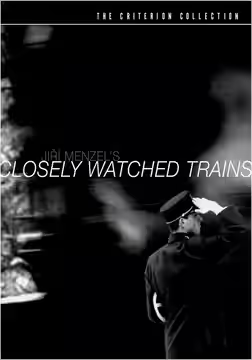
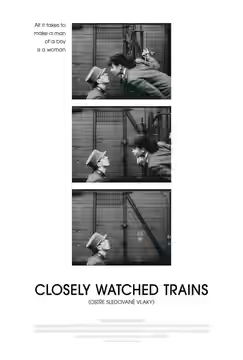
Jiří Menzel’s wartime railway comedy is funny, patient and more affecting than its modest manner suggests. Its sympathy for a sexually inexperienced trainee is persuasive, though the women deserve more of that attention.
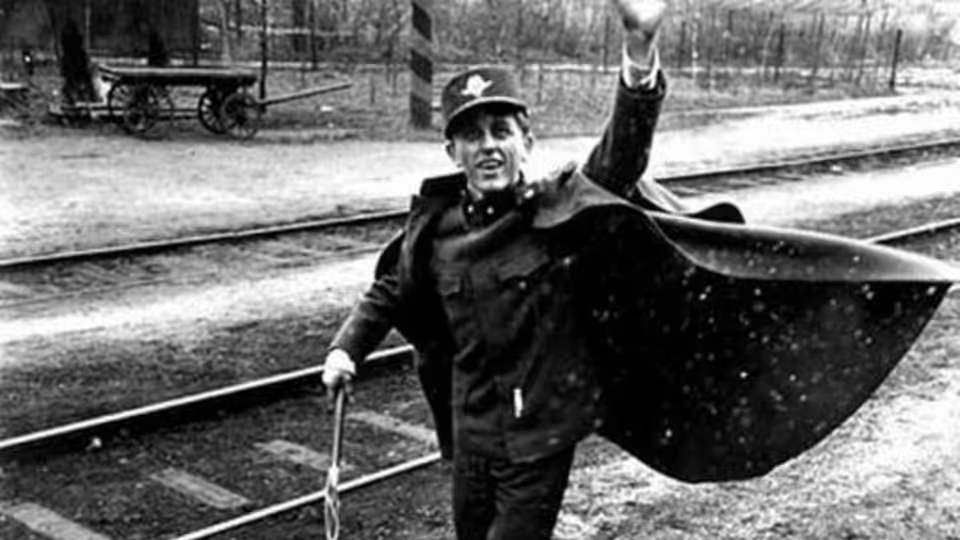
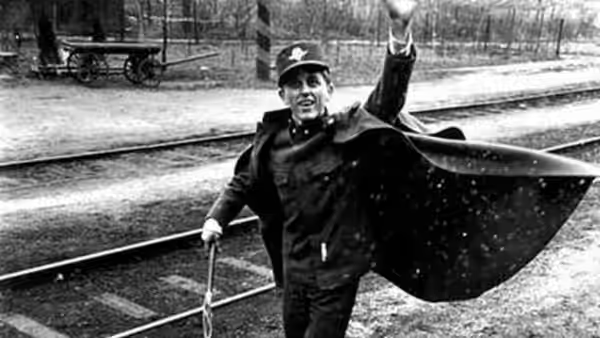
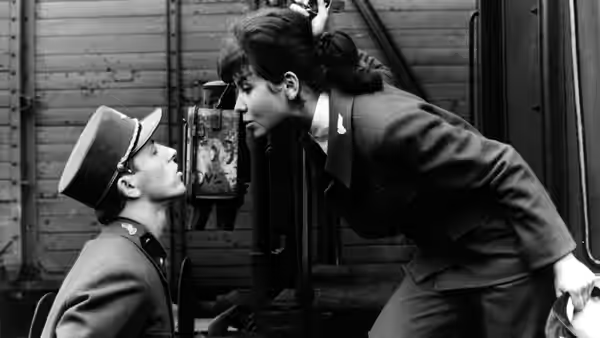
Closely Watched Trains takes a railway trainee’s sexual worries seriously enough to make a funny, affecting film about them. Jiří Menzel lets Milos be distracted by his own inexperience without treating him as a fool for failing to concentrate on the war. That patience is the film’s chief pleasure. We recommend it warmly, with a reservation about how little of its sympathy reaches the women.
Jiří Menzel and Bohumil Hrabal’s screenplay, drawn from the latter’s novel, resists the usual wartime demand that an ordinary person immediately become exemplary. Milos is allowed to be inexperienced, distracted and concerned with something that matters urgently to him. The comedy understands how large sex can seem before it has become part of ordinary life. That makes the political pressure more disturbing: we have first been encouraged to take this young man’s apparently small problems seriously.
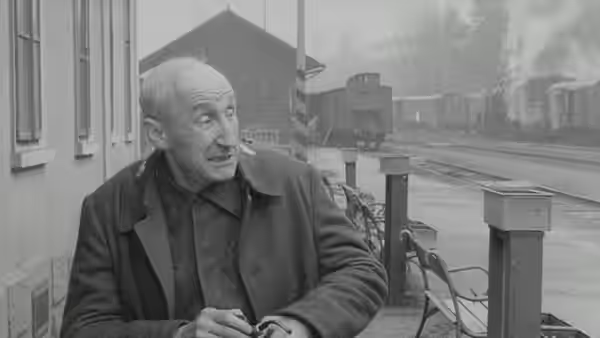
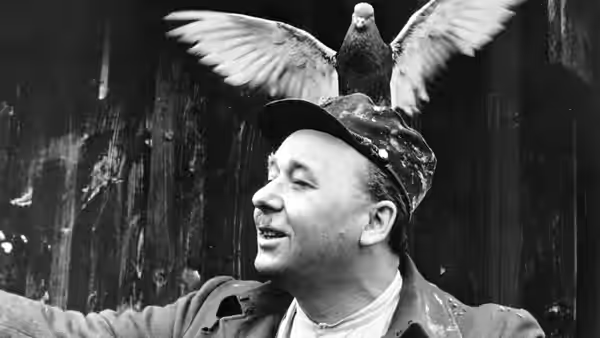
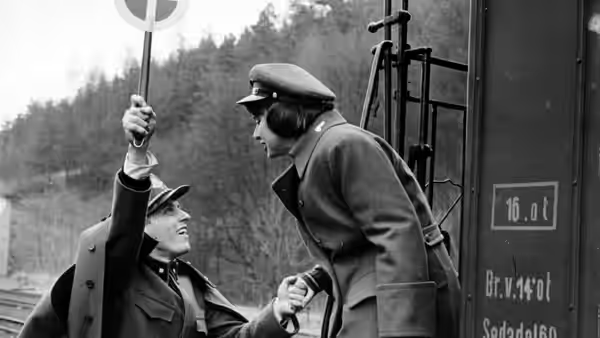
Václav Neckář gives Milos a vulnerability that keeps the sexual comedy from becoming a prolonged invitation to laugh at him. We felt protective of him, because his uncertainty about sex is allowed to trouble him even when it amuses us. Josef Somr as dispatcher Hubicka and Vladimír Valenta as Stationmaster Max give the railway hierarchy comic weight. The job titles give these men a standing that Milos has yet to acquire, and the comedy is alert to how much that can matter.
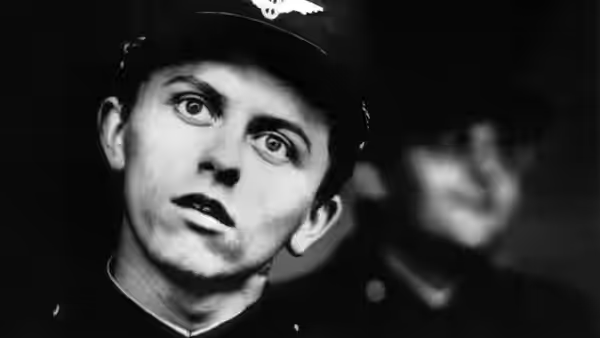
Jaromír Šofr’s cinematography makes the people worth studying without making their everyday concerns seem grand. The attention to faces suits a story in which embarrassment can matter more than an explanation. Oldřich Bosák’s production design gives the station the settled feel of a workplace whose habits predate its newest employee. The surroundings help make the trainee’s discomfort understandable: we can believe these people have been irritating one another for years, and that joining them requires more than learning the work.
Jiřina Lukešová’s editing lets awkwardness last long enough to become uncomfortable. A faster film might have hurried Milos towards a lesson or reduced his inexperience to a succession of comic mishaps; this one gives us time to become fond of him. Jiří Šust’s music fits that measured approach, supporting the comedy without making Milos’s anxiety seem trivial. Such restraint matters here, because the sexual material could easily have become cosy, and because the war has to remain more than an inconvenient background.
The reservation concerns the women, particularly the limited terms on which the sexual coming-of-age story asks us to consider them. Jitka Bendová’s Masa belongs to a film much more curious about what sex means for Milos than about what it means for her. That imbalance narrows the comedy, and affection for its central character does not make it disappear. Some of the humour assumes we will share a male view of sexual experience simply because the man having it is shy.
Still, Jiří Menzel gets the scale of private worry right. We were moved by the way Milos’s sexual concerns become vulnerable to political events, because we had come to care about those concerns ourselves. For a wartime comedy, that is a welcome willingness to let ordinary people worry about something other than history. Give it 93 minutes when you have the patience for shy people and the irritation they cause themselves.