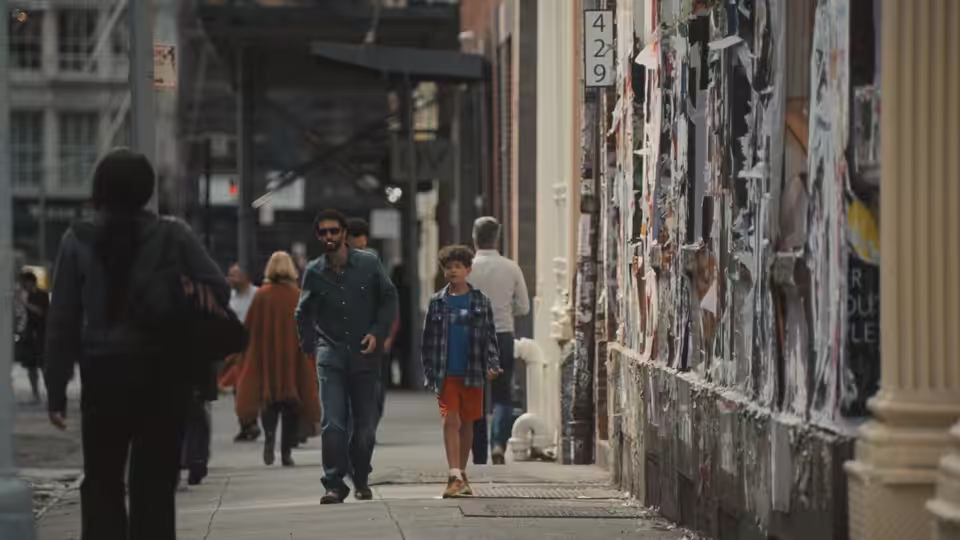
Jordan Firstman makes a funny, tender film about fatherhood without treating queer nightlife as something to apologise for. His rapport with Reggie Absolom carries it through a change of heart that comes a little too easily.
An irresponsible adult being improved by a child is a familiar proposition for a comedy, and Club Kid makes no great effort to disguise it. Jordan Firstman, who writes, directs and plays Peter, finds plenty worth keeping in the queer nightlife his character enjoys. This is a funny, generous film that we recommend, with one reservation: Peter becomes ready for responsibility rather faster than we believe. His relationship with Arlo is appealing enough to make us want to give him the benefit of the doubt.
Peter’s attachment to club life needs to be convincing, or there would be little to ask of him. Adam Newport-Berra’s cinematography and Stephen Phelps’s production design make the nightlife inviting enough that leaving any of it behind would count as a loss. The clubs have people in them whose company matters, and the film allows us to enjoy that company. Nothing would be easier than making the party look empty once a child enters the picture; the film is better for resisting that.
The writing is particularly good at keeping the comedy alive inside a story that could become dutiful. The dialogue has a pleasing sharpness, and the affection never requires everyone to become polite. As a performer, he is good company too, although there are moments when being entertaining seems to spare Peter questions the script ought to ask.
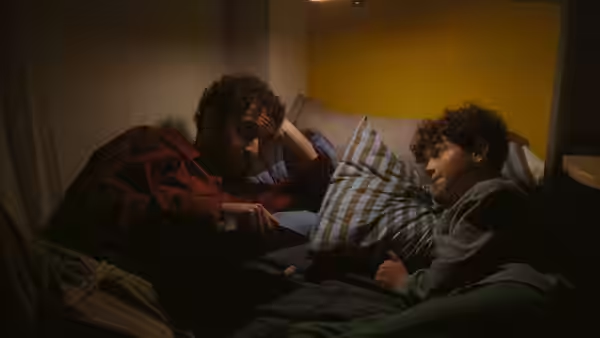
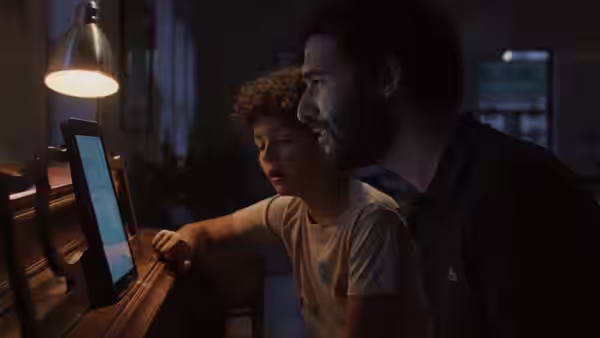
Reggie Absolom makes the central relationship work. He and Jordan Firstman have an ease together that gives their scenes interest beyond the question of whether Peter will become a satisfactory parent. We were more moved than we expected by the affection between Peter and Arlo, because their enjoyment of each other’s company makes the bond believable. There is humour in that connection, which helps keep Arlo from feeling like a lesson Peter has been assigned.
The reservation concerns how much work Peter actually has to do. His move towards caregiving comes quickly, and the film sometimes accepts his willingness as sufficient proof that he is changing. Arlo is also given less of a life of his own than this performance deserves, which makes the script’s attention to Peter more noticeable. Neither problem destroys the relationship, but a little more difficulty would have made Peter’s growing competence easier to believe.
Taylor Levy and Sofía Subercaseaux’s editing lets the comedy carry into the more tender passages without an awkward change of pace. Cristóbal Tapia de Veer supplies the music, though much of the film’s liveliness comes from its conversations. At 126 minutes, the film gives its ensemble room to be part of the pleasure, and their presence helps prevent Peter’s problems from becoming the only thing that matters. The jokes do not have to stop simply because fatherhood is being taken seriously. Watch it with someone who will appreciate a fatherhood film that still likes a night out.