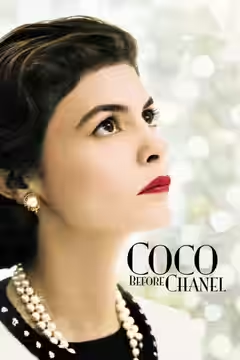
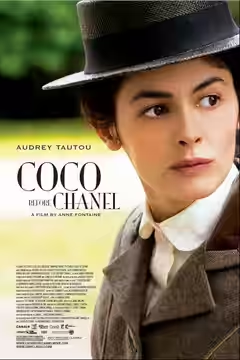
Anne Fontaine’s account of Chanel’s years before fame is handsome, well acted and slow, and it keeps the one thing we came for, the clothes, until its final minutes. Tautou and Poelvoorde make the waiting bearable.
Anne Fontaine’s film stops where most Chanel stories would begin. There is no Paris salon, no perfume, no little black dress, only a girl from an orphanage who ends up in a rich man’s house and will not leave. The question Fontaine and her co-writer Camille Fontaine are asking is a good one: how did a provincial seamstress with no money and no manners decide that everyone around her was dressed wrong? The film gets about halfway to an answer.
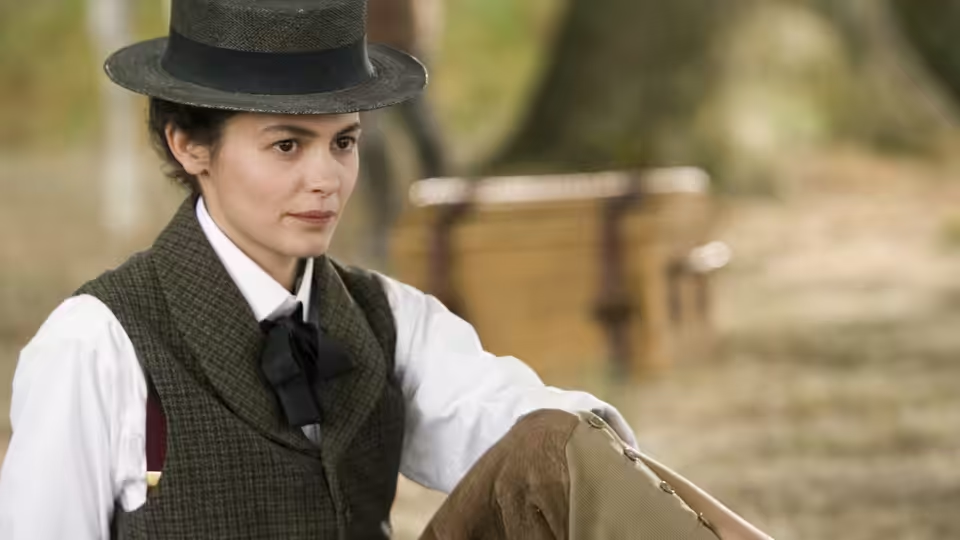
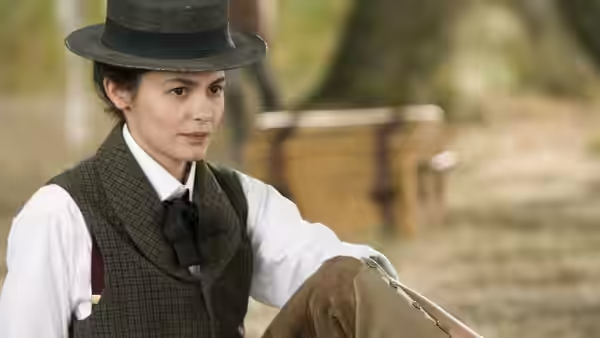
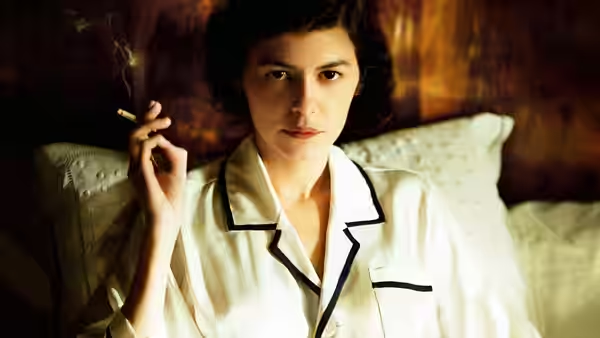
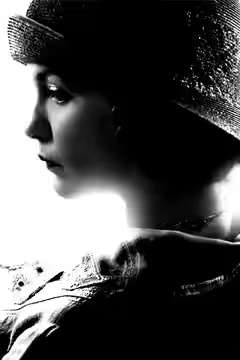
Tautou plays Gabrielle Chanel as a watcher. She stands at the edge of rooms, small and dark among tall women in feathers, and her face stays shut while her eyes work. It is the opposite of the performance that made her famous in Amélie (2001), and it suits her; she declines to charm, refuses to laugh at Balsan’s jokes, and when she does smile it looks like a decision. She cuts down his shirts to wear herself, rides astride when the other women ride side-saddle, and takes scissors to a hat as if the hat had offended her.
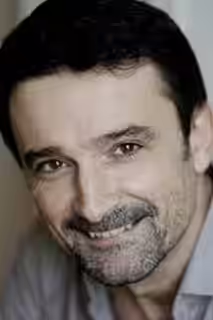
Benoît Poelvoorde is the surprise. His Étienne Balsan is a rich idler who keeps horses, mistresses and friends in roughly that order, and he takes Coco in as a plaything. Poelvoorde plays him for comedy first, a man exhausted by his own house parties, then lets something sadder in as Balsan realises he has been outmanoeuvred by a girl he thought he was keeping. Emmanuelle Devos, as the actress Émilienne d’Alençon, is the one person in the house who laughs with her whole body, and the scene in which she tries on one of Coco’s plain hats is the funniest in the film. Alessandro Nivola’s Boy Capel is handsome and reasonable, and once he arrives the film becomes a love triangle, which is the least interesting thing about Chanel. Marie Gillain’s Adrienne, the sister who takes the conventional route with an aristocrat, is set aside by the script almost as soon as it has introduced her.
Christophe Beaucarne shoots it in grey, overcast light, the estate in muted greens and the interiors lit from the windows, and he refuses the honeyed glow that period films usually reach for. Olivier Radot gives Balsan’s house large, under-furnished rooms with horses never far from the door. Catherine Leterrier’s costumes do more than the script does. Every other woman is corseted into pastel silk, lace and feathers; Coco is in black, white and a man’s cut, so that in any wide shot you find her in a second. Alexandre Desplat’s score, piano and strings, is kept low and does not push. Luc Barnier cuts in long, unhurried scenes, and the first hour moves at the pace of a country weekend.
Here is what we felt. We laughed out loud at a hat, more than once. Around the hour mark we noticed we had stopped watching and started waiting, and the film did not seem to mind. What finally got at us was Poelvoorde, in a scene near the end we will not describe, doing almost nothing with his face while his whole life rearranged itself behind it. It moved us more than the romance did.
The larger fault is simple. This is a film about a dressmaker that spends most of its 110 minutes not showing her make anything. The hats appear and are admired; the thinking that produced them happens off screen. Phantom Thread (2017) understood that the sewing could be the drama. Here it is the reward, held back for a closing sequence that is the best thing in the film. Fontaine also prefers her Chanel as a heroine of self-reliance and does not ask what else she was, which makes for a gentler film than its subject deserved.
Biopics usually rush. This one dawdles. It is for the interested: anyone who wants to watch a style being arrived at, in flashes, by a woman who refuses to explain herself, will find enough here. It runs 110 minutes and carries a 12A, and it feels longer, because for most of it Chanel is waiting for her life to begin and the film makes us wait too.