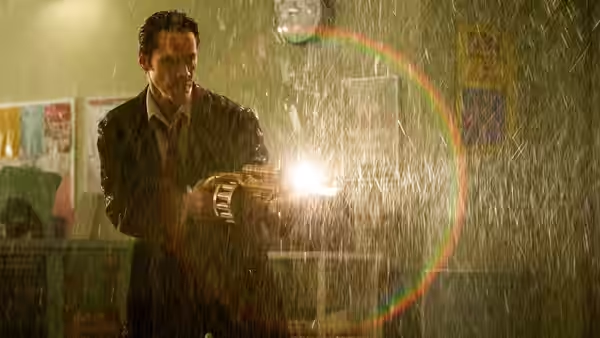
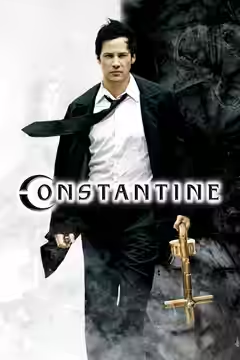
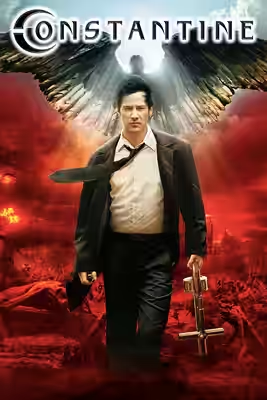
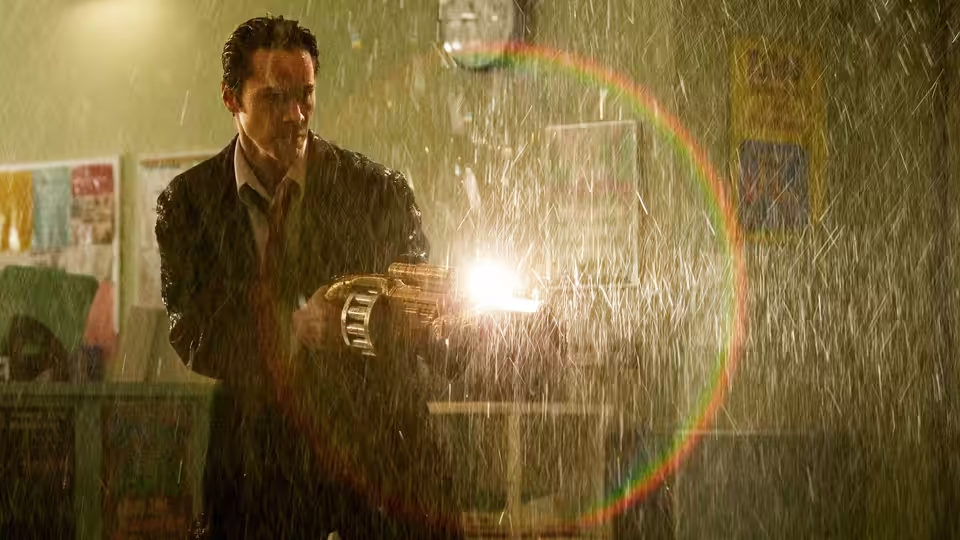
John Constantine (Keanu Reeves) fires a weapon through a rain-soaked room
Film review

Constantine

2005 · Directed by Francis Lawrence · 2h 01m

In a sentenceAn angel this unhelpful makes the prospect of Heaven considerably less attractive

John Constantine (Keanu Reeves) has a problem with both sides of the afterlife: Hell wants him, and Heaven will not take him. Earth still needs him. Angela Dodson and Isabel Dodson (Rachel Weisz), Chas Kramer (Shia LaBeouf), Father Hennessy (Pruitt Taylor Vince) and Midnite (Djimon Hounsou) also figure in his story. Gabriel (Tilda Swinton) brings an angel into a supernatural conflict involving a religious relic. The human characters find themselves in a story where Catholic doctrine meets fantasy, horror and action.

Plays from YouTube when you press play; nothing loads from them until then.

Fi1m review

Francis Lawrence’s Constantine is worth considering for its Gothic atmosphere and Tilda Swinton’s unsettling angel. The muddled supernatural explanations are a substantial obstacle, and Keanu Reeves gives his co-stars much of the emotional work.

Constantine has enough unpleasant atmosphere to interest us, though its supernatural rules require more patience than its script earns. Francis Lawrence directs the horror as if the possibility of salvation ought to make everyone more nervous, and that suits a story whose central figure is wanted by Hell and refused by Heaven. The trouble comes when the film starts explaining itself. At 121 minutes, it has plenty of time to establish what matters, yet the religious exposition keeps making a fairly direct predicament sound unnecessarily complicated.

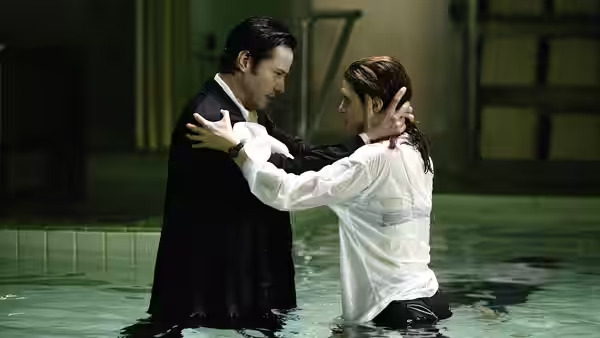
Keanu Reeves plays John Constantine with a reserve that we can enjoy until a scene needs something more than reserve. His stillness fits the gloomy surroundings; we do not need him to underline every strange thing that happens. But too often we have to supply the irritation, anxiety or urgency ourselves. The scenes with Rachel Weisz improve matters, because she gives their exchanges some human feeling and makes his restraint seem like a response to another person.

Tilda Swinton’s Gabriel is the supporting performance that makes the film’s religious unease convincing. We felt a chill at the angel’s moral ambiguity: nothing in this performance makes the presence of a heavenly being feel reassuring. She does not need the explanation of a relic or a further supernatural rule to hold our attention. Frank Cappello and Kevin Brodbin’s screenplay could have trusted that discomfort more often, instead of repeatedly telling us how its otherworldly business works.

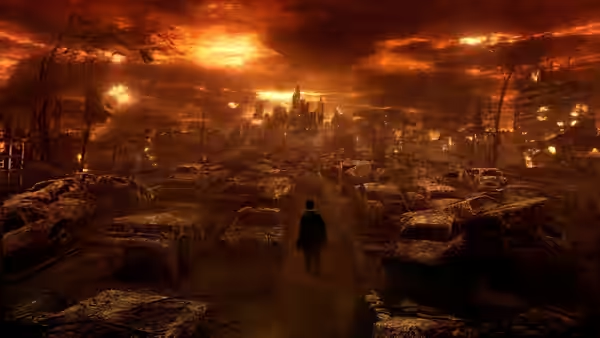
Philippe Rousselot’s cinematography is persuasive in its gloom, especially when the Hell imagery supplies a threat that the dialogue struggles to convey. Naomi Shohan’s production design gives the Gothic setting a convincing consistency, making its religious imagery feel at home within the same unpleasant surroundings. These details reward attention even when the explanations have begun to try our patience. The limitation is that so much oppressive darkness eventually becomes familiar, and the film has fewer fresh ways to disturb us than its atmosphere initially promises.

Wayne Wahrman’s editing has an awkward task when so much supernatural exposition must sit alongside the action. The explanations interrupt the unease, and the movement between them does little to clarify which details deserve our attention. The music by Brian Tyler and Klaus Badelt sustains the mood, though it cannot give those explanations much dramatic weight. We kept wanting the film to leave a little more unexplained, particularly when its cast could make uncertainty so compelling.

For supernatural horror, the difficulty is making us fear for people once the strange surroundings have become familiar. Here the supporting characters are not developed enough to make their presence consistently matter, however intriguing the religious framework might be. That weakness also leaves too much resting on the central performance. Rachel Weisz gives the film much-needed emotional weight, but she cannot make all of its elaborate mythology interesting.

For an evening of straightforward scares, we would look elsewhere. This is one for a patient appetite for religious horror, and for the peculiar unease of finding so little comfort in the prospect of Heaven. Anyone hoping the rules will become simpler with further explanation should make other plans.

Critical consensus AI synthesised

50
Positive
2
Mixed
6
Negative
4

The consensus on Constantine is mixed, with praise clustering around its Gothic atmosphere, inventive visual details and special effects. Even several less persuaded critics admire the imagery and the sense of supernatural unease. Performances draw more selective approval: Tilda Swinton’s Gabriel and Rachel Weisz receive praise, while Eye for Film also welcomes the chemistry between Weisz and Keanu Reeves. The recurring reservation is that the images offer more interest than the story or its religious ideas.

The reviews range from qualified enjoyment to outright rejection. Empire finds a wry pleasure despite weaknesses in the script and supporting characters; elsewhere, complaints centre on confusing exposition, thin substance and Reeves’s unconvincing performance. Time Out treats his wooden portrayal as a central problem, rather than a drawback the atmosphere can overcome. The New Yorker offers the sharpest dissent, regarding the use of Catholic doctrine and imagery as exploitative spectacle.

Empire
1 January 2000 · William Thomas
70*

The critic finds Constantine an enjoyable, wry pleasure despite flaws in its script and supporting characters. They praise its eerie, stylishly Gothic world and inventive details.

Read the full review →
Screen Daily
8 February 2005 · John Hazelton
64*

The accessible page identifies this as a review, but its text is behind a registration wall. The critic’s verdict and any specific praise or complaint are not visible.

Read the full review →
The New York Times
18 February 2005
64*

The page appears to be a review of the 2005 film, but its verdict cannot be determined from the accessible text. No specific praise or complaint is available to report.

Read the full review →
RogerEbert.com
17 February 2005 · ★★½/4 · Roger Ebert
62

Ebert finds the film visually stylish but lacking in substance. He singles out its striking visual style, while faulting the film for having little point.

Read the full review →
Radio Times
★★★ · Leslie Felperin
60

Felperin finds the adaptation diluted but visually arresting. The striking visuals stand out, while the supernatural exposition and relic subplot are criticized as silly.

Read the full review →
Slant Magazine
17 February 2005 · ★★/4 · Nick Schager
50

Schager finds the film’s religious ideas and story unoriginal, with Keanu Reeves’s performance too vacant to make the protagonist convincing. He praises Francis Lawrence’s skill at creating an atmosphere of otherworldly unease.

Read the full review →

Straight answers AI written, from our review

Is Constantine worth watching?
Constantine is worth considering for patient fans of Gothic religious horror; we score it 62 out of 100. Tilda Swinton’s unsettling angel and the oppressive atmosphere hold our attention, but muddled supernatural explanations and Keanu Reeves’s limited emotional range make it a poor choice for straightforward scares.
How long is Constantine, and what is it rated?
Constantine runs 2h 01m. It is a fantasy and action film.
Where can I watch Constantine in Estonia?
Constantine is streaming on HBO Max in Estonia. Availability is checked daily; the links above go straight to each service.
How violent or frightening is Constantine, and is it suitable for children?
Constantine has a UK 15 certificate and is not suitable for children, with Hell imagery and an oppressive religious atmosphere providing much of its menace. We find its morally ambiguous angel particularly unsettling; the review supports expecting supernatural unease rather than straightforward scares, but does not establish how graphic the violence is.
How does Constantine compare to Hellboy?
Constantine is the gloomier choice beside Hellboy, which we recommend more readily for its engaging supernatural outsider and considerably greater warmth and humour. Both involve demonic trouble, but Constantine gets bogged down in religious explanations; its particular appeal is the discomfort of a heavenly presence that offers little reassurance.
What should I watch after Constantine?
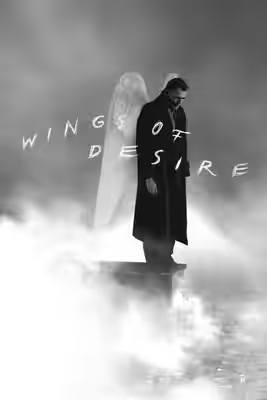
After Constantine, try Hellboy (2004, Fi1m 71): Another supernatural outsider handles demonic trouble, with considerably more warmth and humour. Then Wings of Desire (1987, Fi1m 88): Try a gentler encounter with angels, built around loneliness and human connection.

Cast

If you liked this, try…

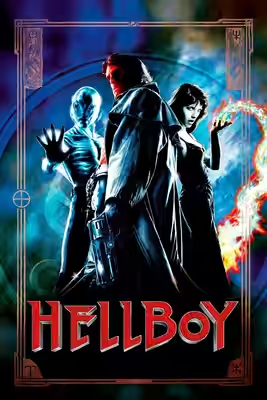
  1. Hellboy (2004, Fi1m 71)Another supernatural outsider handles demonic trouble, with considerably more warmth and humour.

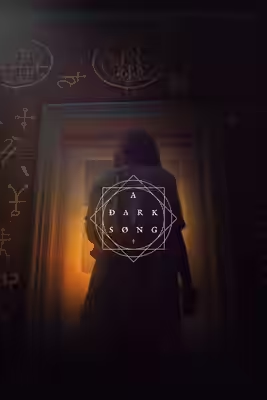
  2. A Dark Song (2016) · not reviewed yetRitual, grief and spiritual danger receive the patient attention missing here.

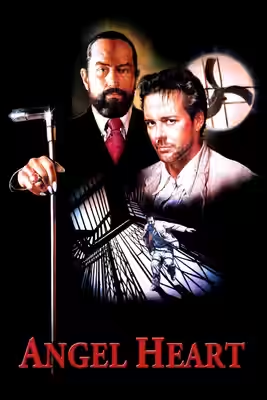
  3. Angel Heart (1987) · not reviewed yetReligious dread and an investigation become inseparable in a more disturbing thriller.

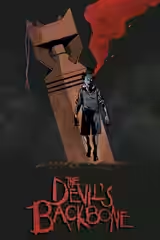
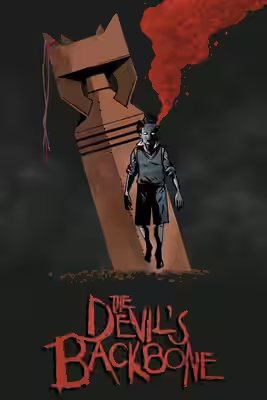
  4. The Devil's Backbone (2001) · not reviewed yetFor haunted spaces, patient dread and greater tenderness towards people living with ghosts.

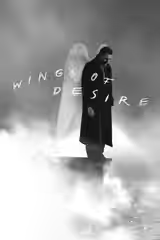
  5. Wings of Desire (1987, Fi1m 88)Try a gentler encounter with angels, built around loneliness and human connection.

Free account

Know what to watch tonight

Two lists that know where things are streaming, collections you can share, your own score beside ours, and Discover that remembers what you have seen.

  • Want to see, sorted by what is streaming now
  • Seen, with your score out of ten
  • No adverts, ever