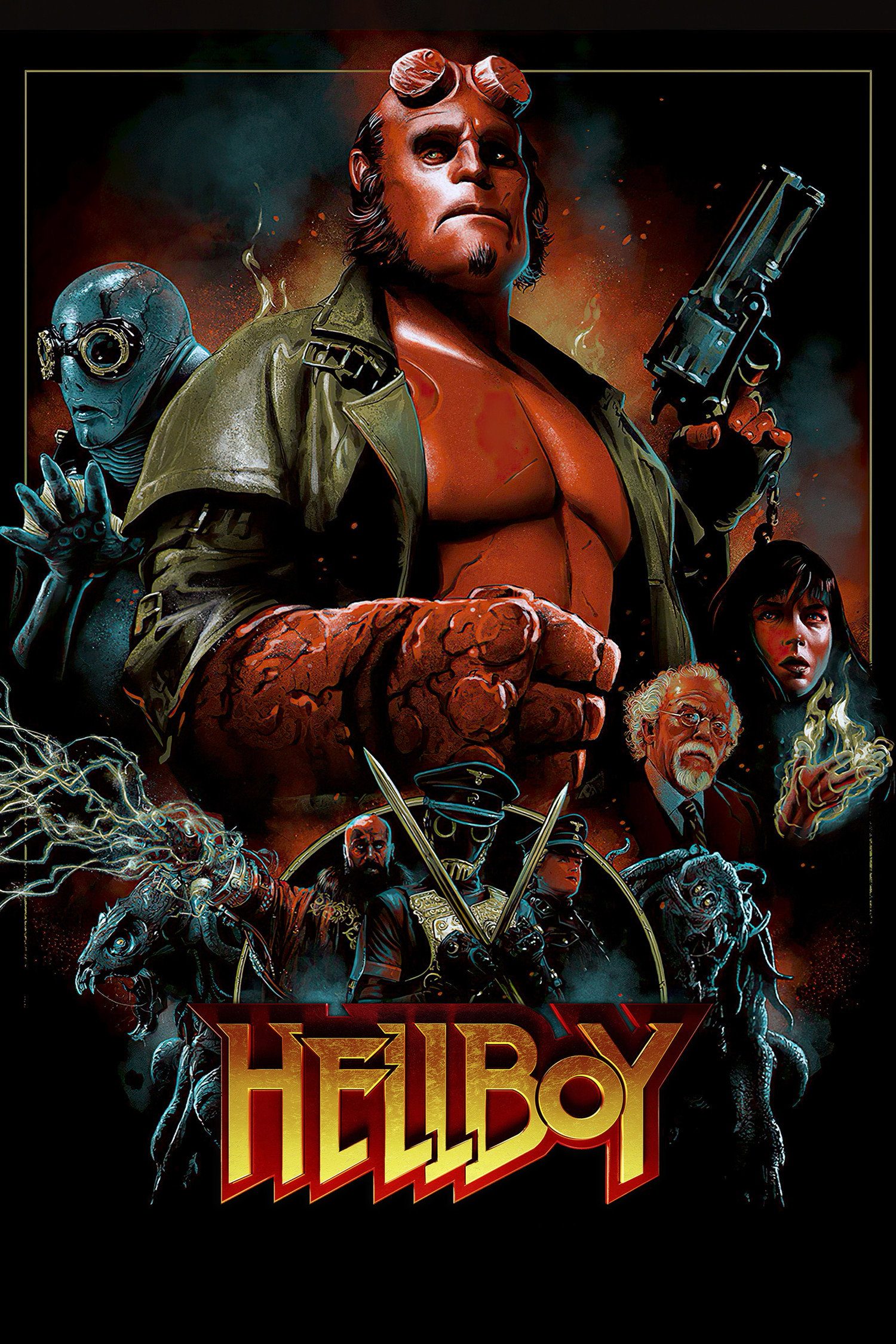
Guillermo del Toro’s comic-book film has a hero worth the name in Ron Perlman’s sulking, cigar-chewing demon, and monsters built with obvious love. The plot about waking an old god is the least interesting thing in it, and the film seems to know.
Guillermo del Toro adapts Mike Mignola’s comic about a demon raised by a kindly Englishman to fight for the side he was not born on. The prologue puts Nazis, Rasputin and a portal on a Scottish island in 1944; the rest puts the grown demon in Newark sixty years later, punching things for a bureau nobody admits exists. It is good-natured, handsome and 122 minutes long. The plot is the weakest thing in it. Perlman carries the rest.
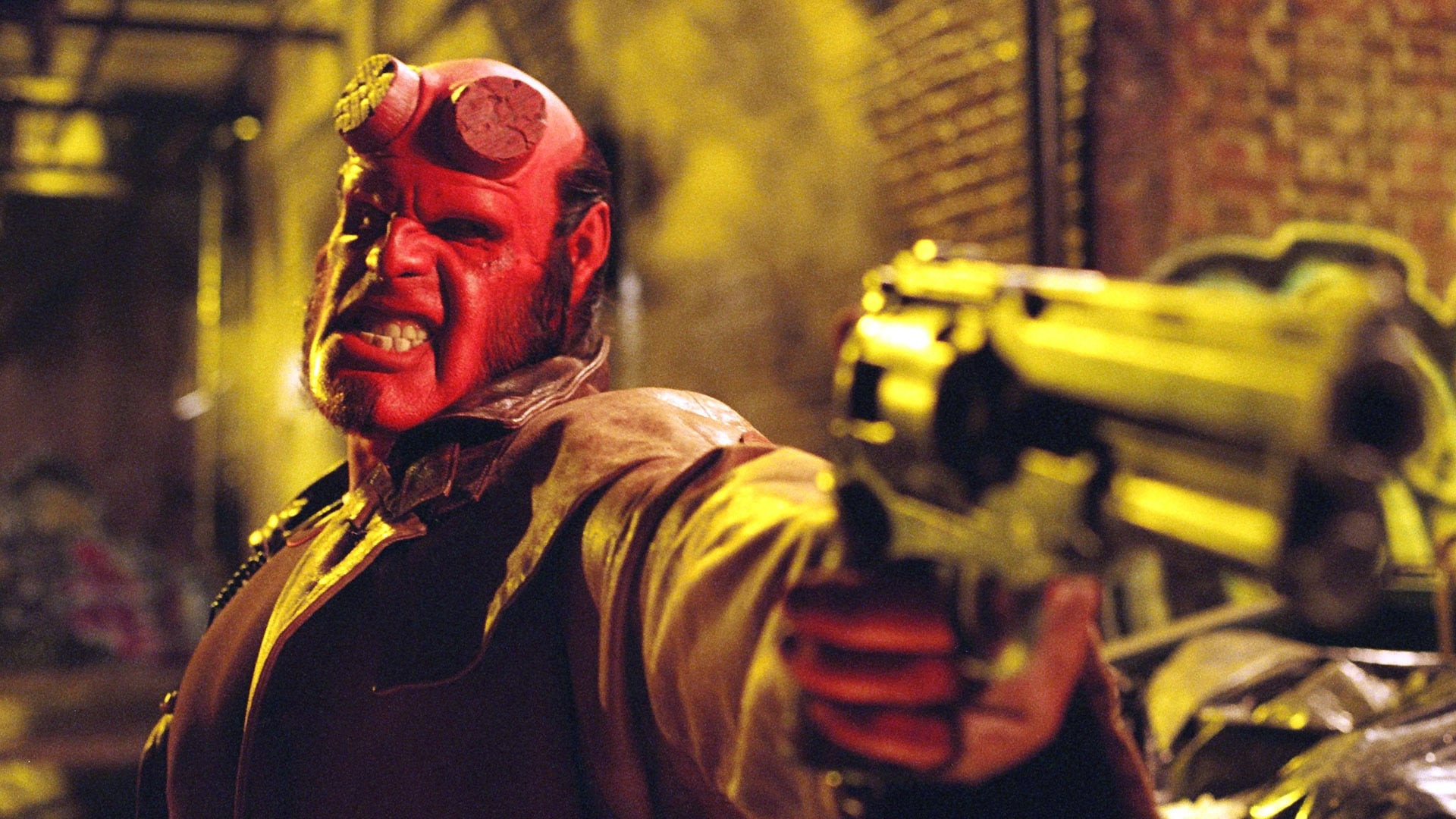
Under a full-body prosthetic, horns ground down to stumps, Ron Perlman gives Hellboy the walk of a man who has spent his life ducking through doors. He eats, he smokes, he sulks about a girl, and he hits monsters with a hand the size of a paving slab. Perlman plays the ordinary things straight and lets the red skin be the joke, and when Liz will not come home his hurt is real and a little ridiculous.
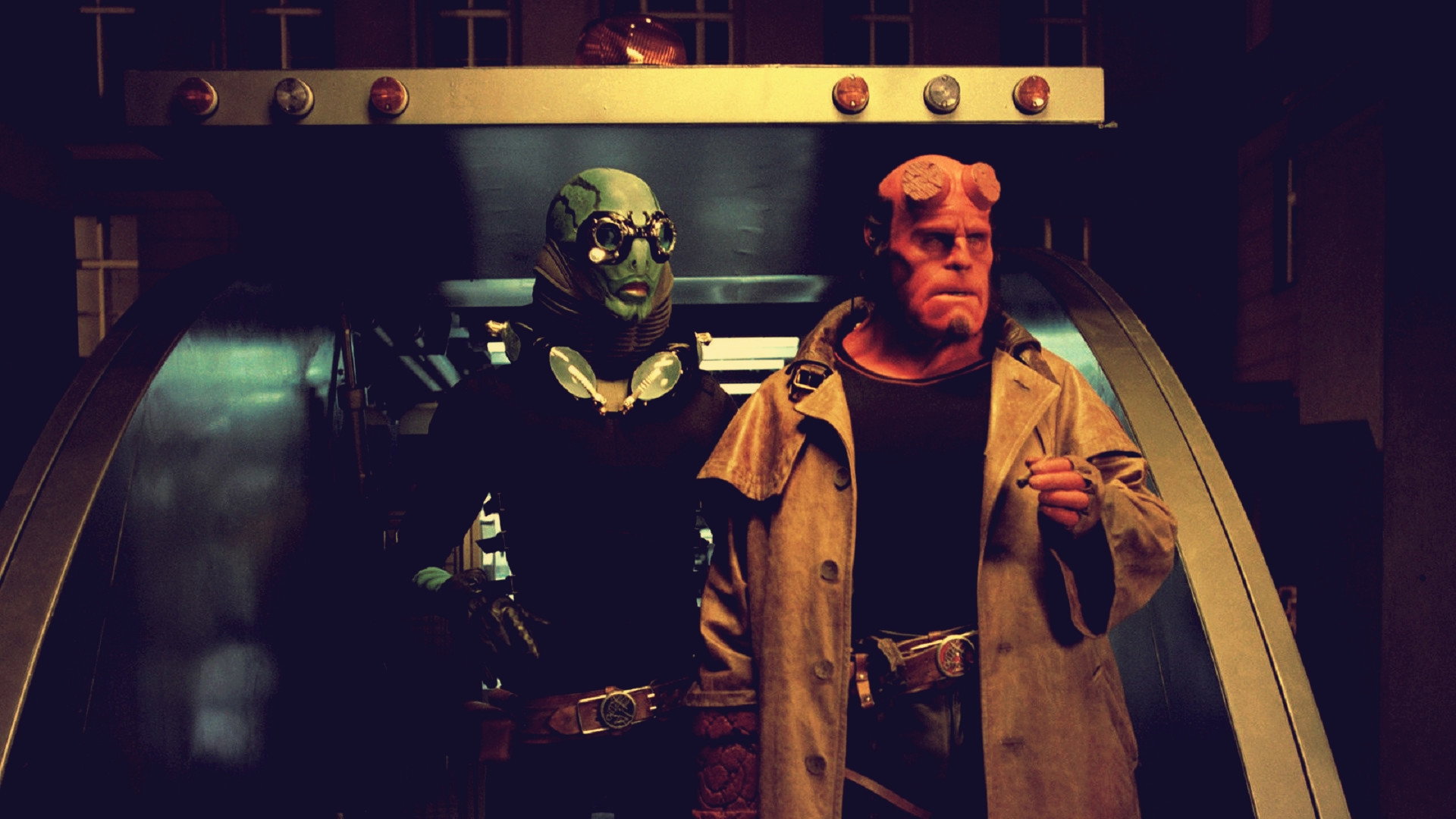
The Bureau, designed by Stephen Scott and Gene Warren III, is riveted steel doors and library shelves. Guillermo Navarro shoots it in blues and steel greys, so that Hellboy is the warmest thing in every frame, and lights the tunnels under the city with sodium orange and torch beams. Wendy Partridge puts Hellboy in a duster coat and Karl Ruprecht Kroenen (Ladislav Beran), the Nazi assassin from the prologue, in black leather and a gas mask. Kroenen frightened us. He does not speak, he moves like a wound-up toy, and blades come out of his sleeves; del Toro shoots him with more care than he gives the nominal villain.
That villain is where the film goes soft. Karel Roden plays Rasputin as a still man who wants to wake something ancient and tentacled, and the film tells us so several times without making us feel what difference it would make. His creature, Sammael (Brian Steele), is a fine design with a tongue like a fire hose, but the fights with it are the same fight staged in a museum, then a subway, and Peter Amundson lets each one run past the point where we knew how it would end. In wide shot Sammael has the rubbery weightlessness of 2004 computer animation, and the film keeps cutting to the wide shot.
Rupert Evans plays the new agent, John Myers, as decent and puzzled, and the film uses him as our way in when it already has a better one. The romantic triangle between him, Liz and Hellboy is the one thing we did not believe for a second.
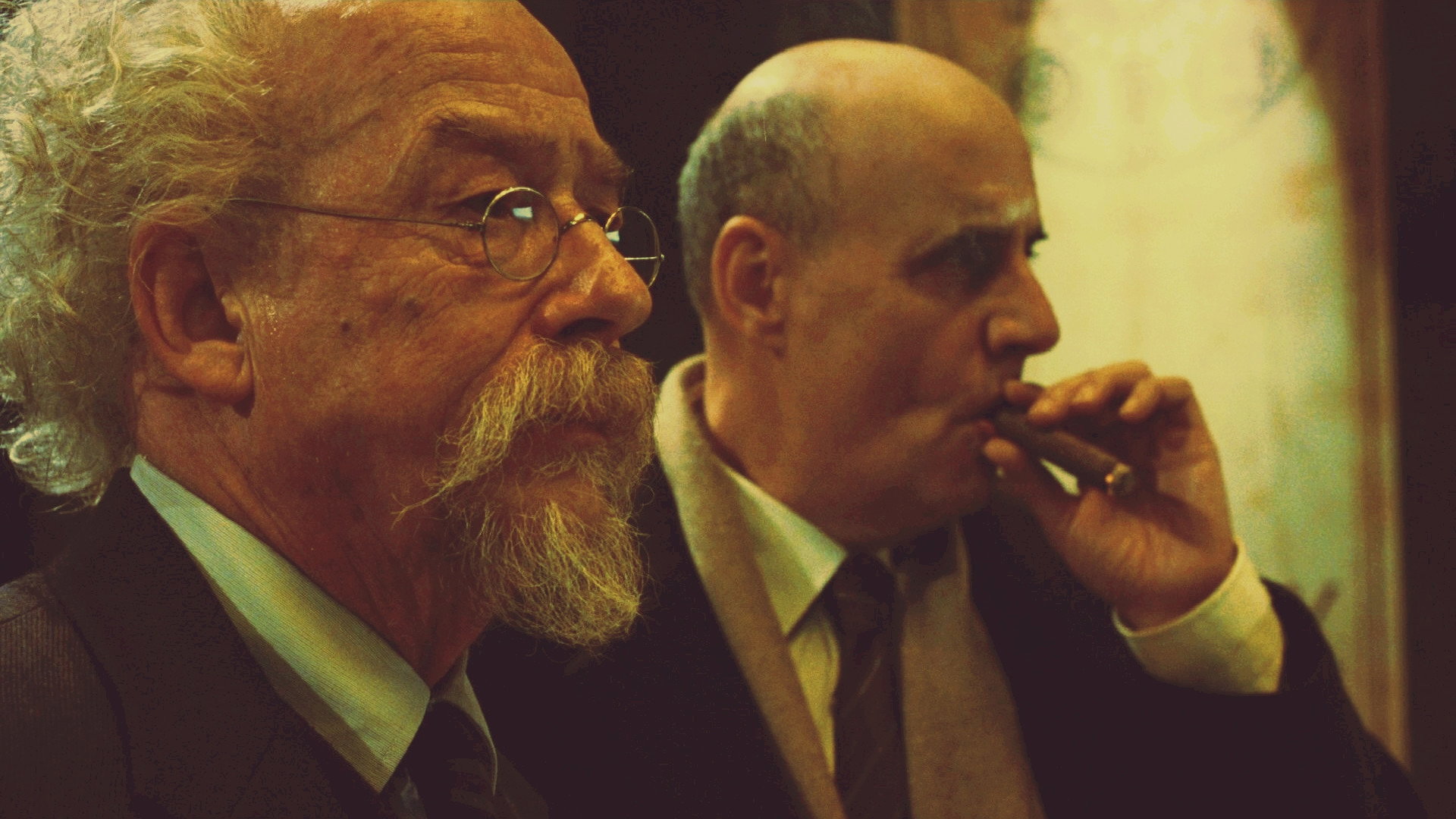
John Hurt, as the professor who raised him, does the film’s quiet work, and his scenes with Perlman are played by both men as though the horns were not there. Selma Blair gives Liz a flat, medicated sadness that is right for the character and a little dull to sit with. Doug Jones’s Abe, amphibious and polite, is lovely movement work. Jeffrey Tambor’s Manning, the FBI man, gets most of the jokes. The moment that got us was smaller than any fight: Hellboy on a rooftop with a small boy, a plate of biscuits and a glass of milk, spying on the woman he loves. It is sweet and slightly pathetic, and we were fonder of the film for it than for anything it blew up.
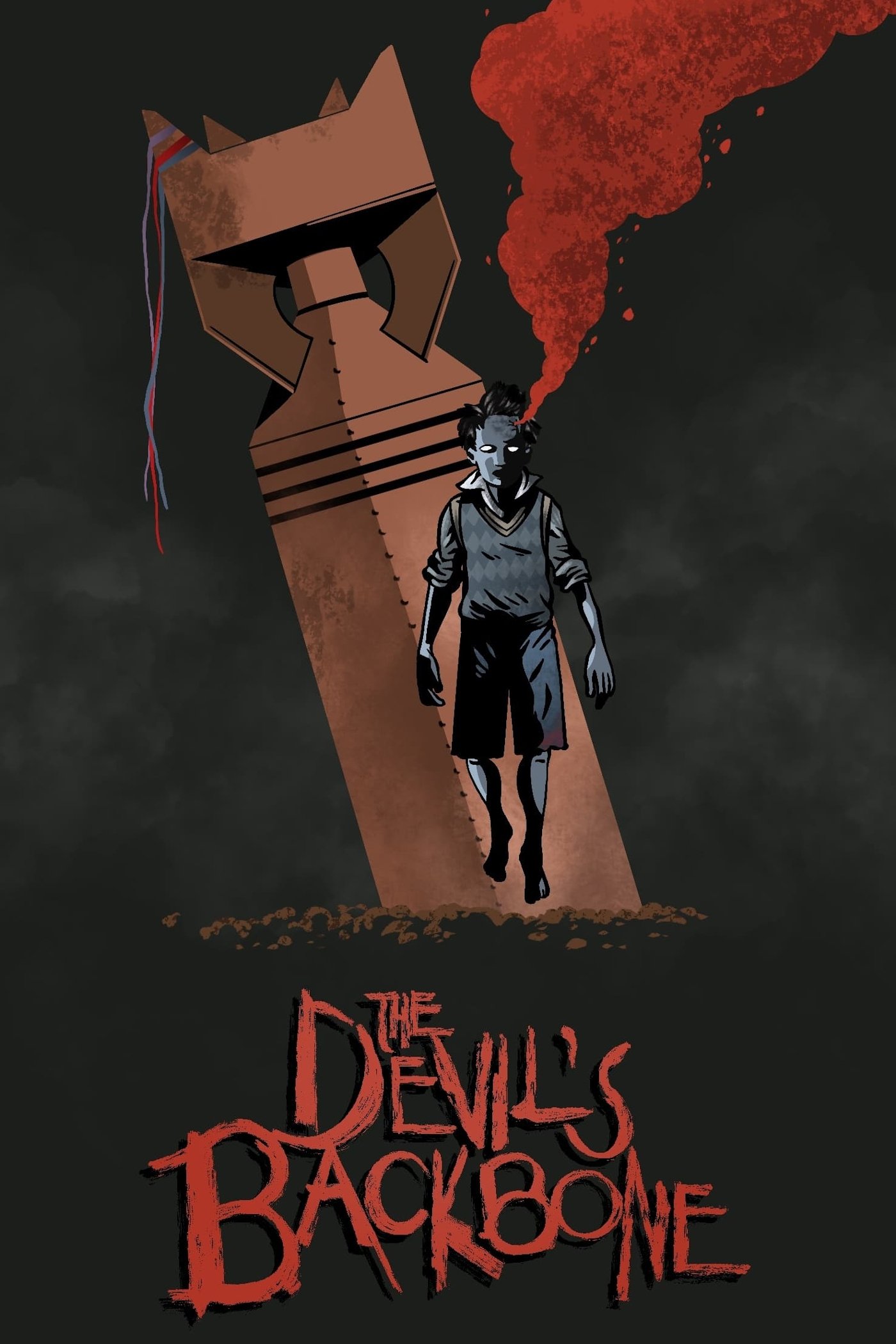
Marco Beltrami’s score is brass and choir, loud where the fights are loud and gentler under the rooftop. Cronos (1993) and The Devil’s Backbone (2001) had one idea each and followed it; Blade II (2002) was a hired job done with relish. Hellboy has the monsters of the first two and the plotting of the third, and Pan’s Labyrinth (2006) would show what happens when he gives the story as much love as the creatures.
See it for Perlman, for Kroenen and for the rooftop, and forgive it the squid. It carries a 12A, and a child of ten who likes monsters will get on with it fine. So did we, mostly, and we were sorrier than we expected whenever the big red idiot got hurt.