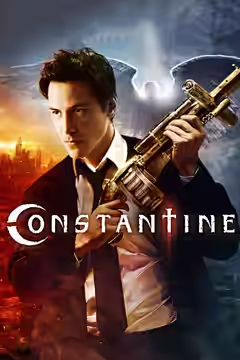
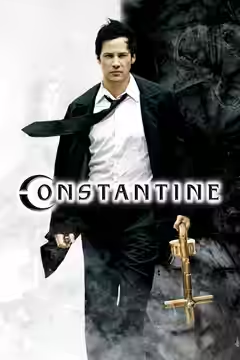
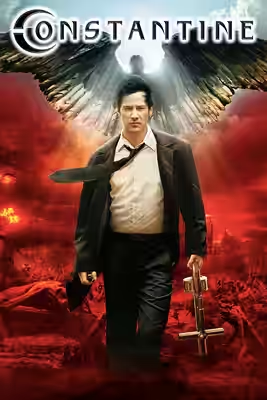
Francis Lawrence’s Constantine is worth considering for its Gothic atmosphere and Tilda Swinton’s unsettling angel. The muddled supernatural explanations are a substantial obstacle, and Keanu Reeves gives his co-stars much of the emotional work.
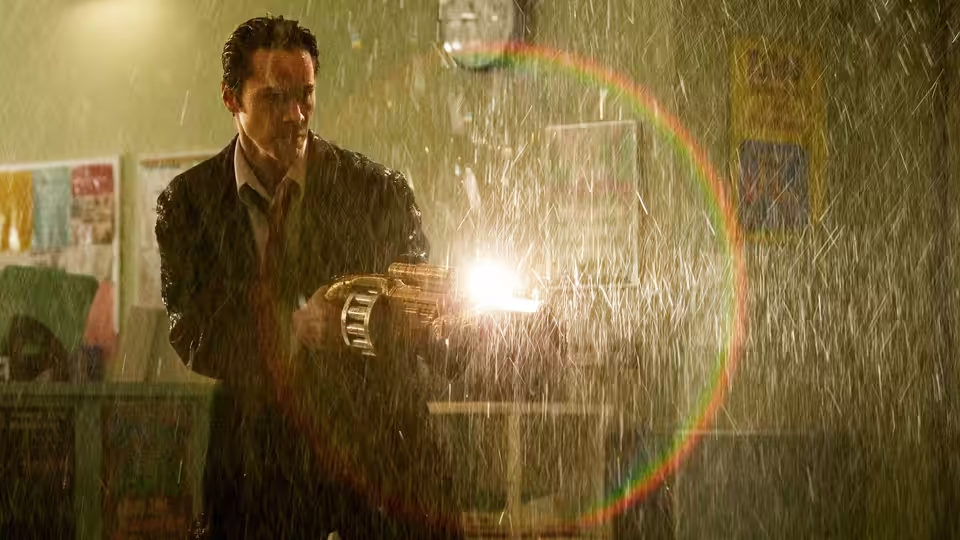
Constantine has enough unpleasant atmosphere to interest us, though its supernatural rules require more patience than its script earns. Francis Lawrence directs the horror as if the possibility of salvation ought to make everyone more nervous, and that suits a story whose central figure is wanted by Hell and refused by Heaven. The trouble comes when the film starts explaining itself. At 121 minutes, it has plenty of time to establish what matters, yet the religious exposition keeps making a fairly direct predicament sound unnecessarily complicated.
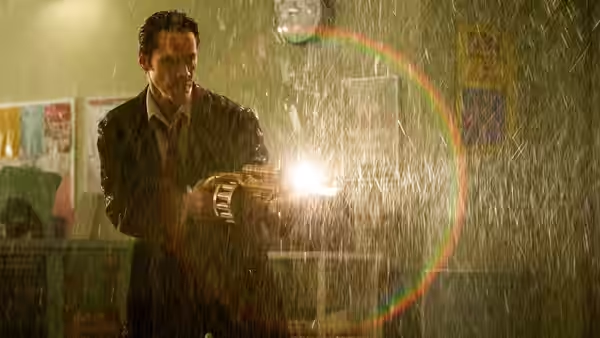
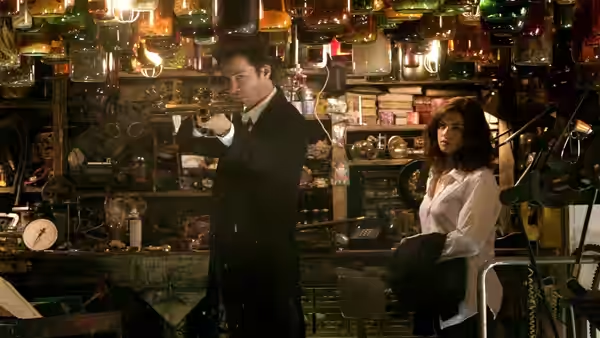
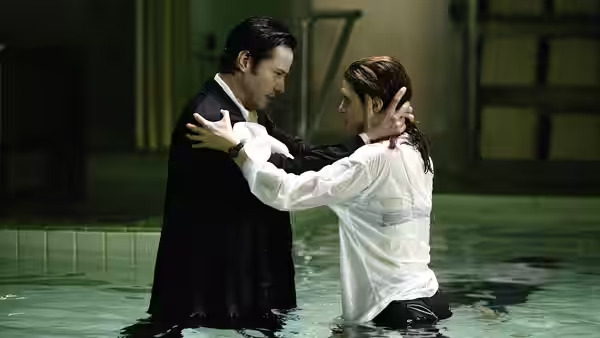
Keanu Reeves plays John Constantine with a reserve that we can enjoy until a scene needs something more than reserve. His stillness fits the gloomy surroundings; we do not need him to underline every strange thing that happens. But too often we have to supply the irritation, anxiety or urgency ourselves. The scenes with Rachel Weisz improve matters, because she gives their exchanges some human feeling and makes his restraint seem like a response to another person.
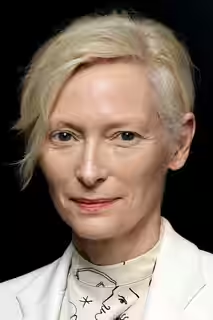
Tilda Swinton’s Gabriel is the supporting performance that makes the film’s religious unease convincing. We felt a chill at the angel’s moral ambiguity: nothing in this performance makes the presence of a heavenly being feel reassuring. She does not need the explanation of a relic or a further supernatural rule to hold our attention. Frank Cappello and Kevin Brodbin’s screenplay could have trusted that discomfort more often, instead of repeatedly telling us how its otherworldly business works.
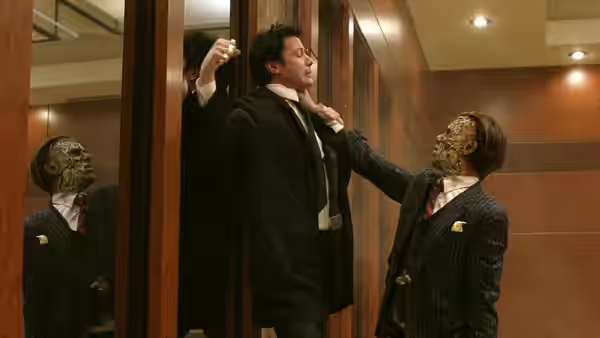
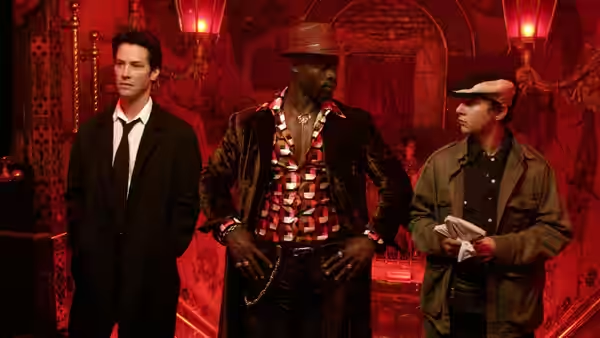
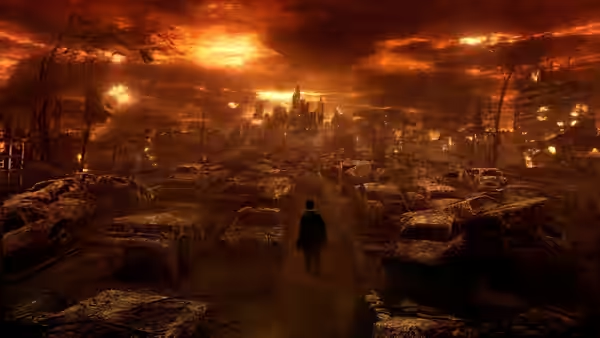
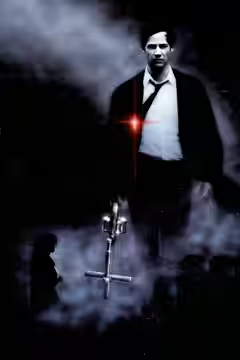
Philippe Rousselot’s cinematography is persuasive in its gloom, especially when the Hell imagery supplies a threat that the dialogue struggles to convey. Naomi Shohan’s production design gives the Gothic setting a convincing consistency, making its religious imagery feel at home within the same unpleasant surroundings. These details reward attention even when the explanations have begun to try our patience. The limitation is that so much oppressive darkness eventually becomes familiar, and the film has fewer fresh ways to disturb us than its atmosphere initially promises.
Wayne Wahrman’s editing has an awkward task when so much supernatural exposition must sit alongside the action. The explanations interrupt the unease, and the movement between them does little to clarify which details deserve our attention. The music by Brian Tyler and Klaus Badelt sustains the mood, though it cannot give those explanations much dramatic weight. We kept wanting the film to leave a little more unexplained, particularly when its cast could make uncertainty so compelling.
For supernatural horror, the difficulty is making us fear for people once the strange surroundings have become familiar. Here the supporting characters are not developed enough to make their presence consistently matter, however intriguing the religious framework might be. That weakness also leaves too much resting on the central performance. Rachel Weisz gives the film much-needed emotional weight, but she cannot make all of its elaborate mythology interesting.
For an evening of straightforward scares, we would look elsewhere. This is one for a patient appetite for religious horror, and for the peculiar unease of finding so little comfort in the prospect of Heaven. Anyone hoping the rules will become simpler with further explanation should make other plans.