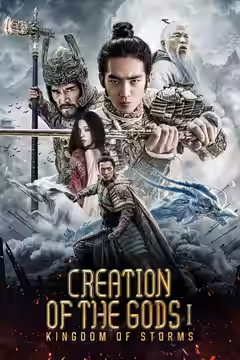
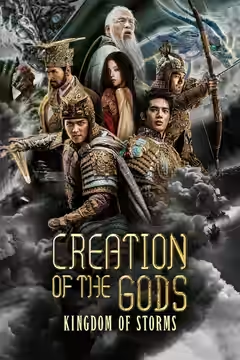
Wu Ershan’s fantasy finds its appeal in eccentric touches, especially Wu Yafan’s acrobatic Nezha. Uneven effects and an overbearing score make its 148 minutes a qualified recommendation for fantasy enthusiasts.
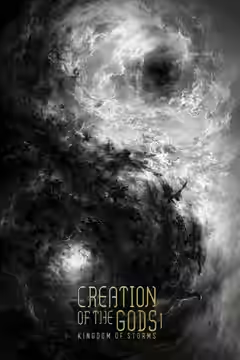
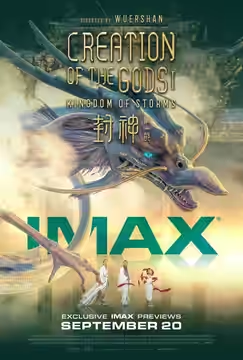
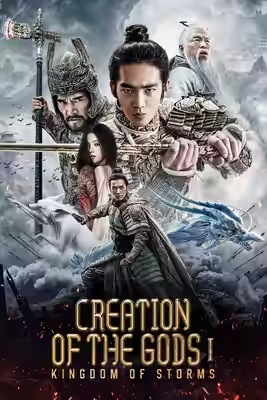
Wu Ershan’s Creation of the Gods I: Kingdom of Storms is an uneven fantasy with enough oddness to reward an enthusiast’s patience. Its most appealing figure is an acrobatic immortal child; its most persistent problems are variable digital effects and music that keeps insisting on the importance of the occasion. We recommend it to those already fond of the genre, with reservations about both. At 148 minutes, it asks for rather more tolerance than its distinctive pleasures always earn.
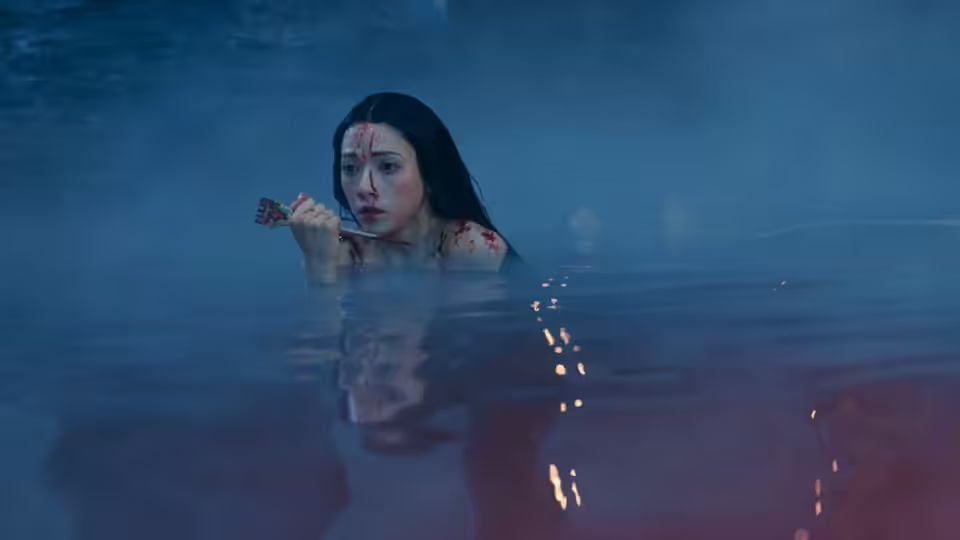
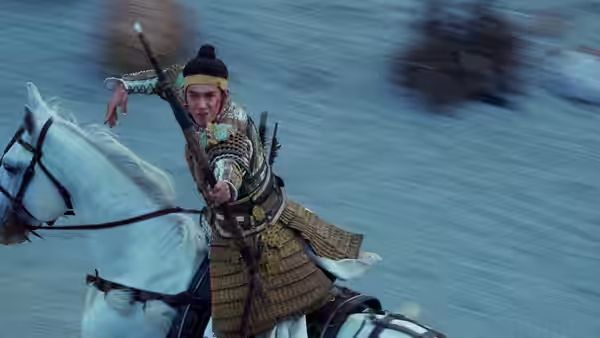
Wu Yafan’s Nezha gives the film a welcome sense of play. An immortal child with acrobatic powers could easily amount to another demonstration of what a computer can do, but the character’s eccentricity makes the movement entertaining in itself. We were delighted by his acrobatics, because they gave us a particular figure to enjoy rather than merely another supernatural ability to register. For a fantasy, that is a more useful achievement than simply making everything bigger.
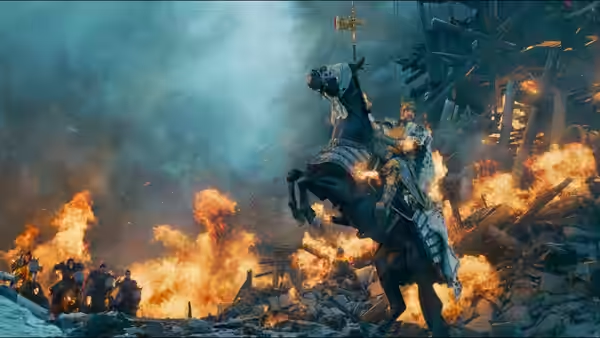
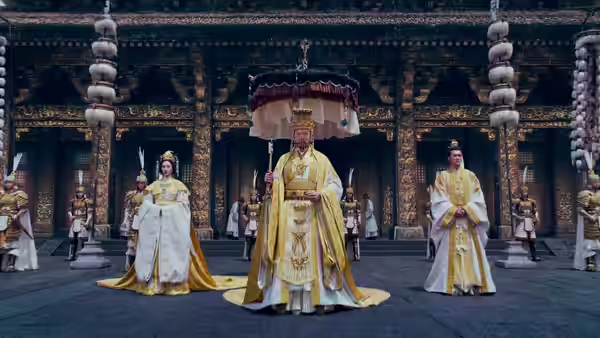
The visual effects are less reliable, and their unevenness keeps drawing attention to how the impossible has been made. Wang Yu is the cinematographer, while Huang Baorong and Timothy Yip Gam-Tim share the production design credit; the digital finish makes their contributions harder to judge separately. Fantasy needs a consistent look if we are to accept what it shows us without repeatedly inspecting how it has been assembled. Here, too much attention goes on deciding whether an effect works.
The difference matters in a genre that needs us to accept unfamiliar beings without spending the whole evening assessing their plausibility. We do not need an immortal child to look as though we might meet him at the bus stop; we need his behaviour to be interesting once we have accepted that he exists. Nezha clears that modest but important hurdle, and gives the film a reason to persist with its stranger impulses. The weaker effects are distracting, but they are not sufficient reason to dismiss the enterprise. A more polished fantasy could easily be duller than this one, although that does not make the rougher edges any less noticeable.
The music is a more wearing difficulty. Gordy Haab and Monkodran supply a score whose heavy emphasis too often crowds out the pleasure of discovering something peculiar for ourselves. We found its insistence tiring: the eccentric supernatural characters already provide a reason to pay attention, without the music pressing so hard. A less forceful accompaniment would have allowed the fantasy more space, and would have made its bursts of invention easier to enjoy without quite so much encouragement.
Huang Shuo’s editing works within that constant pressure to impress, and the 148-minute running time leaves room for it to become wearying. We would not assume a shorter cut would cure the problem. A long fantasy can be engrossing when we are allowed to become curious about its people and creatures, and Nezha shows that possibility here. The film’s persistent emphasis makes enjoyment feel more effortful than an adventure ought to be, even when there is something distinctive to enjoy.
This is the sort of fantasy we can like without finding it an easy recommendation. Its oddness is a reason to spend time with it, and the immortal child’s acrobatics supply a pleasure the uneven effects do not entirely spoil. But anyone hoping to be persuaded into the genre is being asked to overlook quite a lot. Choose it for the eccentric supernatural company, provided patience with noisy, imperfect spectacle is already part of the evening.