Emma Stone and Emma Thompson make this fashion feud worth watching for the interested. The clothes are inventive, but a crowded origin story keeps explaining away the nastiness that might have made it more fun.
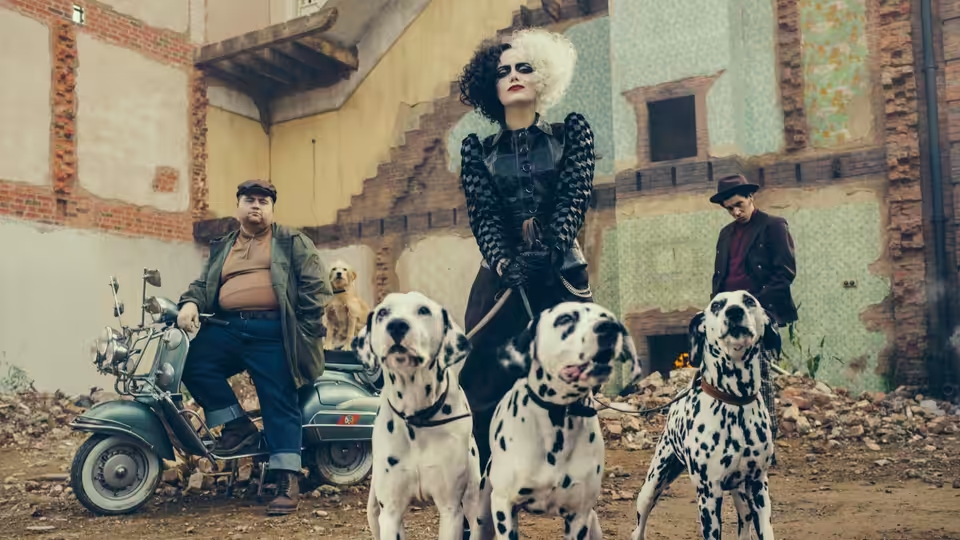
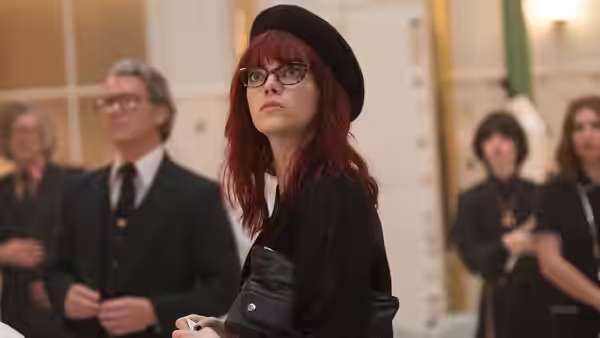
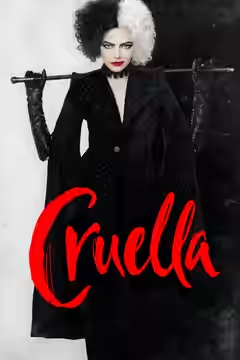
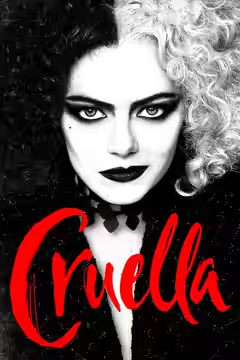
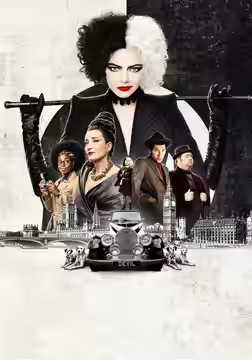
Cruella is an enjoyable fashion feud held up by an origin story that takes far too long to explain itself. Craig Gillespie has two actors capable of making professional spite funny, and the film is at its most entertaining when it leaves them to compete. Emma Stone gives Estella / Cruella the appetite of someone determined to be noticed; Emma Thompson makes The Baroness look offended that anyone else should want the attention. At 134 minutes, their contest acquires more history than it needs.
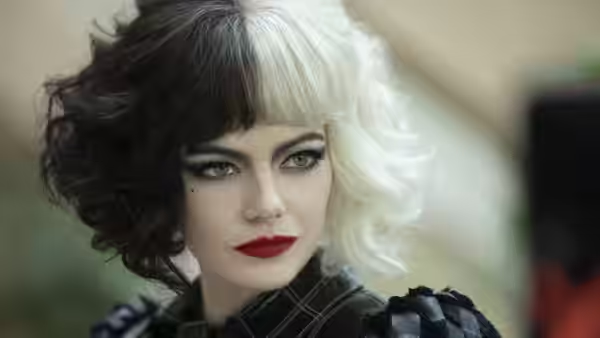
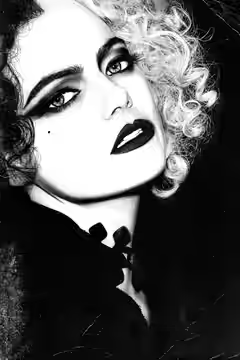
Emma Stone is good at making self-invention look like something the character enjoys doing. There is enough relish in her performance to keep Cruella interesting even when the screenplay starts doing the explaining for her. Emma Thompson has the easier task, since The Baroness is allowed to be unpleasant without continually requesting our understanding. Her contempt is funny because she treats it as ordinary good judgement.
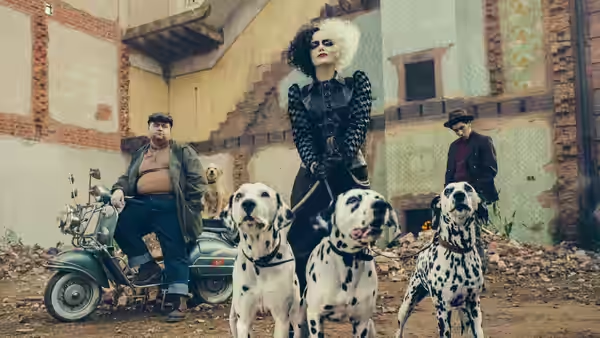
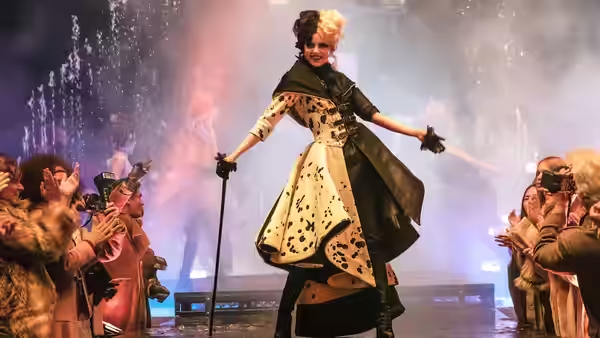
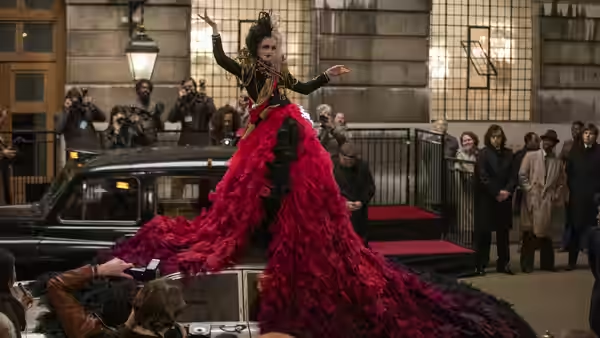
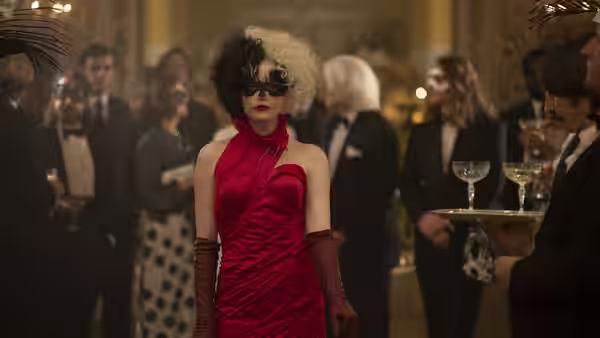
We laughed at how seriously these women take the business of outdoing each other in clothes. The gowns make the absurdity convincing: after all that labour, we might resent being upstaged too. Costume designers Jenny Beavan and Samuel Coviello give the rivalry something worth looking at, and the clothes communicate ambition more briskly than the dialogue. Even when our interest in the story faltered, we wanted to see what Cruella would wear next.
Nicolas Karakatsanis’s cinematography gives that work the prominence it deserves, without making the actors seem incidental to the display. Fiona Crombie’s production design supplies elaborate surroundings that make the fashion world’s self-importance credible. The recreated 1970s London is enjoyable to look at, though it scarcely feels troubled by anything beyond the competition for attention. For all the film’s interest in punk styling, it is comfortable with the glamour it supposedly wants to disturb.
The screenplay by Tony McNamara and Dana Fox is less assured about what we should make of Cruella herself. Its determination to explain her risks making every unpleasant impulse sound like something for which an excuse can be found. We do not need a villain to be beyond sympathy, but we do need the film to allow her some responsibility for being objectionable. Too often, the backstory takes over just as Emma Stone has made the character entertaining without it.
Tatiana S. Riegel’s editing gives the fashion passages energy, yet the accumulation of plot keeps slowing the film down. The pace suffers whenever the rivalry has to wait for another piece of history. Nicholas Britell’s score is less distracting than the surrounding soundtrack, whose insistence on keeping things lively eventually becomes tiring. After a while, we wanted fewer musical cues and fewer detours.
As an origin story, this belongs to the school that would rather account for a villain than let us enjoy being appalled by her. That is a frustrating choice for a film with such willing performers and such good clothes. There is still enough pleasure here for anyone interested in fashion, extravagant egos and the comedy of professional resentment. Go for the two women trying to steal each other’s attention, and expect the story to interrupt them.