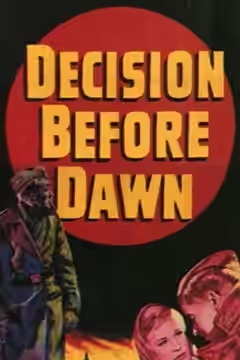
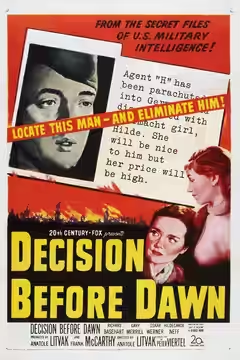
Anatole Litvak’s spy film gives its heart to a German corporal and its dialogue to the Americans, and only one of those decisions was right. Oskar Werner, shot among towns still half rubble, is worth the whole evening.
Anatole Litvak’s spy film is about the last weeks of a war and it is not on the side you expect. It belongs to a German corporal called Karl Maurer, a medic his captors nickname Happy, who agrees to go back behind his own lines and report what he finds. Peter Viertel’s screenplay, from George Howe’s novel, asks one thing about him: is a man who betrays a bad cause a traitor? It never answers in words, which is to its credit. It answers in Oskar Werner’s face.
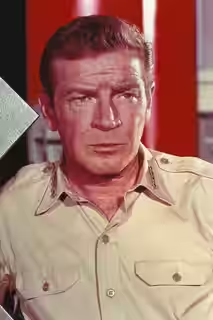
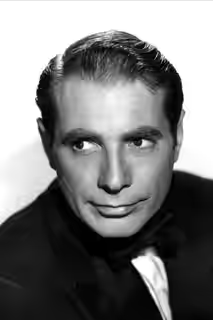
The first half hour is spent on the American side, in the prisoner compound and at the training house in France. Col. Devlin (Gary Merrill) runs the scheme and believes in it. Lt. Rennick (Richard Basehart) does not. Sgt. Barth (Hans Christian Blech), called Tiger, is a spiv with a uniform on, and Blech gives him a grin that never reaches his eyes. Happy volunteers after watching what the other prisoners do to a man who spoke his mind, and Werner lets us see that the decision costs him more than it would cost Tiger to change his socks.
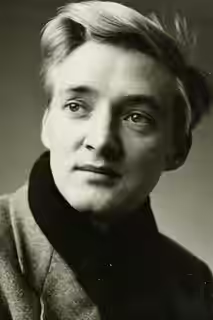
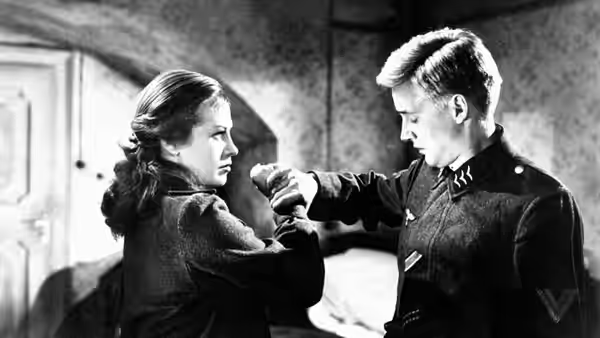
Werner is quietly remarkable. He plays a man who has never been sure of anything and is now required to be sure of a false name, a forged pass and a story about where his unit went. The performance is in the half-second before he answers a question, and in the way he thanks people who could have him shot. Hildegard Knef, as Hilde, a woman in a wrecked town with nothing left to lose, gives him one scene of tired kindness the film badly needs. O.E. Hasse’s Colonel von Ecker, who takes Happy onto his staff, is an old soldier who knows the war is lost and has decided not to notice.
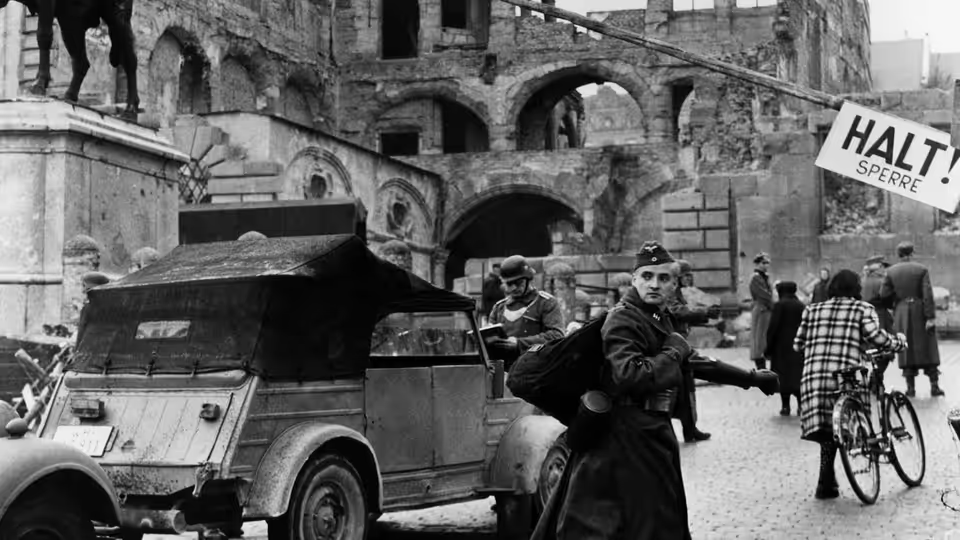
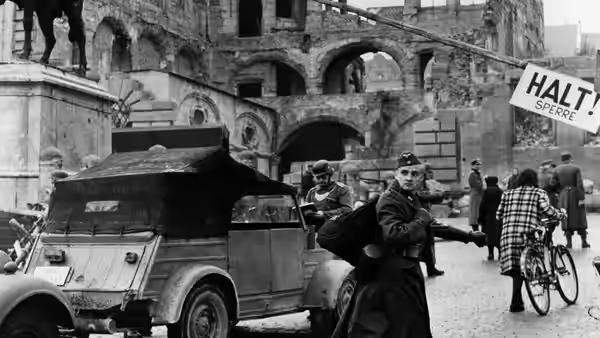
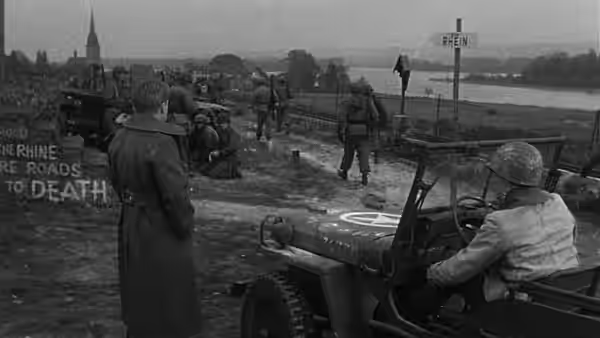
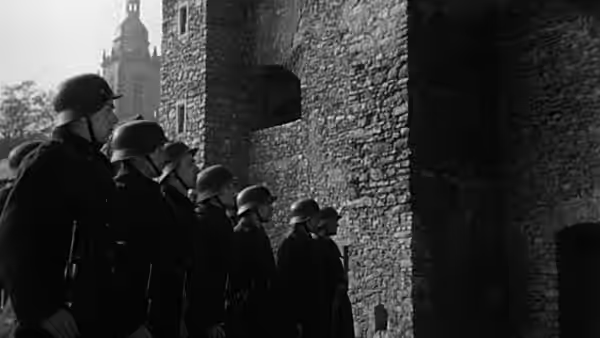
Franz Planer shot it on location in Germany, and the ruins are not sets. Streets end in piles of brick, walls stand with nothing behind them, and the people queueing for trains and bread are the people who lived there. He puts Werner in medium shot before a shattered station and lets the background do the work, and the film has a plainness few war pictures went looking for. Dorothy Spencer cuts the middle hour tight, one town, one checkpoint, one train, and the 119 minutes never sag once Happy is on the ground. Franz Waxman’s score is loud in the American scenes and wisely thin in the German ones, where a footstep in a corridor does more than an orchestra could.
The flaws are all on the American side. Basehart is saddled with the narration and with the film’s conscience, and he delivers both as if reading them into the record. Merrill explains the theme in case we missed it. The French interlude with Monique (Dominique Blanchar) is ten minutes of soft-lit romance the film has no use for. The last act, which we will not describe, leans on a coincidence or two the first ninety minutes had not needed.
Here is what got us. For most of the middle hour we were as tense as we have been at any spy film, and the reason is one supporting actor. Wilfried Seyferth plays Scholtz, an SS man Happy falls in with on the road, drunk, friendly, generous with his cigarettes and never quite gone. Every time the camera found him at the edge of the frame, smiling, our stomach dropped. Seyferth never raises his voice, and he does not have to. Helene Thimig, as the landlady Fräulein Schneide, adds a second kind of fear in one scene at a door.
Litvak had made The Snake Pit (1948) and Sorry, Wrong Number (1948), two films about nerves, and this is the same skill with an army around it. What was unusual then, and still is: the Germans are played by German actors and allowed to be people, frightened, tired, decent, rotten, in about the proportions you would find anywhere. Most critics have liked it and we like it a little more than they do. Forgive the Americans their speeches, sit through the French house, and wait for Werner to be handed his papers.