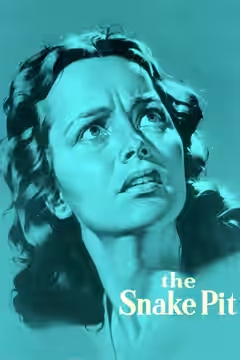
Anatole Litvak’s asylum drama is carried by Olivia de Havilland, who plays a woman lost inside her own head without a trace of vanity. The wards are frightening and true; the psychiatry that explains her is tidier than any mind we have met.
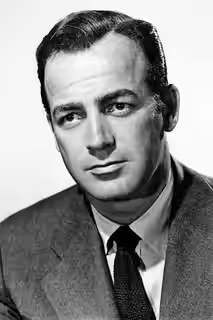
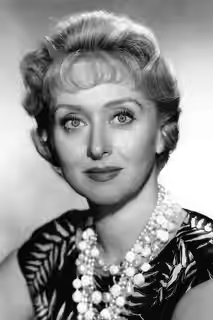
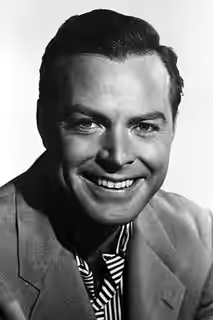
Virginia Cunningham sits on a bench in the grounds of a state hospital and cannot say how she got there. A man’s voice is asking her questions, and there is no man. It takes a fellow patient, Grace (Celeste Holm), to tell her where she is, and a visit from her husband Robert (Mark Stevens) to tell her who she is, and she believes neither of them. Anatole Litvak’s film, adapted by Frank Partos and Millen Brand from Mary Jane Ward’s novel, spends most of its 108 minutes inside that confusion, and its best decision is to stay there for as long as it can.
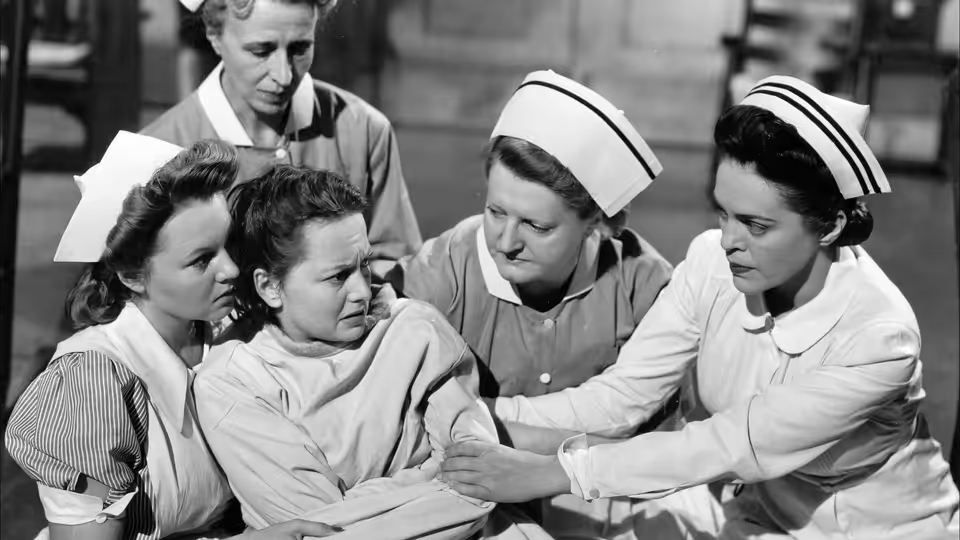
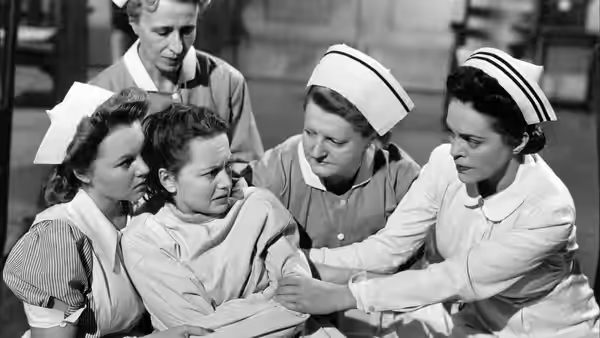
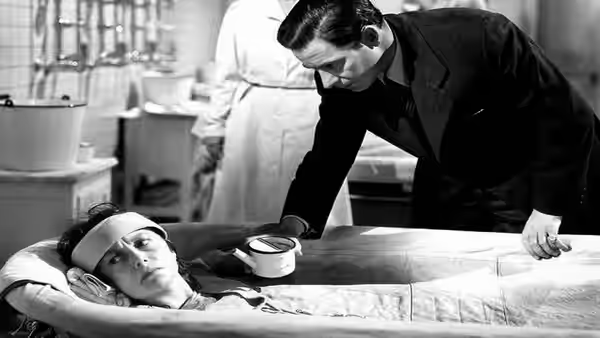
The hospital runs on numbers. Ward One is for women nearly ready to go home; the numbers climb as the patients get worse, and everyone knows what the top number means. Dr Mark Kik (Leo Genn) takes Virginia on and starts with electroshock. That sequence horrified us, and not because of what it shows. Litvak stages it as routine: a trolley, a rubber gag, a nurse counting, the next patient already waiting. Leo Tover keeps his camera on de Havilland’s face and lets everything around her go soft, so we get what she gets, which is a light, a hand, and then nothing.
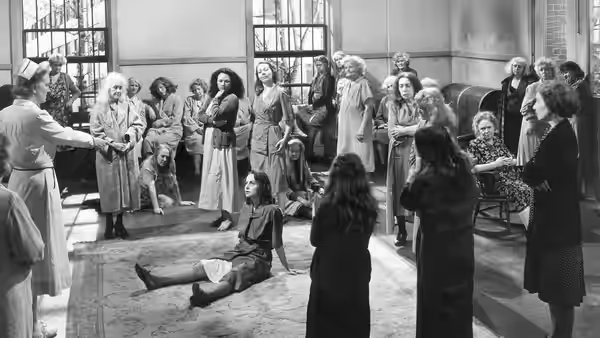
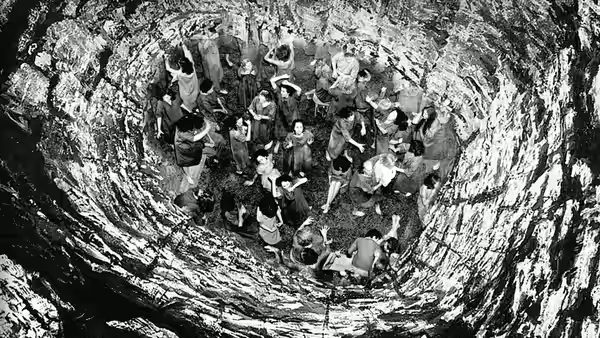
Tover has one shot everyone remembers, and it deserves to be remembered. Virginia has been moved to the worst ward, and the camera lifts straight up and away from her until the women on the floor beneath stop being women and become a pit of moving bodies. It is the image the title promises, and the film has earned it by then. Dorothy Spencer’s cutting between the hospital and Virginia’s past uses her voiceover as the seam, so a question from Kik lands us years back in her life without a dissolve to warn us. It is a neat way of showing a mind that does not know what year it is.
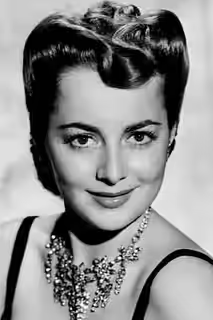
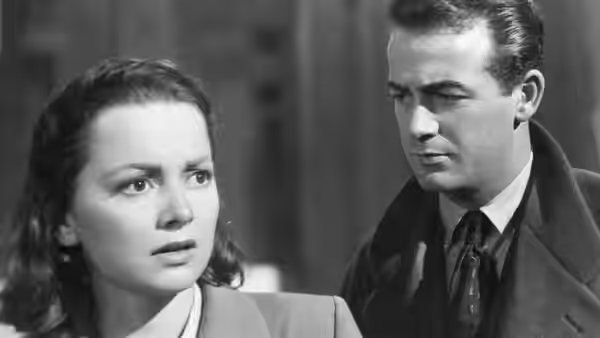
De Havilland does not protect herself. Her hair is unpinned, her eyes never settle, and she answers the voice in her head out loud in the middle of other people’s sentences. Watch her at the wire fence with Robert, trying to work out from his face what a husband is supposed to feel like. She plays a woman who is frightened of being found out as mad and equally frightened of being found sane and sent home to a life she cannot remember. Genn is a calm, low-voiced presence who never raises his voice, and Helen Craig’s Nurse Davis is the villain the wards require, all keys and smiles. Beulah Bondi’s Mrs Greer, Lee Patrick, Ruth Donnelly and Natalie Schafer fill the day room with women who are funny as well as ill, and Litvak has the decency to let them be both.
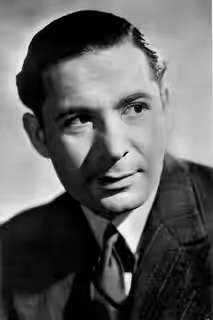
What does not work is the cure. Once Kik has Virginia talking, the film starts to believe that a person is a lock and the right memory is the key, and it goes looking for the key with a chart and a pointer. Leif Erickson turns up in the flashbacks as Gordon, a man from her past she would rather not think about, and we will say no more about him. The consulting-room scenes are the least alive in the film: two people in chairs, one of them explaining the other to herself. Alfred Newman’s score does not help, swelling under every breakthrough where Litvak had been content to keep quiet. Dr Curtis (Howard Freeman), the administrator who counts beds and wants them emptied, is a stock figure and plays like one.
Measured against the asylum films that came after it, this one is more honest about the wards and more credulous about the doctors. Forman’s One Flew Over the Cuckoo’s Nest would not trust a psychiatrist to hold a door open. Litvak trusts his to hold a mind together, and the film is weaker for it. But nobody in 1975 shot a shock treatment as plainly as Tover does here, and nobody made the corridors look so long.
There is a dance late on, in a hall with a band, and a patient sings. We were moved more than we expected to be, and it was the hall that did it: a hundred women who have been shouted at for two hours suddenly allowed to stand still and listen. Watch it for de Havilland and the wards. Forgive the doctor, as she does.