Peter Berg’s reconstruction of the Deepwater Horizon blowout is at its best in the hour before anything goes wrong, and the fire, when it comes, is as frightening as anything in a horror film. It then loses sight of the men it came to honour.
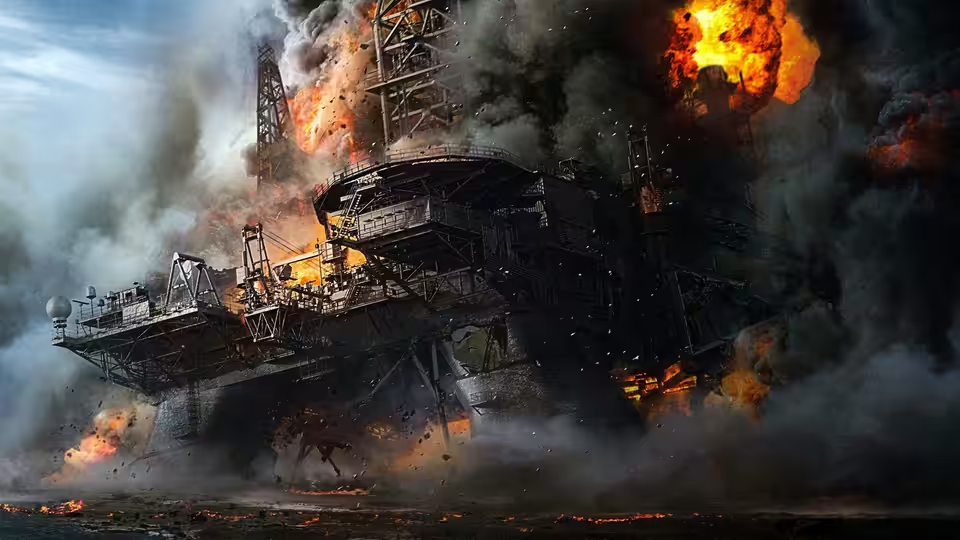
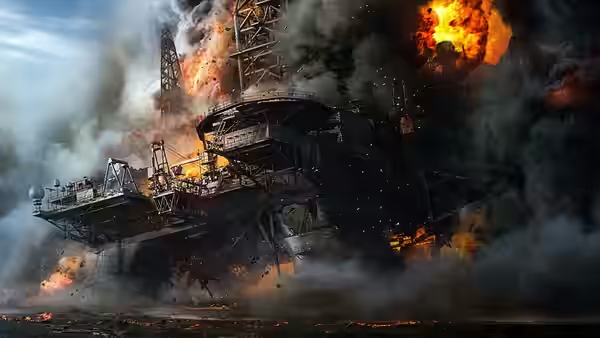
On 20 April 2010 the Deepwater Horizon, a drilling rig in the Gulf of Mexico, blew out, burned for two days and sank. Eleven men died and the well beneath it leaked oil for months. Peter Berg’s film is about the night, not the months, and that choice shapes everything in it. The script by Matthew Sand and Matthew Michael Carnahan is built in two halves: an hour of what the rig was and who was on it, and forty minutes of it coming apart. The first half is excellent. The second is spectacular and then, in a way that matters, careless.
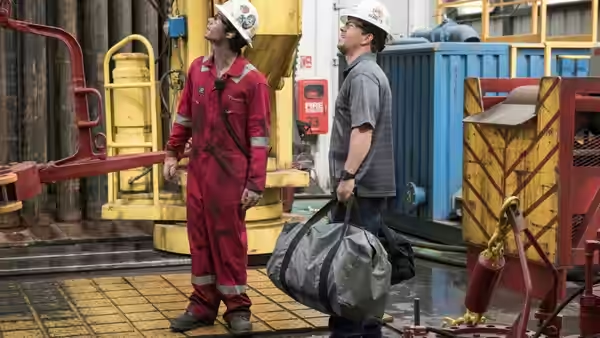
The hour of set-up is the best stretch of filmmaking Berg has managed. The cola-can demonstration Williams’s daughter gives at the kitchen table tells us in ninety seconds what a well is and what mud does, and the film trusts us to remember it. Chris Seagers designs the rig as a working place rather than a set, grey steel and yellow handrails, a drill floor slick with brown fluid, a bridge with too many screens and a galley with a cake in it. Enrique Chediak shoots it handheld, close to faces, and at night lets the rig’s own sodium lamps do the lighting, so the sea around it is simply black. Colby Parker, Jr. and Gabriel Fleming cut this hour with patience, holding on gauges and on the men reading them, and the arguments about the negative pressure test are as tense as any gunfight.
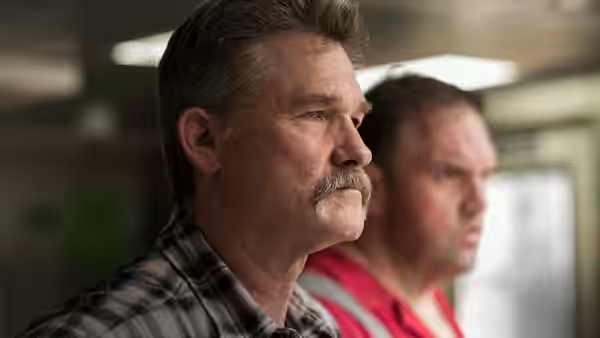
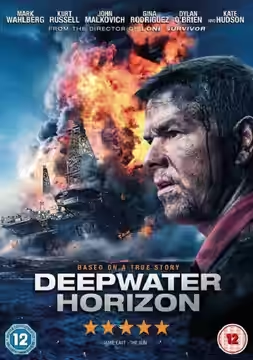
Kurt Russell carries that tension. His Jimmy Harrell, Mr Jimmy to the crew, talks slowly, says please, and makes it plain that the courtesy is a warning. Watching him stand on the drill floor and explain to the company men why their schedule is not his problem, we understood why a rig full of men would follow him. John Malkovich plays Vidrine with a Louisiana accent so thick it keeps pulling attention from what he is saying, which is a pity, because the script gives him a decent argument for impatience and he plays the man as someone who believes it. Wahlberg does what he does: capable, quiet, a man who checks things.
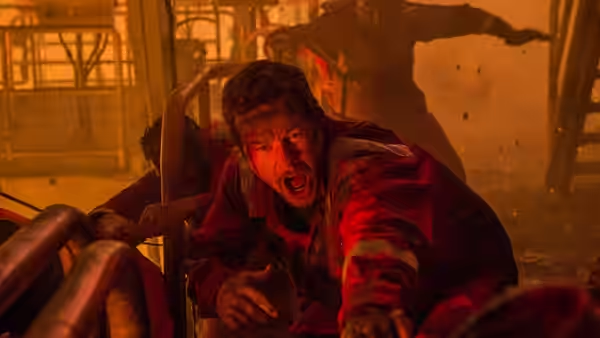
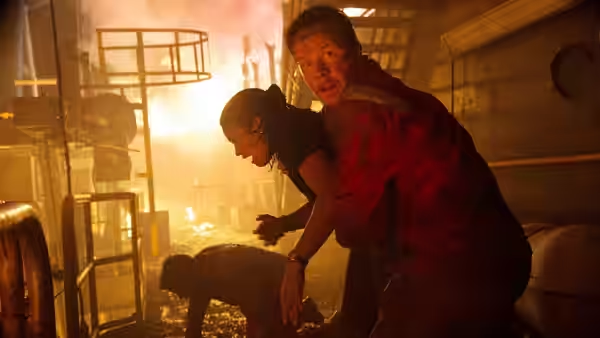
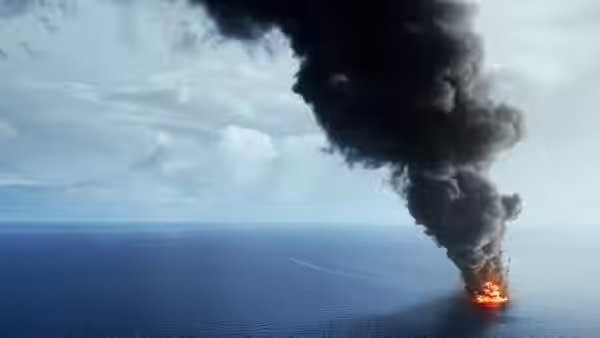
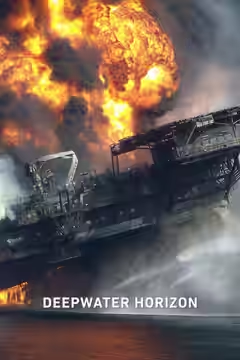
Then the well kicks. Mud comes up through the derrick, then gas, then the lights go, and when it finally ignites Berg stages it as a series of blows rather than one explosion, each worse than the last. We were horrified, plainly and physically. It was the men on the deck that did it, lit from one side by the fire and running with nowhere obvious to run to, and the sound of the rig itself, a noise like a jet engine that does not stop. Steve Jablonsky’s score has the sense to stay almost silent through this; the roar is the music. For ten minutes the film is as frightening as anything we have sat through in a long while.
The trouble is what the fire does to the people. Once everyone is covered in mud and blood, the cutting speeds up until we could no longer tell Dylan O’Brien’s Caleb Holloway from the half-dozen other young men on the drill floor, or work out which deck anyone was on and why they were going up rather than down. Gina Rodriguez has a strong scene on the bridge and is then handed a stretch of screaming. Kate Hudson, at home on the telephone, is cut back to again and again for no better reason than to remind us someone is waiting. Eleven men died that night, and the film means to honour them, but it rarely slows down long enough to let us know which ones they were.
It also ends where it ends. Berg’s anger is all in the first hour, aimed squarely at the men in the clean shirts, and it is well aimed. But the largest consequence of that night was not on the rig, and a film this sure of its villain might have found a minute for it. We will say no more than that the last scenes reach for an emotion the preceding forty minutes had not earned.
Against Berg’s own work it sits above Lone Survivor (2013), his previous film with Wahlberg, and below Friday Night Lights (2004), which understood that the people are the point. See it for Russell and for that first hour, which is a model of how to make an audience care about a pressure reading. It runs 107 minutes and carries a 12A, and the fire is loud enough that the certificate feels generous.