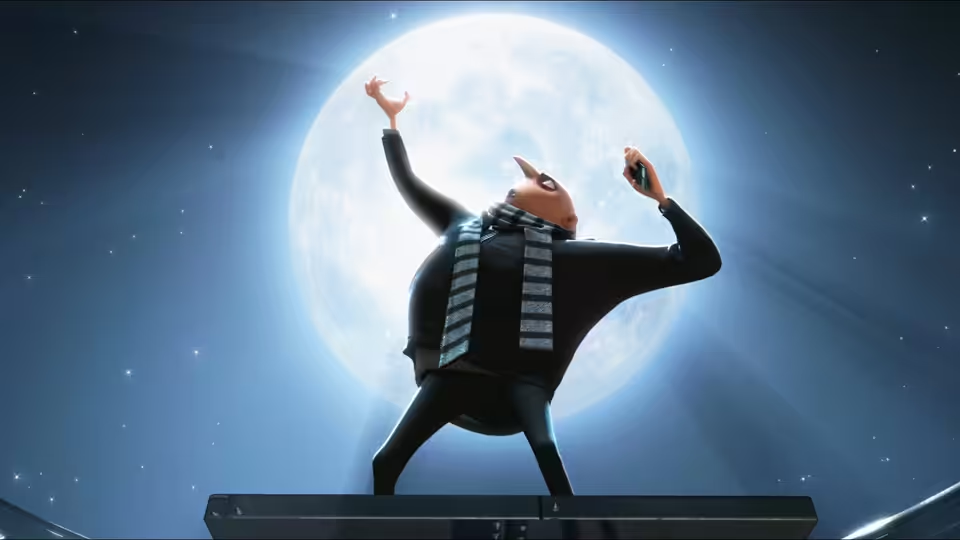
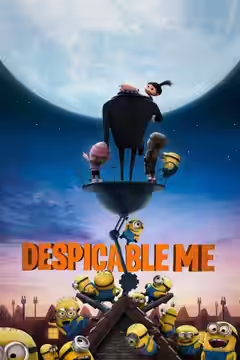
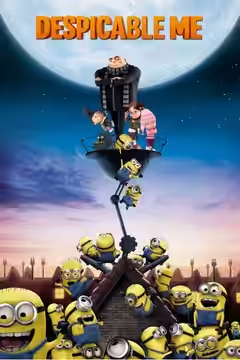
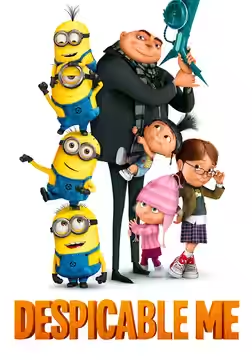
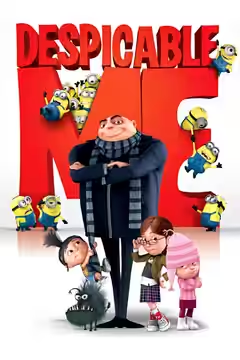
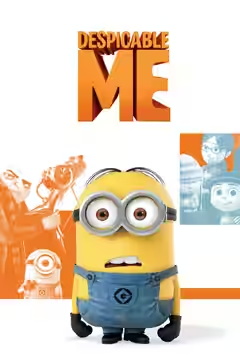
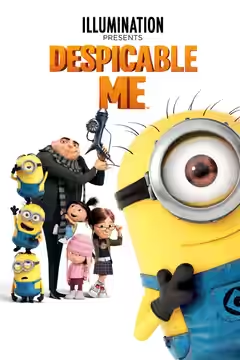
Despicable Me is an amiable family comedy carried by Steve Carell’s voice work and the Minions’ mischief. The gadgets and comic timing make up for a predictable story that sometimes presses too hard for affection.
The useful thing about making a villain the centre of a family comedy is that he need not be pleasant company from the start. Chris Renaud and Pierre Coffin understand this, and Despicable Me gets a fair amount of fun from Gru’s determination to be taken seriously. It is a funny, modestly touching film with a story that becomes predictable well before it becomes moving. We would happily spend an evening with it, while wishing it trusted its jokes a little more.
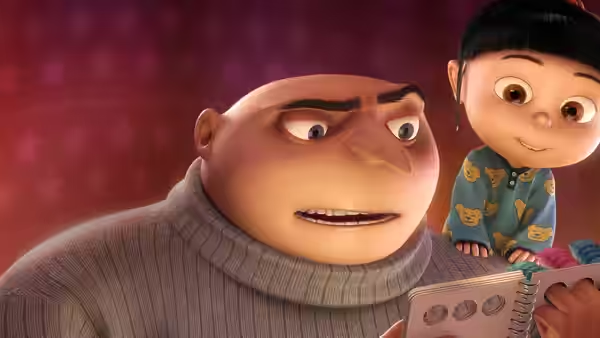
Steve Carell does the most important work, letting embarrassment and need show through Gru’s bluster without making him helpless. His voice suggests someone putting considerable effort into sounding formidable, which gives the performance a useful vulnerability. There is room for this character to soften, although the screenplay by Ken Daurio and Cinco Paul signals that possibility early and often. The performance makes the small changes worth following even when the larger change is easy to predict.
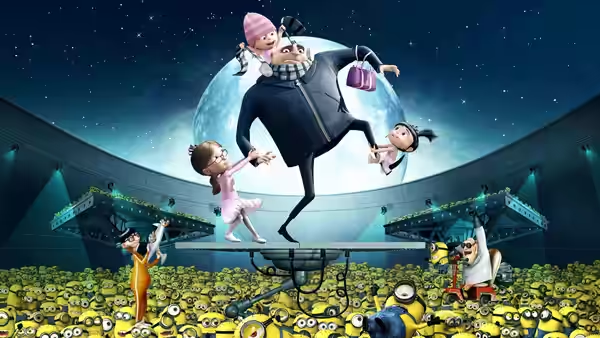
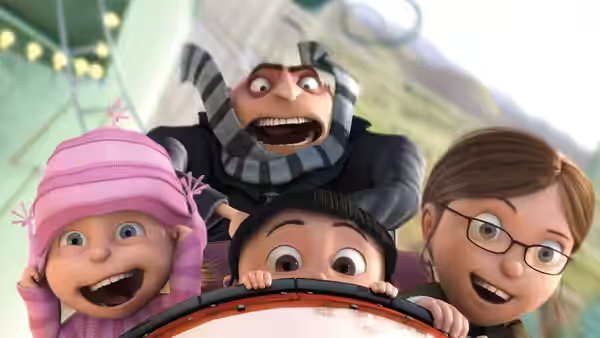
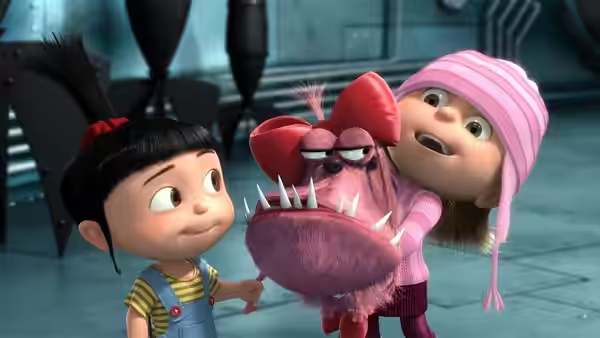
Margo (Miranda Cosgrove), Edith (Dana Gaier) and Agnes (Elsie Fisher) give Gru something more troublesome than another opportunity to look important: people who want his attention. Their growing bond supplies a reason to care about him beyond the success of his villainy. We were more touched than we expected by the vulnerability Steve Carell brings to Gru’s dealings with the sisters. The girls remain appealing, though the writing sometimes seems unwilling to leave their appeal to the voice performances.
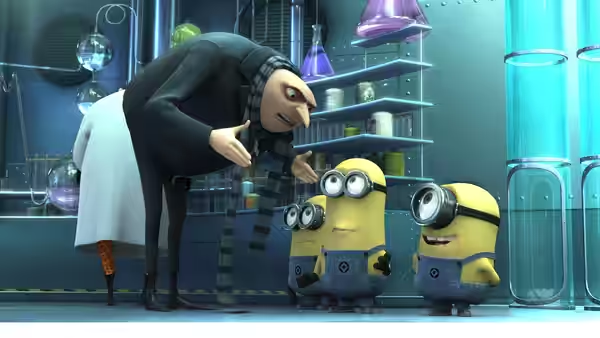
The Minions provide the more dependable pleasure, because their mischief does not need much explanation or a reassuring moral. We laughed at their unruliness, which gives the film a welcome break from worrying about Gru’s improvement. Editors Gregory Perler and Pam Ziegenhagen deserve credit for the comic rhythm: the supporting antics feel brisk without becoming impossible to follow. These characters are useful precisely because they need not become better behaved to justify their place in a family film.
Yarrow Cheney’s production design makes the gadgetry an important part of the comedy, giving the eye something to enjoy while the story follows its familiar course. The directors use the space around the characters inventively, allowing physical business to compete with the dialogue. That matters in an animated comedy with so many voices seeking attention. The machinery and the staging offer more surprises than the plot, and we wanted longer stretches in which those visual jokes could take priority.
The music, credited to Pharrell Williams, Heitor Pereira and Chris Westlake, helps maintain the buoyancy, though its encouragement becomes less welcome when the film turns tender. The screenplay already makes clear where our sympathies should lie, and the extra prompting can make an otherwise agreeable moment feel laboured. This is the central weakness: affection is requested a little too insistently after the performances have given us reasons to feel it. The sentiment does not spoil the comedy, but it occasionally slows it down.
By the standards of family animation, the idea of children improving a bad-tempered adult offers little surprise. There is enough comic invention here to compensate, particularly for anyone happier watching contraptions and misbehaving assistants than following a complicated plot. At 95 minutes, the film also keeps the commitment reasonable. Choose it for a shared evening when good jokes matter more than an unfamiliar story, and allow for some determined encouragement to feel fond.