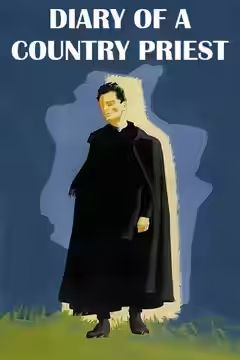
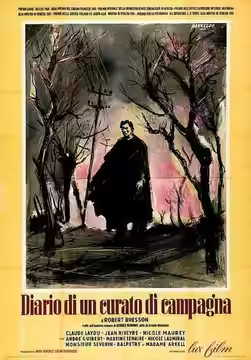
Robert Bresson’s drama of a priest’s isolation is severe, patient and moving, carried by Claude Laydu’s restrained performance. We recommend it, though its solemnity sometimes makes a lonely man’s company harder work than it needs to be.
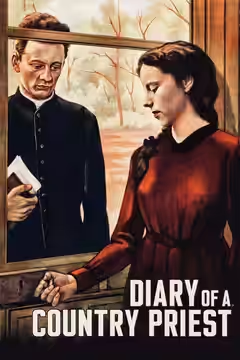
Diary of a Country Priest is a demanding, affecting film, and we recommend it with a warning about how little relief it offers. Robert Bresson adapts Georges Bernanos’s novel around a priest whose humble origins have not prepared him for the worldliness he encounters. The priest’s difficulty in finding his place gives the film its subject. The director takes his spiritual life seriously without making him easy company, and that seriousness earns our attention even when the film becomes too stern.
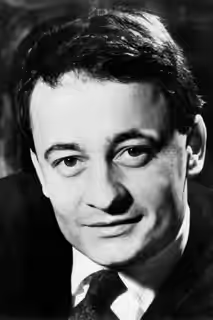
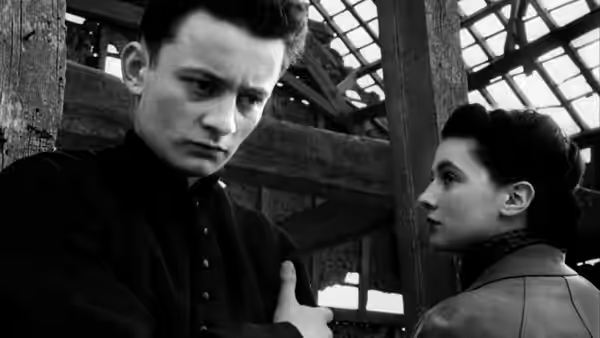
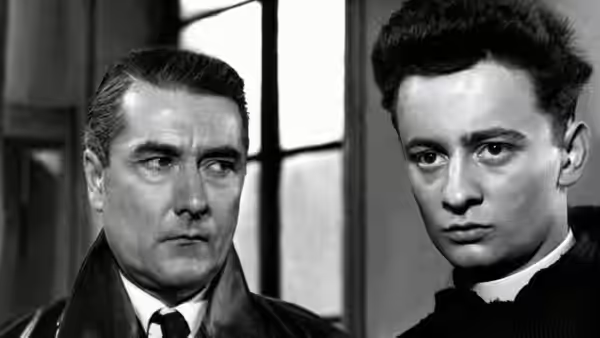
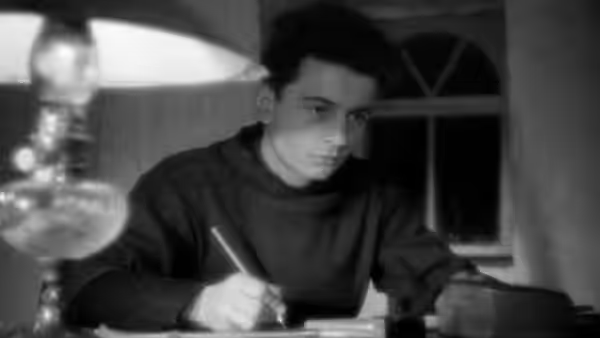
Claude Laydu, playing Curé d’Ambricourt, gives the film the human presence it needs. His restraint can initially seem to keep us outside the character, and we understand why some critics find him hard to reach. But we were moved by how lonely he looks, especially by the lack of any obvious appeal for our sympathy. He does not make suffering look distinguished or turn conviction into confidence. We kept watching his face because it never quite offers the reassurance that a more demonstrative performance might provide.
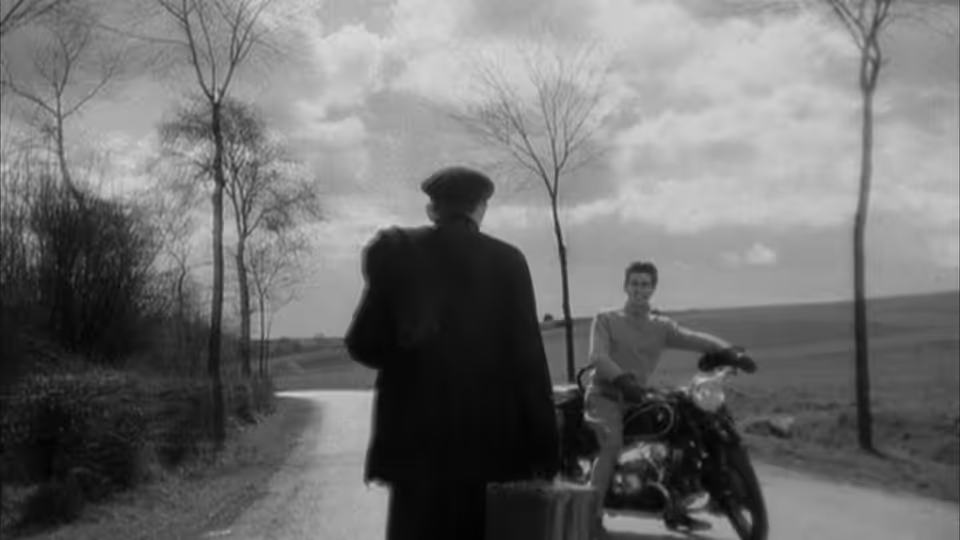
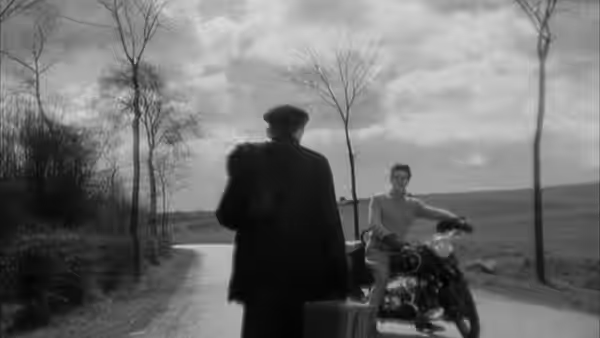
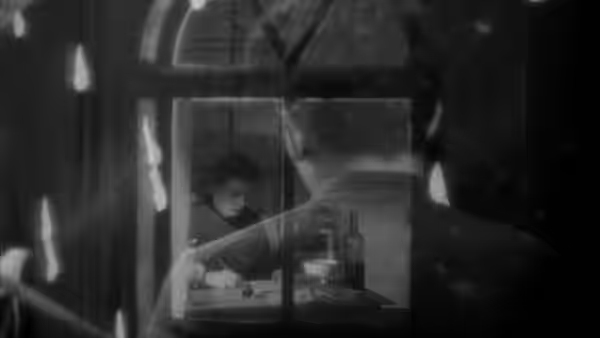
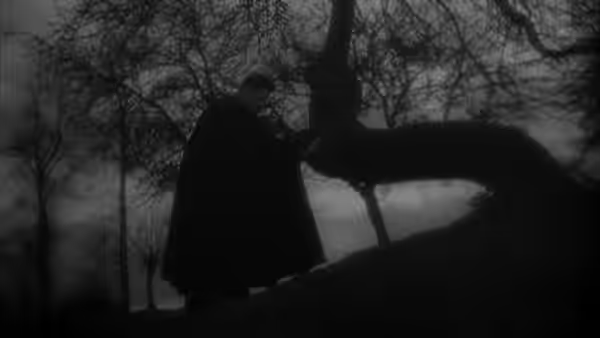
Léonce-Henri Burel’s cinematography makes that face difficult to escape. The visual austerity can feel oppressive, but it also stops the priest’s distress from becoming something merely pleasant to look at. There is little distraction from the uncomfortable business of watching a person who cannot readily make himself understood. This is where the film earns its difficulty: the priest’s isolation becomes something we have to spend time with, and the photography gives us few opportunities to look elsewhere.
Paulette Robert’s editing works through accumulation, allowing small details to matter without forcing each one to announce a change in the story. At 115 minutes, the film asks for sustained attention to a man who does not make himself immediately approachable. That patience mostly pays off, because a more hurried account would make his isolation easier to dismiss. It also has a cost: stretches of the film feel closed off, with too little variation in how they ask us to respond.
Jean-Jacques Grunenwald’s music lends weight to the priest’s distress, though we prefer the passages in which the performance seems enough. The film can be too determined to impress its seriousness upon us. Robert Bresson’s screenplay already gives such close attention to the priest’s inward life that an extra insistence on solemnity feels unnecessary. We have understood that this man’s troubles matter, and occasionally wish the film would trust that understanding.
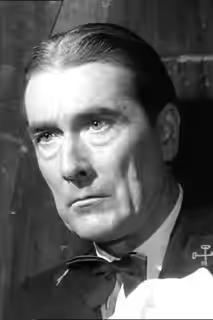
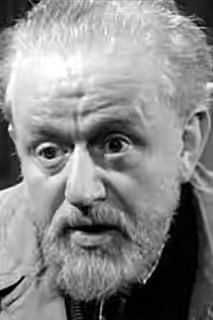
Adrien Borel, as the Priest of Torcy, supplies a useful contrast in temperament. His firmer presence lets us see that a vocation need not be lived in quite this state of distress. As a religious drama, the film is persuasive because it does not assume that belief makes a person easy to understand. We do not need to share the priest’s faith to recognise the difficulty of finding a place among other people.
The reserve will be a barrier for some, and there is no point pretending that attention will remove it for everyone. We found the performance worth the effort, even when the surrounding solemnity felt overinsistent. Give it an evening without interruptions; this is not a film to leave doing its work in the background.