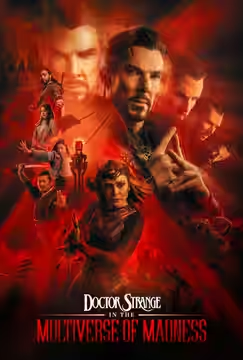
Sam Raimi gets a Marvel film to himself and, for stretches, we can tell: the corpses, the crash zooms, the eyeball. The rest is a franchise delivering messages to itself, and Elizabeth Olsen is the only one in a story.
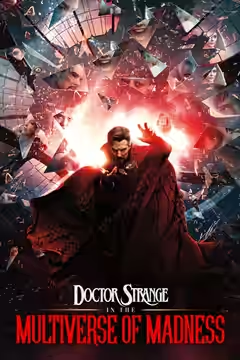
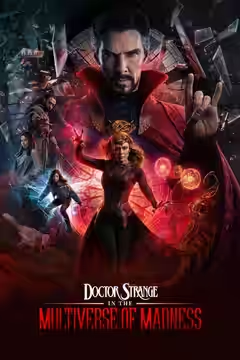
Sam Raimi has been handed a Marvel film with obligations attached, and Doctor Strange in the Multiverse of Madness is the result: a studio product with a director’s fingerprints on about a third of it. The third is good. Corpses walk, an eyeball is skewered, the camera lunges at faces the way it did in Evil Dead II. The other two thirds are Michael Waldron’s script explaining who America Chavez is, what the Darkhold does and why a witch living quietly in an orchard is now a problem for every universe at once. It is a decent evening if this is your sort of thing.
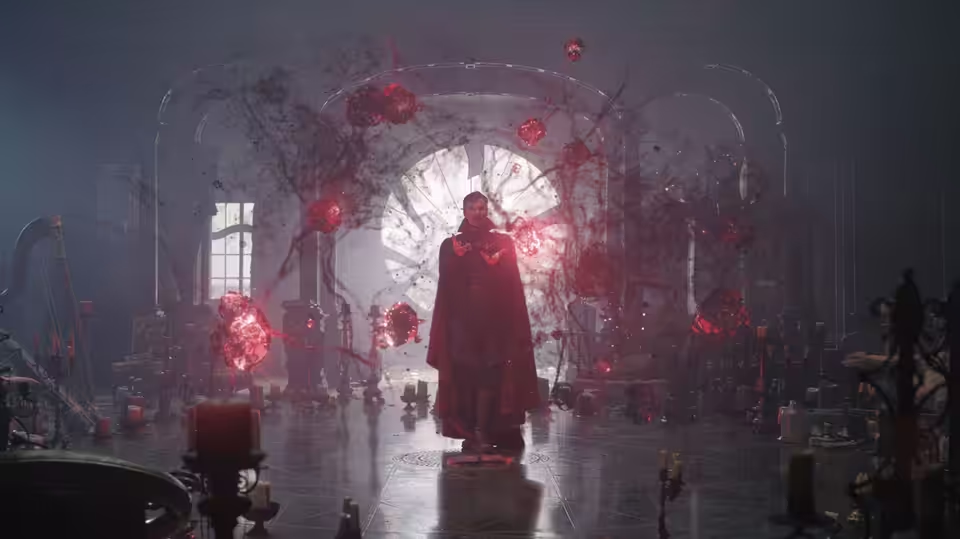
A one-eyed octopus drags itself down a Manhattan street, and what happens to its eye is the first proper laugh. John Mathieson shoots daytime New York flat and bright, so the monster looks wrong in it, and keeps his shadows for the orchard, where the apples are too red and the light too kind. Charles Wood’s best work is the fall through the universes, a world of paint and a world built from blocks, each held on screen for about a second and a half. It is the only sequence in which the multiverse is fun to look at.
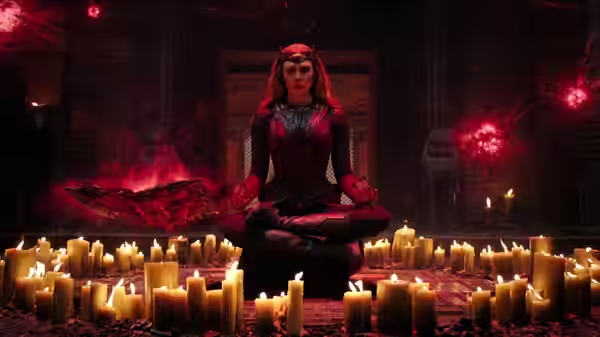
Elizabeth Olsen is the reason to see it. Her Wanda Maximoff arrives already broken, barefoot among the apple trees, and Olsen plays the grief as reasonable: she wants her children, she has found a universe where they exist, and one girl stands between her and them. She does not raise her voice until she has to, and when she does the film stops being funny. Graham Churchyard puts her in a red crown and a red coat and lets the face do the rest. The film assumes we have watched WandaVision; anyone who has not will find the orchard scene a puzzle.
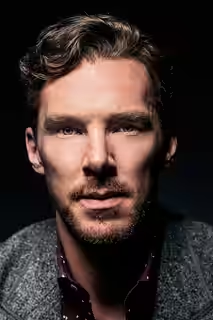
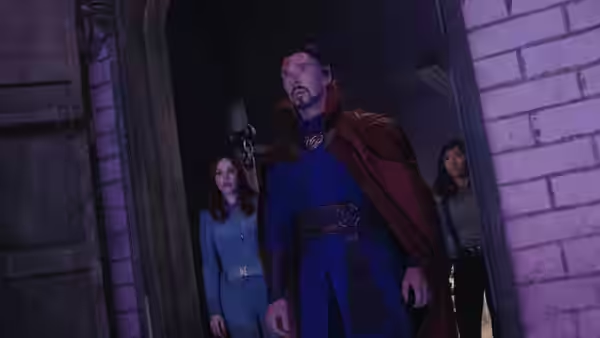
The trouble is that Strange himself is not in a story. Waldron gives him one question, whether he is happy, and asks it at a wedding, in a dream and over a drink on a rooftop, and Cumberbatch answers it the same way each time, with the eyebrow. He is nimble and times a line well, but the man who ends the film is the man who began it, dustier. Xochitl Gomez has charm and about four lines of character; America can punch a hole between universes and cannot steer, and that is all we are told. Rachel McAdams and Benedict Wong get the best small laughs and not much else.
We flinched twice. Once at a reflection that moves when the person in front of it does not, once at a sound Raimi holds a beat longer than this studio usually allows. Around the ninety-minute mark we caught ourselves waiting for an explanation to finish so the film could start again, annoyed that a picture with a walking corpse in it had made us feel we were in a meeting. That is the film: Raimi for a scene, then paperwork for two.
There is a stretch in the middle with a roomful of familiar faces we will not list; it is there so the audience can point at the screen, though Raimi treats the visitors more rudely than Marvel normally permits, and the rudeness is the best thing in it. Danny Elfman’s score is brass and thunder and could belong to any of the last dozen of these, until a late duel fought with notes pulled off a stave, when for two minutes music and picture are the same idea. Bob Murawski and Tia Nolan cut the fights cleanly, so we always know where Wanda is and how far the door is.
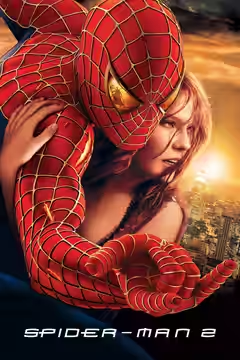
Against Raimi’s own films this is the fenced-in one. Spider-Man 2 (2004) also had a hero who did not want the job, and it made his doubt the whole film rather than a running gag. Here he is let in when a body needs to be made funny or a face needs lunging at, and asked to wait outside while the plot is read aloud.
See it if Olsen’s Wanda means something to you, or if you want to know what Raimi can do inside a fence. Watch it at home, where the explanations can be paused and the two or three real shocks still land. It runs 126 minutes and carries a 12 certificate, which, given the number of corpses, is generous.