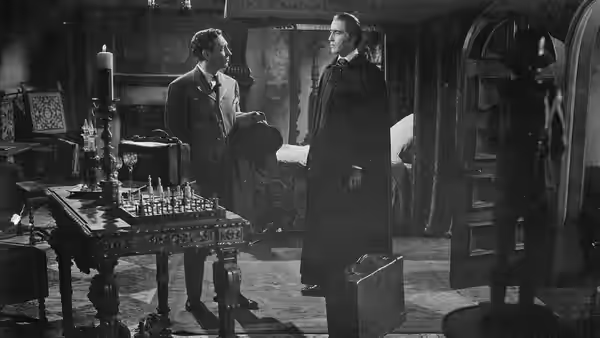
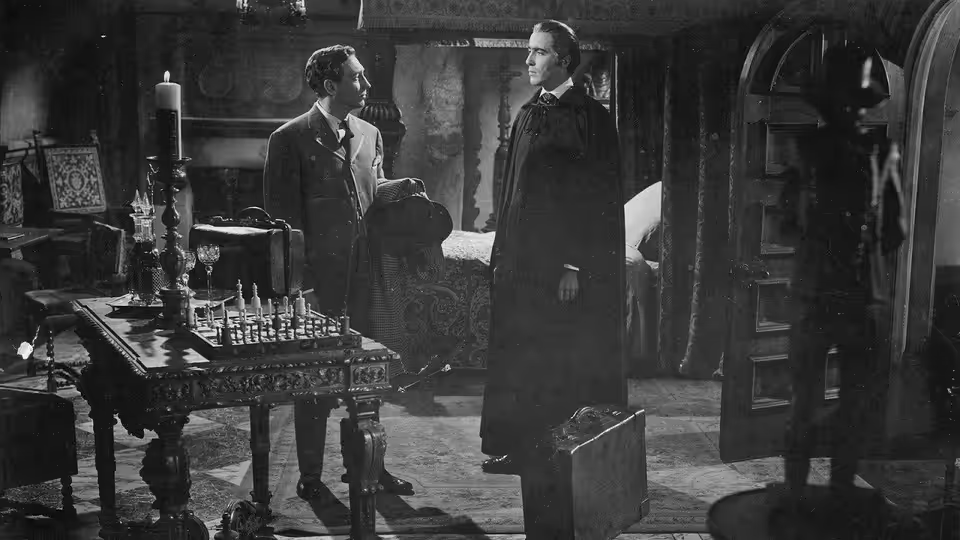
Doctor Van Helsing (Peter Cushing) stands with a man beside laboratory equipment
Film review

Dracula

1958 · Directed by Terence Fisher · 1h 22m

In a sentenceChristopher Lee is handsome enough to make common sense look negotiable

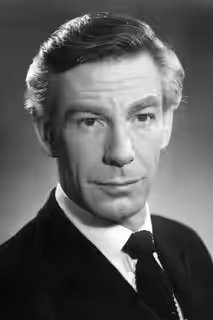
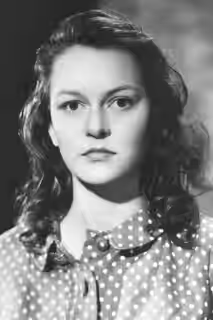
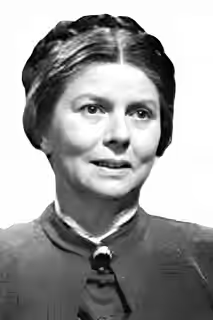
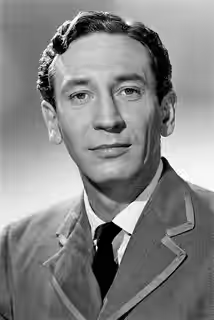
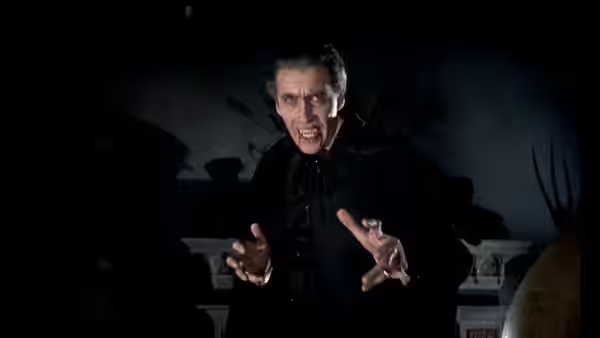
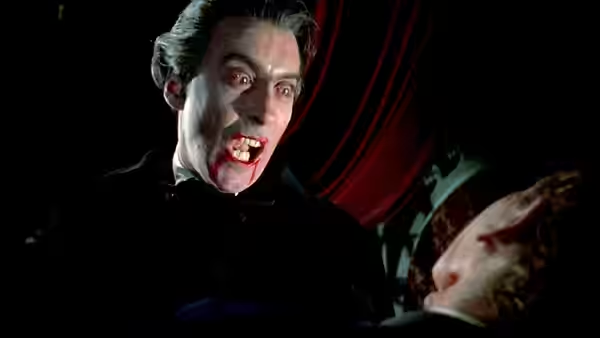
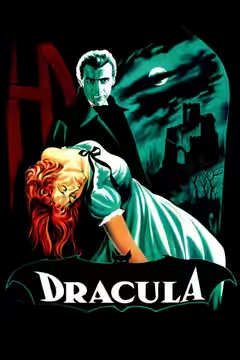
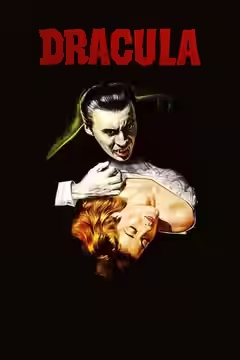
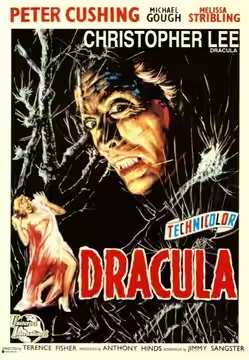
Count Dracula (Christopher Lee) is a seductive, threatening presence in a Gothic period setting. Doctor Van Helsing (Peter Cushing) and Jonathan Harker (John Van Eyssen) share the story with Arthur Holmwood (Michael Gough), Mina Holmwood (Melissa Stribling) and Lucy Holmwood (Carol Marsh). Doctor Seward (Charles Lloyd-Pack) and Vampire Woman (Valerie Gaunt) also feature. Adapted from Bram Stoker’s novel, the film unfolds in three sections. The Count’s sexual appeal is part of the danger, and the horror makes room for attraction as well as fear.

Plays from YouTube when you press play; nothing loads from them until then.

Fi1m review

Terence Fisher’s Dracula still unsettles, chiefly because Christopher Lee makes the Count’s attraction credible. Peter Cushing supplies the conviction; some creaky plotting is the price of an otherwise forceful evening’s horror.

Dracula is still an effective horror film, with performances strong enough to carry some stiff storytelling. Terence Fisher understands that the Count needs to be attractive if the fear is to become personal. He gives that attraction room to disturb us, without treating it as an awkward extra in a monster story. The film runs 82 minutes, though a few stretches feel longer than they should.

Christopher Lee makes Count Dracula’s appeal credible without softening his menace. There is something unpleasant about finding such a gruesome figure seductive, and the performance allows both responses at once. We were unsettled by him, specifically by how little his attractiveness reassured us. His presence gives the horror an intimacy that survives familiarity with the vampire story: we can understand the attraction without ever feeling comfortable about it. The performance needs no allowance for the film’s age.

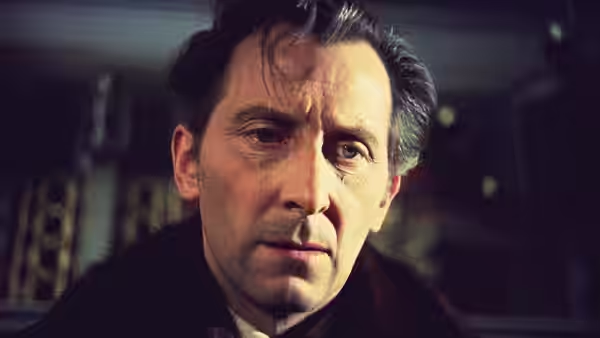
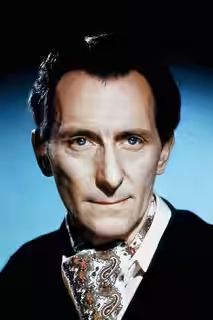
Peter Cushing brings the necessary conviction to Doctor Van Helsing. There is no hint of an actor asking indulgence for appearing in a vampire film; he takes the danger seriously and expects us to do the same. His firmness gives the horror something to press against, and his performance makes even the less persuasive storytelling worth following. We particularly value the lack of condescension towards the material, which allows the character’s seriousness to become our own.

Jack Asher’s cinematography and Bernard Robinson’s production design make the period setting feel persistently uneasy. There is nothing retiring about the visual style, and its richness can become garish. We like that forcefulness here: subdued good taste would not necessarily improve a film so concerned with dangerous attraction. The setting feels artificial without becoming reassuring, and Terence Fisher keeps the performances sufficiently assured that the actors are never merely decorative figures within it.

James Bernard’s music works for us more often than not, although we occasionally want it to leave the performers alone. Its insistence feels appropriate beside these performances, even when a little less emphasis might have helped. The editing by Bill Lenny and James Needs feels economical, giving the film substance without making it cumbersome. Across the three-part narrative, however, the tension sometimes needs gathering again, and the passage between sections is less assured than the atmosphere within them.

Jimmy Sangster’s screenplay is where our reservations lie. The plotting can feel creaky, and there are stretches when we become conscious of the story needing to get somewhere before we believe in the characters’ reasons for going there. We are not asking a vampire film to behave like a police report. We do want its people to seem less constrained by what the next section requires, and that is where the writing occasionally disappoints.

Some of the immediate shock has faded, but there is enough here beyond shock to justify another evening with the Count. Terence Fisher gives the Gothic atmosphere weight, and the two leading performances remain persuasive without needing their historical reputation to do the work. We recommend it with a little patience for the plotting. Christopher Lee and Peter Cushing deserve to be watched without anyone apologising for the age of the film.
Critical consensus AI synthesised

69
Positive
6
Mixed
0
Negative
2

Most critics respond warmly to Dracula, with praise clustering around Christopher Lee, Peter Cushing and the gothic atmosphere. Lee’s sinister, seductive presence draws particular attention, while Cushing receives consistent approval from reviews that discuss both leads. Terence Fisher’s direction is another strength for admirers, who find his visual style effective in sustaining unease. Several reviews argue that the film retains its power, even when its shocks no longer have their original force.

The spread is wide rather than cautiously favourable: six reviews are positive and two negative. Reservations among admirers concern dated pacing and diminished shock value, but the dissent goes further. The Guardian finds the plot creaky and the style cheap and garish, judging the film inferior to the prewar Universal horrors. The central disagreement is over how well it holds up: most critics still find atmosphere and menace where its harshest assessors find little to admire.

Radio Times
★★★★★ · Alan Jones
100

The review calls the film a modern classic and praises its epoch-making impact. It singles out the gothic atmosphere, Fisher’s stylish direction and the performances by Christopher Lee and Peter Cushing.

Read the full review →
The Independent
25 October 2007
85*

The review is strongly positive, describing the film as groundbreaking Hammer horror. It singles out Christopher Lee’s sinister, seductive performance and the film’s erotic charge.

Read the full review →
Time Out
29 October 2007 · ★★★★ · David Jenkins
80

Jenkins gives the restored film a positive verdict, saying it has retained much of its bite. He singles out its creepy period atmosphere and tripartite narrative.

Read the full review →
Empire
24 October 2022 · Alan Morrison
75*

Morrison finds the film still potent despite its diminished shock value over time. He praises Christopher Lee’s layered Dracula and Terence Fisher’s strong visual style.

Read the full review →
Variety
31 December 1957 · Variety Staff
75*

Variety gives the film a positive verdict, praising its tension and suspense. It singles out Peter Cushing’s performance as impressive and Christopher Lee’s Dracula as thoroughly gruesome.

Read the full review →
The Guardian
28 October 2007 · Philip French
30*

French regards the film as inferior to the prewar Universal horror classics, despite its lasting place in British horror. He singles out its creaky plot and conspicuously cheap, garish style for criticism.

Read the full review →

Straight answers AI written, from our review

Is Dracula worth watching?
Dracula is worth watching for its unsettling Gothic atmosphere and Christopher Lee and Peter Cushing’s persuasive performances; we score it 81 out of 100. We recommend it to horror viewers who value menace and dangerous attraction, with a little patience for creaky plotting and occasional lapses in tension.
How long is Dracula, and what is it rated?
Dracula runs 1h 22m. It is a horror film.
Where can I watch Dracula in Denmark?
Dracula is not on any streaming or rental service in Denmark at the moment. It is available in 6 other countries; change your country at the top of the page to see where. Availability is checked daily.
How violent or frightening is Dracula, and is it suitable for children?
Dracula carries a UK 12A certificate, and we find its seductive menace unsettling even though some immediate shock has faded. The Count’s sexual appeal is part of the danger, making this better suited to teenagers comfortable with Gothic horror than younger or sensitive children; under-12s require an accompanying adult at the cinema.
How does Dracula compare to Nosferatu?
Dracula makes its vampire’s attractiveness disturbing, while Nosferatu finds fear in Count Orlok’s physical presence and carefully framed spaces. We favour Dracula for its leading performances and dangerous attraction, despite the stiff plotting; Nosferatu is the stronger choice for sustained unease within ordinary rooms, though its broader acting can distract.
Is Dracula based on a true story or a book?
Dracula is adapted from Bram Stoker’s novel, rather than based on a true story. We recommend it without requiring familiarity with the book: Lee’s threatening appeal and Cushing’s conviction make the central danger persuasive, even when the film’s three-part storytelling feels stiff.

Cast

If you liked this, try…

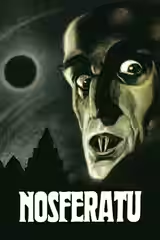
  1. Nosferatu (1922, Fi1m 88)For a vampire whose physical presence makes every ordinary room feel unsafe.

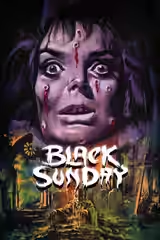
  2. Black Sunday (1960) · not on Fi1m yetAnother period nightmare where faces and atmosphere matter more than tidy plotting.

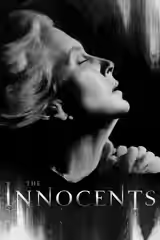
  3. The Innocents (1961) · not on Fi1m yetFor carefully sustained unease, with a performance that makes uncertainty deeply uncomfortable.

  4. Cronos (1993) · not on Fi1m yetA gentler, stranger vampire story with an unusually tender interest in ageing.

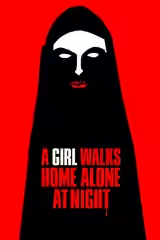
  5. A Girl Walks Home Alone at Night (2014) · not on Fi1m yetFor another seductive vampire, with solitude given as much attention as menace.