Alexander Dovzhenko’s farming drama is stirring because it pays such close attention to faces, fruit and machinery. The political certainty can flatten its characters, but the images reward the concentration they demand.
Earth is worth seeing for the force of its images, even if its politics allow too little room for doubt. Alexander Dovzhenko makes collective farming a subject for close attention: the soil, the people who work it, the machinery that promises to change their lives. The tractor receives the sort of welcome usually reserved for a returning hero. The enthusiasm can be infectious, though the film is rather less interested in understanding anyone who fails to share it.
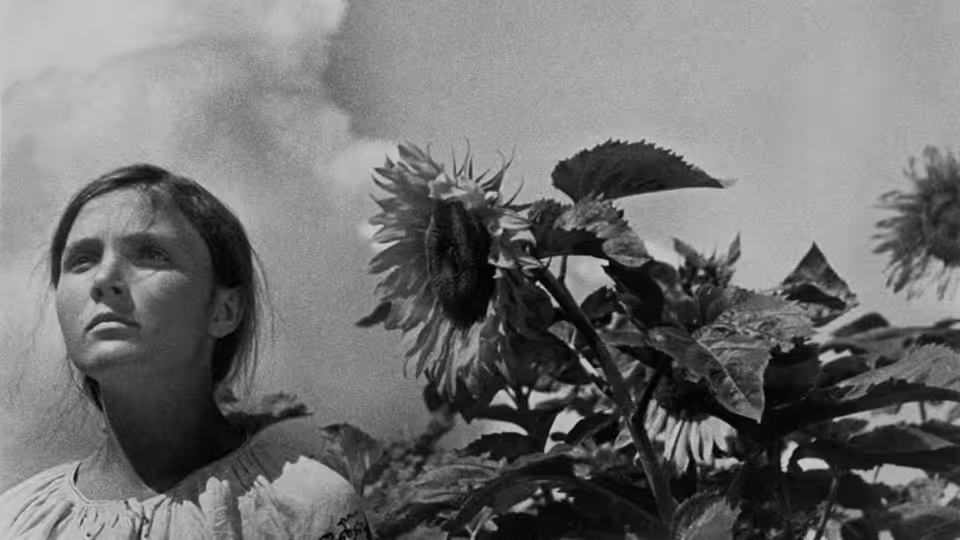
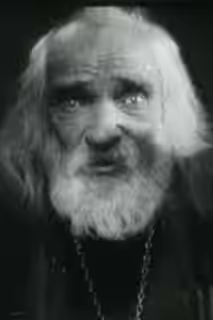
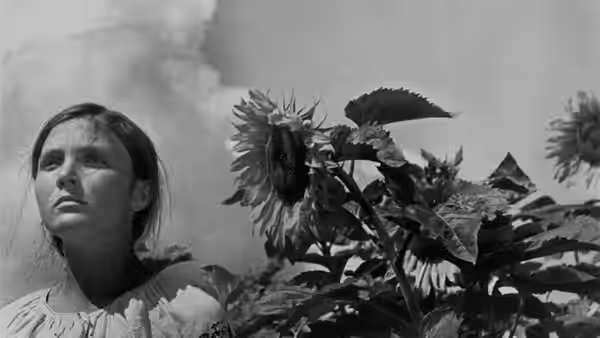
We were moved by the opening orchard, where Grandfather Semyon lies among the apples. Danylo Demutsky’s photography gives the old man’s face and the ripe fruit equal attention, without making either seem like an illustration of a lesson. There is enough time to look at both, and that patience matters. For a film committed to changing how people live, Earth is unusually attentive to what is already there and what people might reasonably wish to keep.
Dovzhenko also edits, and the rhythmic montage is the chief reason the film holds us. Faces, fields and machinery acquire importance through their placement beside one another; we are encouraged to notice a likeness or a contrast before the next image arrives. Some passages move with an excitement that a straightforward account of farm modernisation could hardly generate. Others linger, allowing the film to be sensuous without making every shot hurry towards the next political point.
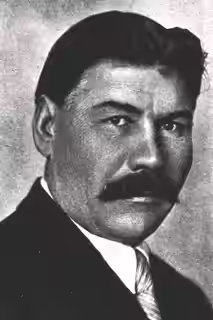
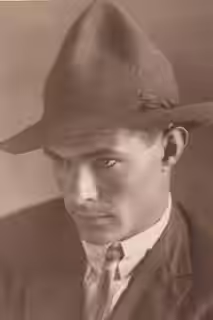
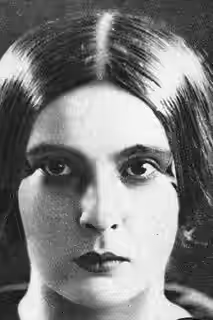
Semyon Svashenko gives Vasyl the confidence that the scheme needs, while Stepan Shkurat’s Opanas provides the resistance of someone harder to persuade. Their difference is more engaging than the broader opposition supplied by Ivan Franko’s Kulak Bilokin. The wealthy farmer is too readily reduced to an obstacle, and that is the weakness in Dovzhenko’s writing. These people can have extraordinary faces and still be asked to represent positions that leave them little room to surprise us.
Vasyl Krychevskyi’s production design keeps the village materially convincing: buildings, farm tools and the divisions of the land give the arguments something solid to concern themselves with. The tractor matters because it belongs among things people actually use. Lev Revutskyi is credited with the music, though the strongest sense of rhythm comes from Dovzhenko’s editing. The cutting establishes the pace so firmly that the images need little help to hold our attention.
Against the more impatient habits of political drama, the pauses are welcome. Dovzhenko understands that the land must interest us before a quarrel over its ownership can matter, and the time spent with fruit and faces is time well spent. Some of the links between images are insistent enough to feel like instructions. Yet the film repeatedly lets a face hold our attention beyond the moment when we have understood what it represents.
At 79 minutes, this is a manageable introduction to a kind of cinema that asks us to follow pictures as closely as events. Its demands are real: anyone hoping for rounded characters and a steadily advancing plot may find the pauses frustrating. Give the orchard and the tractor your full attention, and allow the film to set the pace.