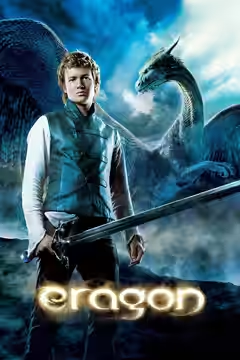
Jeremy Irons brings welcome dryness to a fantasy that hurries through its characters and still feels slow. Eragon offers some competent spectacle, but too little reason to care what happens to anyone.
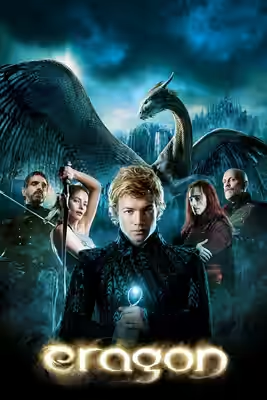
Stefen Fangmeier’s Eragon is a poor fantasy adventure that gives its characters too little time to become interesting. Peter Buchman adapts Christopher Paolini’s novel around the promise of a dragon choosing its rider, a premise with enough appeal to earn a willing audience. The film then seems to expect that willingness to last without much encouragement. We can accept familiar ingredients; what wears us down is how little personality the people handling them are allowed.
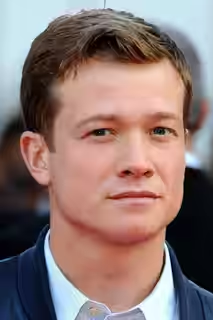
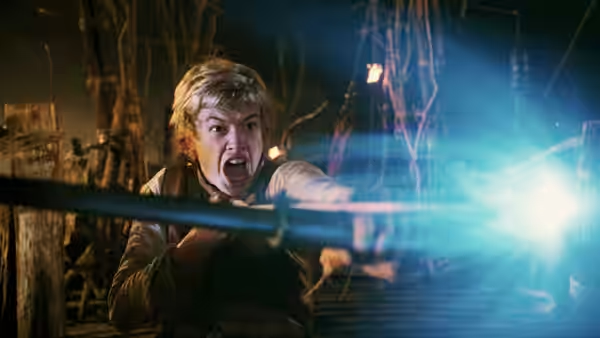
Ed Speleers, as Eragon, has the thankless task of finding a personality in a part that the writing keeps moving along. The screenplay leaves too little room for decisions to register or relationships to acquire weight. It wants the importance of events to be understood immediately, without doing the slower work of letting us know the people involved. That leaves him with too little to play beyond his place in the story, and gives the audience little opportunity to become attached to him.
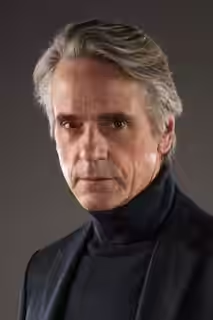
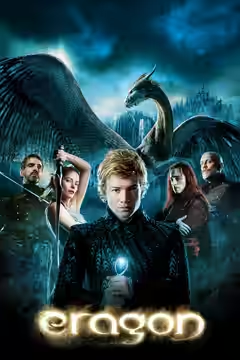
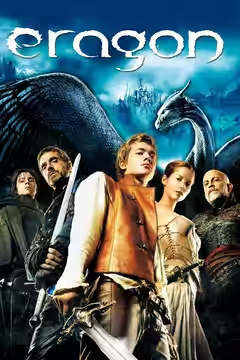
Jeremy Irons gives Brom the dry humour that the rest of the film badly needs. We laughed at his delivery, and were grateful for the interruption. He makes Brom sound capable of questioning what is happening around him, useful in a film that takes its fantasy business so solemnly. This is a modest pleasure, but it makes the character easier to spend time with. Much of the surrounding cast is left to convey importance without being given similarly distinctive behaviour.
The editing, credited to Roger Barton, Masahiro Hirakubo and Chris Lebenzon, keeps the story moving, which at least limits how long individual weaknesses can linger. But the quick progression gives relationships little chance to develop, and important developments arrive before the film has prepared us to feel much about them. At 104 minutes, this ought to be an economical evening. The film could use some quieter time with its characters, even if that meant less action.
Hugh Johnson’s cinematography and Wolf Kroeger’s production design supply the expected fantasy surroundings without giving them much individuality. The images are legible enough, but there is little pleasure in looking around the edges of a scene. A fantasy setting ought to suggest that people live there when the lead character is elsewhere; here, it seldom does. The familiar-looking surroundings compound the screenplay’s problems, because there is so little to discover while waiting for the people to become interesting.
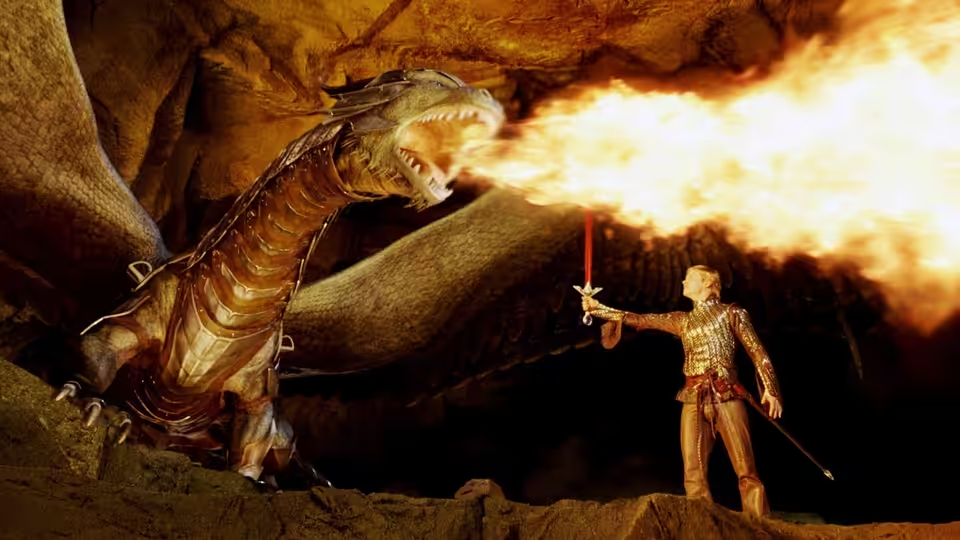
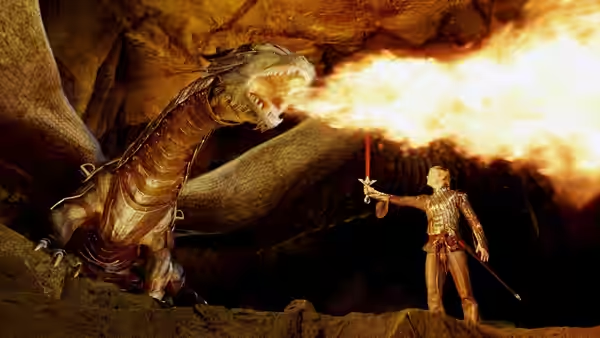
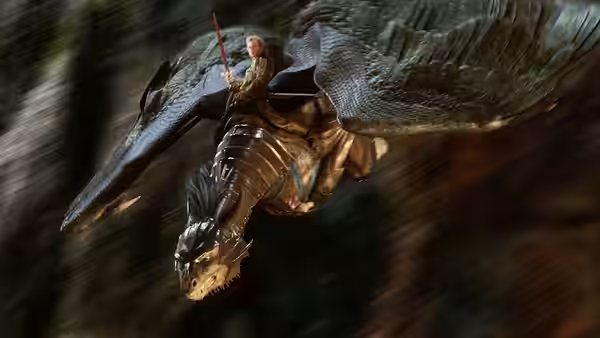
The computer-generated spectacle is competent in places, and it is fair to count that among the film’s limited pleasures. It does not have enough surprise to compensate for the weak dramatic groundwork. Rachel Weisz supplies Saphira’s voice, but the thin writing does not give even this casting much room to help. Patrick Doyle’s music supplies more feeling than the scenes have earned, leaving us aware of how urgently the film wants us to respond.
Family fantasy can be simple without leaving its characters so poorly defined. A new viewer deserves time to discover why a strange creature matters, why someone should be trusted, or what makes a decision difficult. Those are pleasures the genre can offer alongside the action, and this adaptation spends too little time on them. For a family evening, we would choose a fantasy more interested in the people taking part.