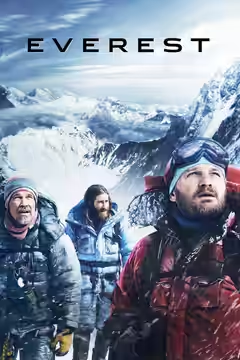
Baltasar Kormákur’s account of the 1996 Everest disaster puts a real mountain on the screen and makes us feel the cold. But it climbs with too many people, and by the time the storm arrives we cannot always tell them apart.
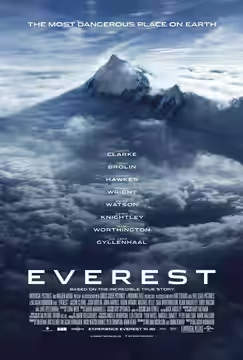
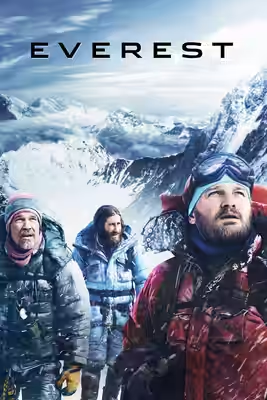
Baltasar Kormákur’s film is about the spring of 1996 on Everest, when two commercial expeditions put their paying clients on the summit on the same afternoon and a storm caught them on the way down. The screenplay, by William Nicholson and Simon Beaufoy, blames nobody in particular and lets everybody share a little of it: the guides who bent their own rules, the clients who would not turn back, the weather, the queue. It is a sober, decently made film with a real mountain in it. It is also spread across so many people that when the worst comes we are working out who is where rather than fearing for them.
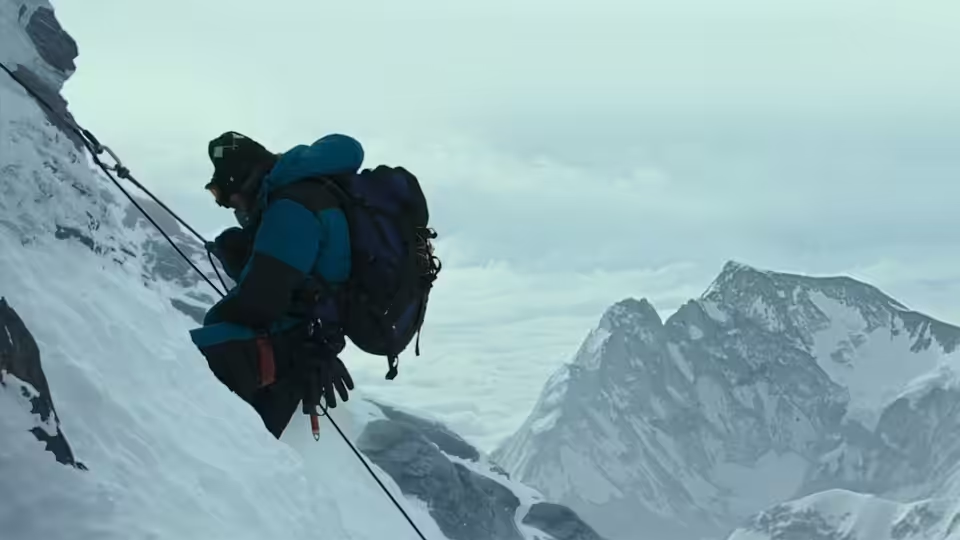
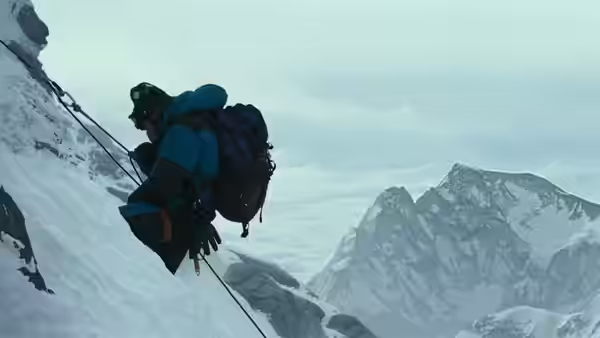
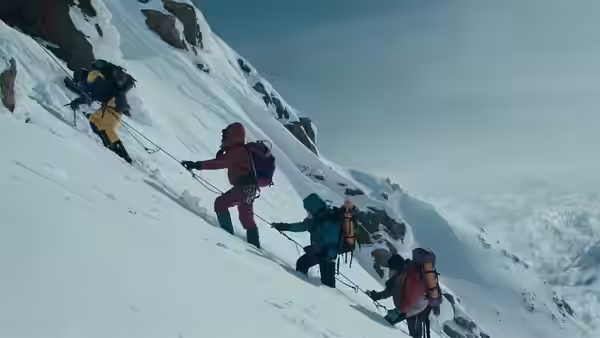
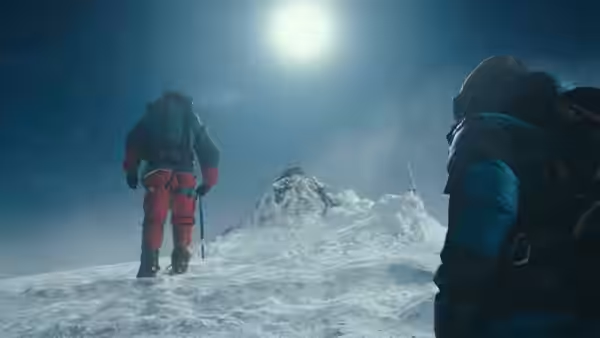
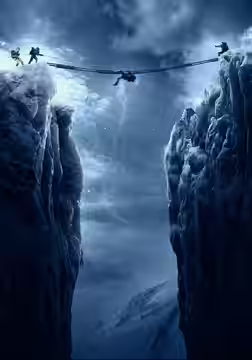
The mountain is the film’s best performer. Salvatore Totino shoots the approach in long, high, wide frames, the climbers a line of coloured dots on a wall of white, so that the scale is never in doubt. Gary Freeman’s Base Camp is a shanty town of yellow tents, cables and prayer flags, and the Hillary Step, when we reach it, is a queue of people on one rope with nothing on either side. When the clients cross a crevasse in the Khumbu Icefall on aluminium ladders lashed end to end, in crampons, with the rungs flexing under each step, we sat with our hands under our thighs. It is the one stretch where the danger is in the frame rather than the dialogue. Dario Marianelli’s score stays out of the way until the views, which can bear it.
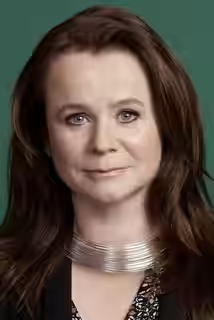
Jason Clarke plays Rob Hall as a careful, courteous man who learns his clients’ first names and uses them. He is the film’s spine and he carries it without raising his voice. Emily Watson, at the radio in Base Camp, does the arithmetic of oxygen bottles and daylight, and her face when a call goes unanswered does more than any line in the script. Josh Brolin’s Beck Weathers arrives as Texan bluster and shows us the fear under it early enough that we care. John Hawkes makes Doug Hansen, the postman who scraped together the money for a second attempt, the client we most want to see on top. Jake Gyllenhaal’s Scott Fischer, ponytail and beer, thinks Hall is too cautious, and is on screen for perhaps a quarter of the film.
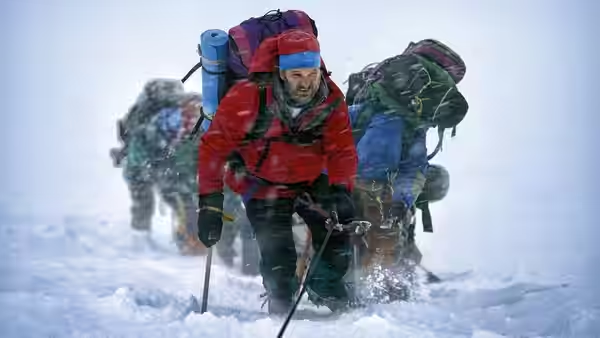
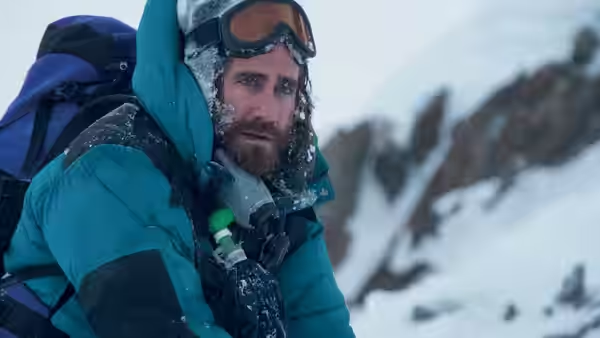
Which is the trouble. There are twelve names in the cast list, and once the climbers go above the South Col they all wear the same thing: oxygen mask, goggles, hood, and a down suit from Guy Speranza whose colour is the only clue to who is inside. In the storm even the colour goes. Mick Audsley cuts between the ridge, the camps below, Base Camp, a house in Christchurch where Keira Knightley waits by a telephone and a house in Texas where Robin Wright waits by another, and the cutting is clear enough. It is the scenes at home that are thin; each woman is given a phone and an expression, and the complaint most reviews have made about that is fair. When the wind arrived we were frightened, properly. Then we noticed we had stopped being frightened for anyone in particular and were checking jackets to keep the roster straight, which is not what the film wanted from us.
The Sherpas, who fixed the ropes and carried the oxygen everyone else is seen using, are at the edge of nearly every frame and the centre of none. Michael Kelly’s Jon Krakauer, whose book about these events is the one most of the audience will have read, spends much of the film being told things.
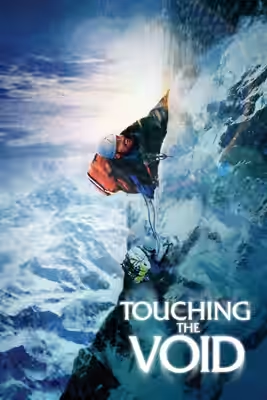
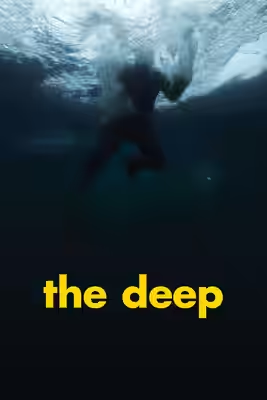
Kormákur’s own The Deep (2012) put one man in the North Atlantic in winter and did not look away. Touching the Void (2003) managed the same with two men and a rope. Everest has a dozen people and keeps looking from one to the next, which is honest about what happened and fatal to what we feel.
See it on the largest screen you can find, where Totino’s wide shots do their work. At home the mountain shrinks to the size of the television and the faces get no easier to tell apart. It runs 121 minutes and carries a 12A, which is about right: it will frighten a twelve-year-old without showing them anything they will regret.