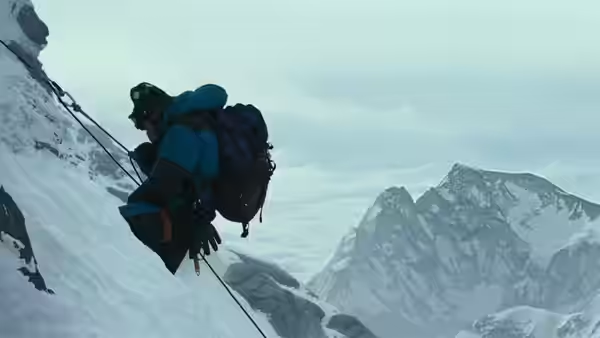
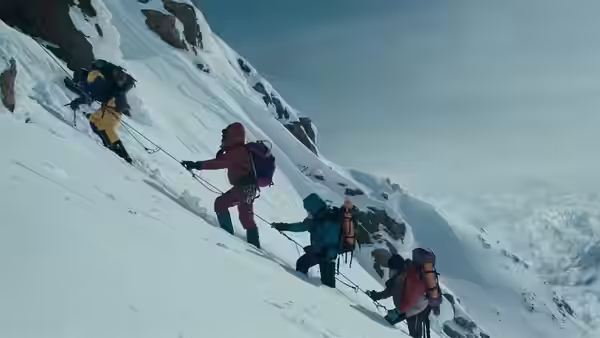
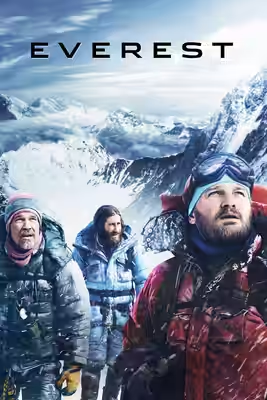
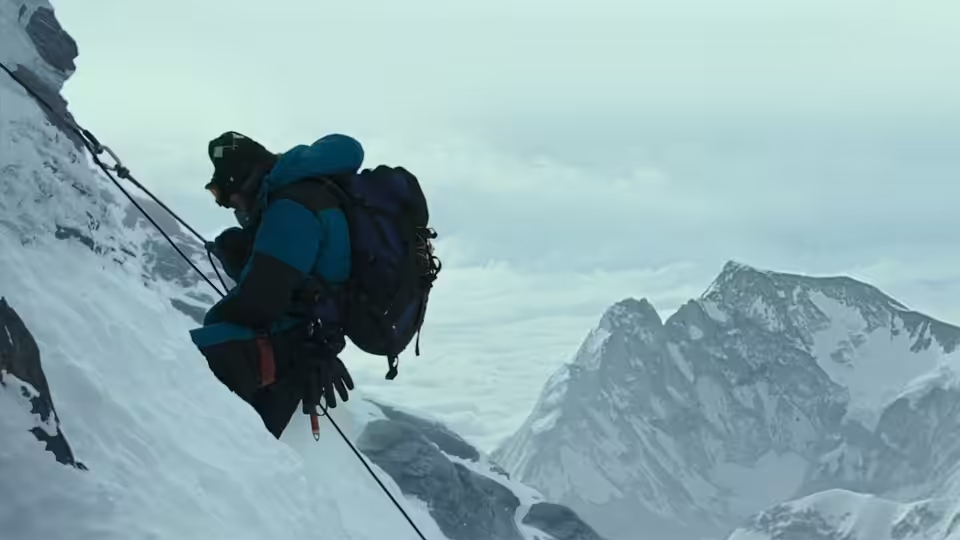
A climber in a blue down jacket ascends a steep icy slope on ropes
Film review

Everest

2015 · Directed by Baltasar Kormákur · 2h 01m

In a sentenceA dozen people in oxygen masks and goggles, and the mountain is the only one we could pick out of a line-up

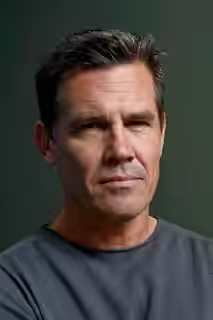
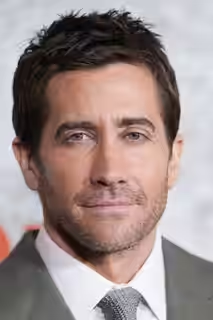
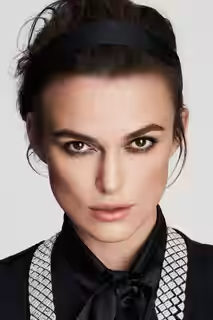
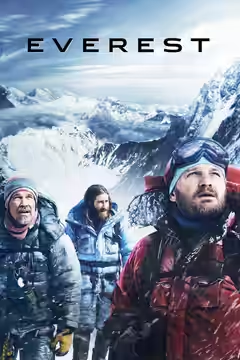
Spring 1996. Rob Hall (Jason Clarke), who guides paying clients up Everest, leaves his pregnant wife Jan (Keira Knightley) in New Zealand and flies to Kathmandu to meet this season’s party: Beck Weathers (Josh Brolin), a Texan doctor; Doug Hansen (John Hawkes), a postman who turned back short of the summit the year before; and Jon Krakauer (Michael Kelly), a journalist writing the climb up for a magazine. At Base Camp, Helen Wilton (Emily Watson) runs the radios, and the mountain is crowded with rival outfits, one of them led by Scott Fischer (Jake Gyllenhaal). Hall’s method is caution: acclimatise slowly, turn around at two o’clock. The clients cross crevasses in the Khumbu Icefall on aluminium ladders, and the forecast for summit day, 10 May, is still anyone’s guess.

Plays from YouTube when you press play; nothing loads from them until then.

Fi1m review

Baltasar Kormákur’s account of the 1996 Everest disaster puts a real mountain on the screen and makes us feel the cold. But it climbs with too many people, and by the time the storm arrives we cannot always tell them apart.

Baltasar Kormákur’s film is about the spring of 1996 on Everest, when two commercial expeditions put their paying clients on the summit on the same afternoon and a storm caught them on the way down. The screenplay, by William Nicholson and Simon Beaufoy, blames nobody in particular and lets everybody share a little of it: the guides who bent their own rules, the clients who would not turn back, the weather, the queue. It is a sober, decently made film with a real mountain in it. It is also spread across so many people that when the worst comes we are working out who is where rather than fearing for them.

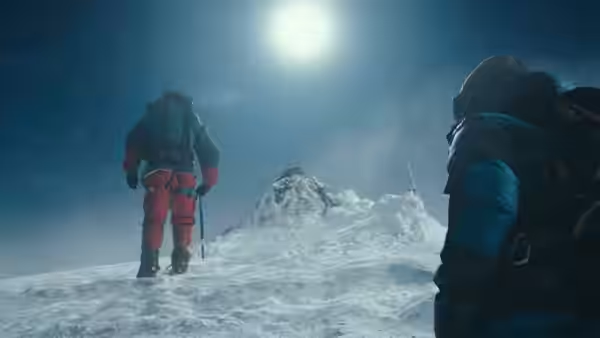
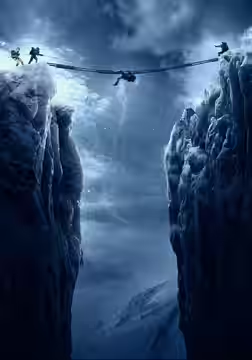
The mountain is the film’s best performer. Salvatore Totino shoots the approach in long, high, wide frames, the climbers a line of coloured dots on a wall of white, so that the scale is never in doubt. Gary Freeman’s Base Camp is a shanty town of yellow tents, cables and prayer flags, and the Hillary Step, when we reach it, is a queue of people on one rope with nothing on either side. When the clients cross a crevasse in the Khumbu Icefall on aluminium ladders lashed end to end, in crampons, with the rungs flexing under each step, we sat with our hands under our thighs. It is the one stretch where the danger is in the frame rather than the dialogue. Dario Marianelli’s score stays out of the way until the views, which can bear it.

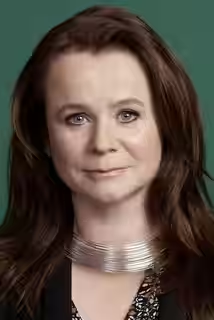
Jason Clarke plays Rob Hall as a careful, courteous man who learns his clients’ first names and uses them. He is the film’s spine and he carries it without raising his voice. Emily Watson, at the radio in Base Camp, does the arithmetic of oxygen bottles and daylight, and her face when a call goes unanswered does more than any line in the script. Josh Brolin’s Beck Weathers arrives as Texan bluster and shows us the fear under it early enough that we care. John Hawkes makes Doug Hansen, the postman who scraped together the money for a second attempt, the client we most want to see on top. Jake Gyllenhaal’s Scott Fischer, ponytail and beer, thinks Hall is too cautious, and is on screen for perhaps a quarter of the film.

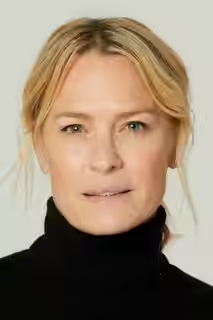
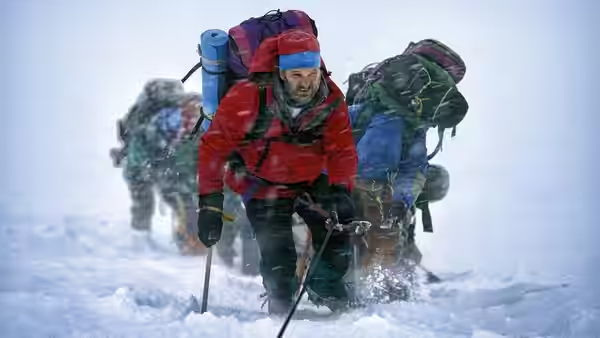
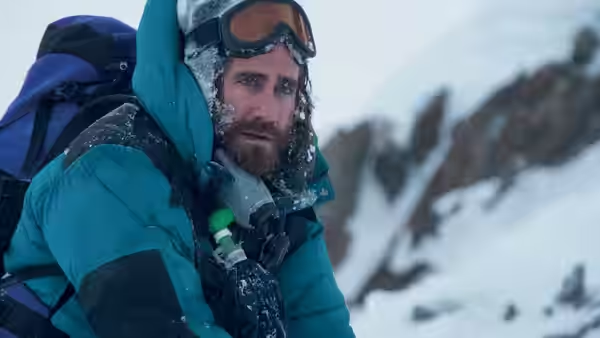
Which is the trouble. There are twelve names in the cast list, and once the climbers go above the South Col they all wear the same thing: oxygen mask, goggles, hood, and a down suit from Guy Speranza whose colour is the only clue to who is inside. In the storm even the colour goes. Mick Audsley cuts between the ridge, the camps below, Base Camp, a house in Christchurch where Keira Knightley waits by a telephone and a house in Texas where Robin Wright waits by another, and the cutting is clear enough. It is the scenes at home that are thin; each woman is given a phone and an expression, and the complaint most reviews have made about that is fair. When the wind arrived we were frightened, properly. Then we noticed we had stopped being frightened for anyone in particular and were checking jackets to keep the roster straight, which is not what the film wanted from us.

The Sherpas, who fixed the ropes and carried the oxygen everyone else is seen using, are at the edge of nearly every frame and the centre of none. Michael Kelly’s Jon Krakauer, whose book about these events is the one most of the audience will have read, spends much of the film being told things.

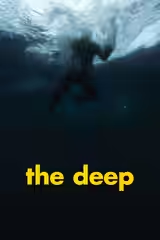
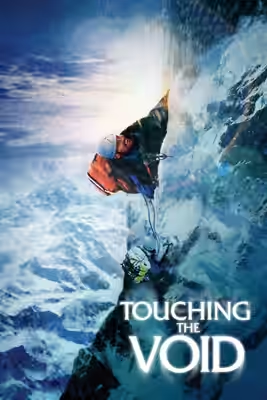
Kormákur’s own The Deep (2012) put one man in the North Atlantic in winter and did not look away. Touching the Void (2003) managed the same with two men and a rope. Everest has a dozen people and keeps looking from one to the next, which is honest about what happened and fatal to what we feel.

See it on the largest screen you can find, where Totino’s wide shots do their work. At home the mountain shrinks to the size of the television and the faces get no easier to tell apart. It runs 121 minutes and carries a 12A, which is about right: it will frighten a twelve-year-old without showing them anything they will regret.
Critical consensus AI synthesised

60
Positive
9
Mixed
7
Negative
8

The reviews split almost down the middle. Where critics agree is on the mountain itself: most find the summit sequences physically immersive, with the large-format imagery and sound design making the cold, the ladders and the drops feel immediate rather than scenic. Several single out individual performances, with Jason Clarke, Josh Brolin and Emily Watson each named as giving the drama what warmth it has.

The reservations cluster on the people rather than the peak. A clear majority say the ensemble is too crowded, the characterisation thin and the emotional pull distant, and more than one critic notes that the Sherpa guides and the women at base camp are underserved. The spread is wide, running from Deadline’s warm endorsement to the Guardian and Evening Standard, who find it subdued and confused. Digital Spy and Consequence go further, denying the film even its main virtue by arguing it never conveys the mountain’s scale or danger.

IndieWire
2 September 2015 · B+ · Eric Kohn
83

Kohn finds Everest a gripping, technically accomplished survival thriller, though it struggles to develop its large ensemble and largely overlooks Sherpa culture. He especially praises the visceral IMAX-scale mountain imagery and sound design for making the climb’s danger palpable.

Read the full review →
Radio Times
★★★★ · Andrew Collins
80

Collins presents the film as an ambitious, gripping mountaineering thriller. He praises the clear staging of the climbers’ journey and the screenplay’s contribution.

Read the full review →
Time Out
14 September 2015 · ★★★★ · Dave Calhoun
80

Calhoun presents the film as a gripping, physically immersive disaster movie. He singles out its breathless, vertigo-inducing experience near the summit.

Read the full review →
The Hollywood Reporter
2 September 2015 · festival review · Todd McCarthy
78*

McCarthy finds the film an intense, involving, and appropriately tragic dramatization, praising its immersive visuals and humanized characters. He also singles out its realistic detail, while wishing the Sherpa guides had more prominence.

Read the full review →
The AV Club
18 September 2015 · B · Katie Rife
77

Rife finds the film thrilling but ultimately more punishingly sad than illuminating about why climbing Everest is worthwhile. She praises its sweeping mountain vistas and effective IMAX-scale images, while noting that the climbers’ suffering overshadows the mountain’s majesty.

Read the full review →
RogerEbert.com
17 September 2015 · ★★★/4 · Matt Zoller Seitz
75

The review finds the film gripping and visually impressive, though somewhat workmanlike. It praises the striking mountain imagery while noting that the drama feels emotionally distant.

Read the full review →

Straight answers AI written, from our review

Is Everest worth watching?
Everest is worth an evening for anyone who wants a real mountain on screen and will forgive a crowded cast, and we scored it 61. Salvatore Totino's wide shots and the ladder crossing in the Khumbu Icefall are frightening in the right way. Once the storm arrives, though, a dozen climbers in identical masks and goggles become hard to tell apart, and our fear stops attaching to anyone in particular.
How long is Everest, and what is it rated?
Everest runs 2h 01m. It is an adventure and drama film.
Where can I watch Everest in Panama?
Everest is streaming on HBO Max in Panama, and it is also available to rent from Apple TV from PAB 3.99. Availability is checked daily; the links above go straight to each service.
How violent or frightening is Everest, and is it suitable for children?
Everest carries a 12A certificate and shows no gore or sex; its frights come from height, cold and a storm that catches people on the way down. We found the crevasse crossing and the wind on the ridge properly alarming. It will frighten a twelve-year-old without showing them anything they will regret, and it is about people dying, which parents of younger children should weigh.
How does Everest compare to Touching the Void?
Everest is the bigger film and Touching the Void is the more frightening one. Kevin Macdonald's documentary has two men and a rope and never looks away, so the danger stays fixed on faces we know; Baltasar Kormákur's drama spreads itself across a dozen clients and guides and keeps cutting between them. See Everest for scale on a large screen, and Touching the Void for suspense you feel in your hands.
What should I watch after Everest?
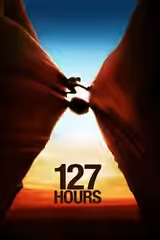
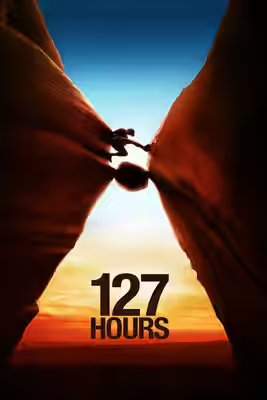
After Everest, try Touching the Void (2003, Fi1m 87): Two men, one rope, and a documentary more frightening than most thrillers. Then 127 Hours (2010, Fi1m 81): Beaufoy’s other script about a body in the wrong place, with one man and no queue.

Cast

If you liked this, try…

  1. Touching the Void (2003, Fi1m 87)Two men, one rope, and a documentary more frightening than most thrillers.

  2. The Deep (2012) · not reviewed yetKormákur’s earlier survival film: one Icelandic fisherman in freezing sea, and it never looks away.

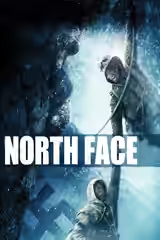
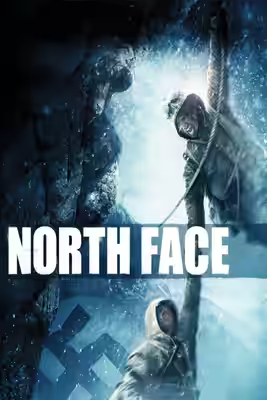
  3. North Face (2008) · not reviewed yetGermans and Austrians on the Eiger in 1936, and the cold is the villain.

  4. 127 Hours (2010, Fi1m 81)Beaufoy’s other script about a body in the wrong place, with one man and no queue.

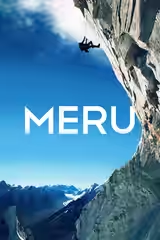
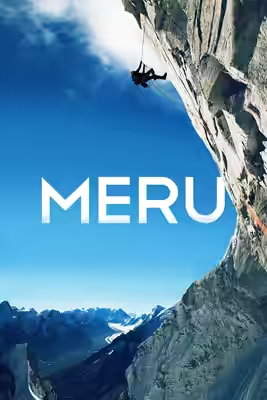
  5. Meru (2015) · not reviewed yetThree climbers filming their own attempt on a Himalayan wall; the fear is first-hand.

Free account

Know what to watch tonight

Two lists that know where things are streaming, collections you can share, your own score beside ours, and Discover that remembers what you have seen.

  • Want to see, sorted by what is streaming now
  • Seen, with your score out of ten
  • No adverts, ever