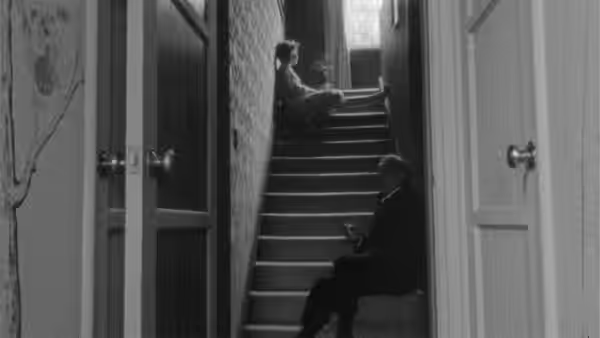
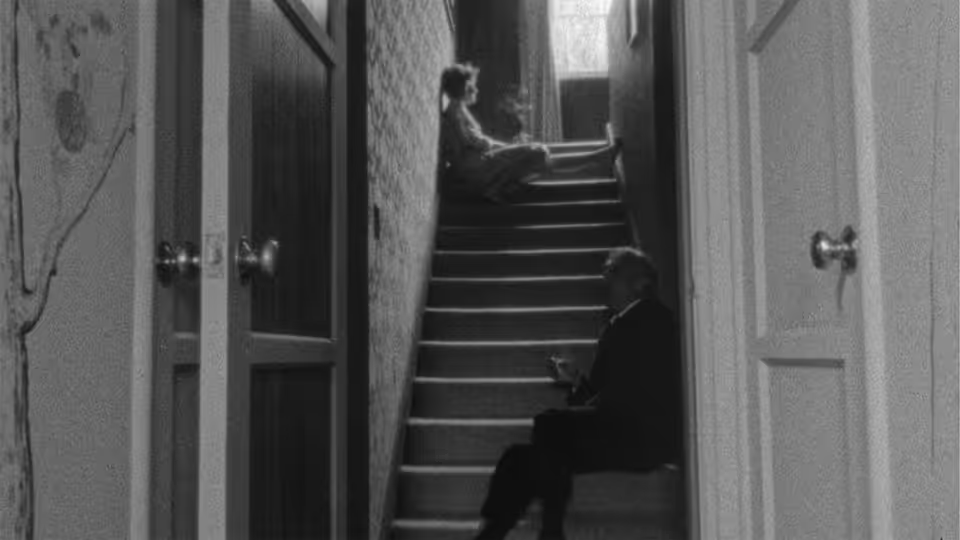
A figure sits on a staircase between open doors
Film review

Faces

1968 · Directed by John Cassavetes · 2h 10m

In a sentenceA marriage drama best followed by a short, uneventful conversation about the washing-up

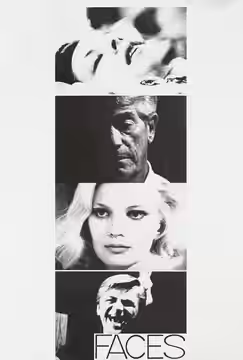
Richard Forst (John Marley) and Maria Forst (Lynn Carlin) are a married couple in crisis, struggling to make themselves understood without anger taking over. Jeannie Rapp (Gena Rowlands) is among the people around them, and her flat provides a setting for encounters outside the marriage. Richard and Maria’s unhappiness extends into their contact with other people, as exchanges charged with resentment expose the hurt beneath. Finding company does not make their difficulties easier to put into words, or make them easier companions for anyone else.

Fi1m review

Faces is a demanding marriage drama worth the effort for its unnervingly alert cast. The arguments sometimes outlast their interest, but the hurt beneath them stays persuasive.

Faces is a good, demanding marriage drama that occasionally mistakes staying with an argument for finding something further in it. John Cassavetes, who writes and directs, puts the work of holding our attention largely in the hands of the cast. That is a sensible decision: the performances make hurt and anger feel uncomfortably close together. We recommend it for those performances, with the warning that 130 minutes is more time than every exchange earns.

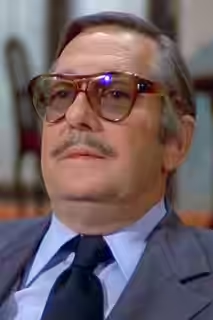
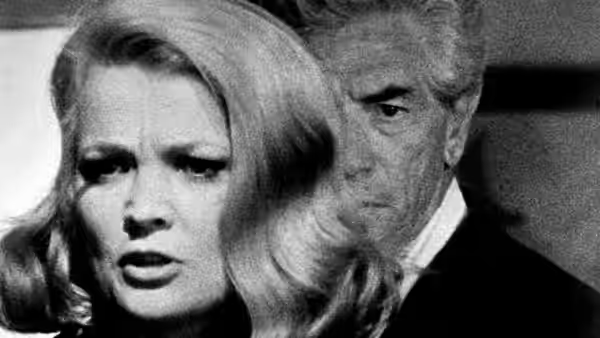
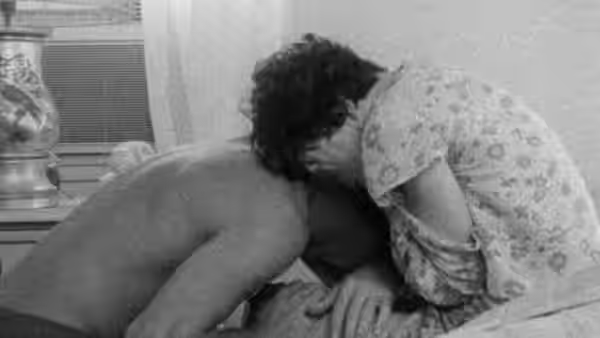
John Marley and Lynn Carlin play Richard Forst and Maria Forst without giving us the comfortable distance of a neatly diagnosed unhappy couple. We can recognise the anger before we are certain what any particular outburst will achieve. The frustration is that people who want to be understood can make themselves so difficult to listen to, and the actors let that frustration remain unpleasant. As a marriage drama, the film asks for a willingness to sit with behaviour we would rather leave behind at the end of an evening.

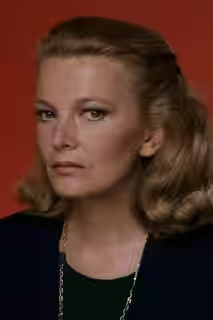
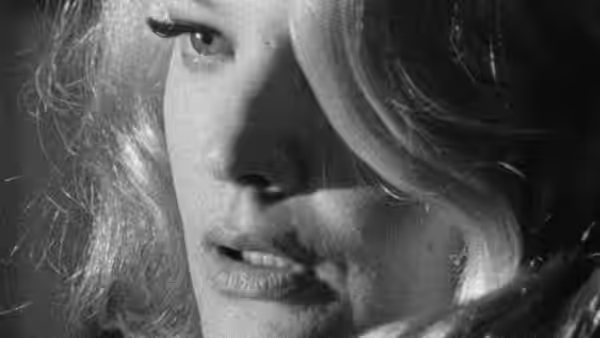
Gena Rowlands, as Jeannie Rapp, gives the flat scenes much of their force. Her performance keeps us interested in the company even as being among these people becomes oppressive. We felt cornered by the anger in these encounters, and the actors’ nervous energy made it hard to dismiss anyone as merely tiresome. A more conciliatory account of marital trouble would have been easier to sit through, but these performances give us good reason to stay.

The cinematography is credited to Maurice McEndree, Al Ruban and Haskell Wexler, and its most persuasive quality is how firmly it directs attention towards the performers. We found ourselves studying reactions as closely as the person commanding an exchange. Phedon Papamichael’s production design is effective on similarly modest terms: Jeannie’s flat holds our interest because of the people in it. Looking elsewhere offers little relief from the discomfort of their company.

The editing, shared by John Cassavetes, Maurice McEndree and Al Ruban, is where our reservations become harder to ignore. Giving an actor room to work is valuable, but there are passages where the same emotional point continues after we have understood it. We began waiting for an exchange to finish rather than wondering what someone would do next. Some firmer cutting would have helped, particularly when the performances have already made the unhappiness clear.

Jack Ackerman’s music supports the unease without competing with the actors for our attention. The voices carry enough agitation without our needing another instruction about how distressed everyone is. The writing is less consistent in finding fresh things for that agitation to reveal. Too often, the intensity increases without changing what we understand about the people, leaving the cast to sustain scenes that have little further to go.

These are difficult people to spend time with, and the cast do not soften them into agreeable company. Their performances remain worth the effort even when the film’s patience exceeds ours. Anyone looking for a marriage drama with a steady supply of explanations should choose something else. We would save Faces for an evening when the two people on the sofa are already getting along.

Critical consensus AI synthesised

64
Positive
2
Mixed
3
Negative
1
Empire
1 January 2000 · Kim Newman
95*

Newman calls the film one of Cassavetes' masterpieces and praises its portrait of a marriage in crisis. He singles out the scenes in Rowlands' apartment and the cast's improvisational performances.

Read the full review →
Slant Magazine
14 February 2009 · ★★★/4 · Jeremiah Kipp
75

Kipp considers the film a high point in Cassavetes’s work, though he notes that its performance-driven approach may test some viewers’ patience. He praises the actors’ vivid, nervy performances and the emotional force beneath their characters’ anger.

Read the full review →
RogerEbert.com
64*

The page could not be accessed, so the critic’s verdict is unavailable. No praise or complaint can be verified from the supplied text.

Read the full review →
The New Yorker
7 December 1968 · Pauline Kael
64*

The archive identifies Kael’s column as reviewing Faces, but the accessible page does not reveal her verdict. It pairs the film with Joanna without exposing any specific praise or complaint.

Read the full review →
Time Out
· GA
64*

The available text identifies this as a review but does not reveal the critic’s verdict. It offers no accessible detail about what the critic praises or criticizes.

Read the full review →
Variety
31 December 1967 · Variety Staff
25*

The review finds the film overlong and unable to bring its material to life. It singles out Gena Rowlands and some other cast members as superior to the material.

Read the full review →

Straight answers AI written, from our review

Is Faces worth watching?
Faces is worth watching for its unnervingly alert performances, and we score it 76 out of 100. We recommend it to anyone willing to sit with marital anger and difficult company, though some arguments repeat their point and the 130-minute running time asks more patience than every scene earns.
How long is Faces, and what is it rated?
Faces runs 2h 10m. It is a drama film.
Where can I watch Faces in Japan?
Faces is not on any streaming or rental service in Japan at the moment. It is available in 2 other countries; change your country at the top of the page to see where. Availability is checked daily.
How does Faces compare to Who's Afraid of Virginia Woolf??
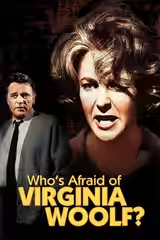
Faces is the more uneven choice beside Who's Afraid of Virginia Woolf?, though both make marital hostility uncomfortable company for an evening. We favour the latter for exhaustion that feels purposeful and Elizabeth Taylor’s remarkable performance; Faces also rewards attention to its cast, but its arguments sometimes continue after they have made their point.
What should I watch after Faces?
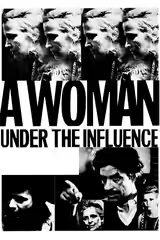
After Faces, try A Woman Under the Influence (1974, Fi1m 86): Another difficult relationship, with performances that make every domestic encounter feel precarious. Then Who's Afraid of Virginia Woolf? (1966, Fi1m 86): Marital hostility becomes a group activity, with alcohol doing little to help; and Another Year (2010, Fi1m 87): A quieter gathering of unhappy adults, observed with patience and an uncomfortable clarity.

Cast

Awards

Academy Awards, 1969

Nominated
Best Supporting Actor
Nominated
Best Supporting Actress
Nominated
Best Writing, Original Screenplay

If you liked this, try…

  1. A Woman Under the Influence (1974, Fi1m 86)Another difficult relationship, with performances that make every domestic encounter feel precarious.

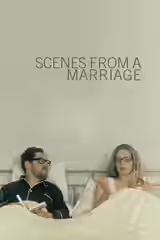
  2. Scenes from a Marriage (1973) · not on Fi1m yetFor more sustained attention to the ways couples explain and wound each other.

  3. Who's Afraid of Virginia Woolf? (1966, Fi1m 86)Marital hostility becomes a group activity, with alcohol doing little to help.

  4. Another Year (2010, Fi1m 87)A quieter gathering of unhappy adults, observed with patience and an uncomfortable clarity.

  5. Happy Hour (2015) · not on Fi1m yetFour women’s friendships receive the time and attention that most dramas cannot spare.