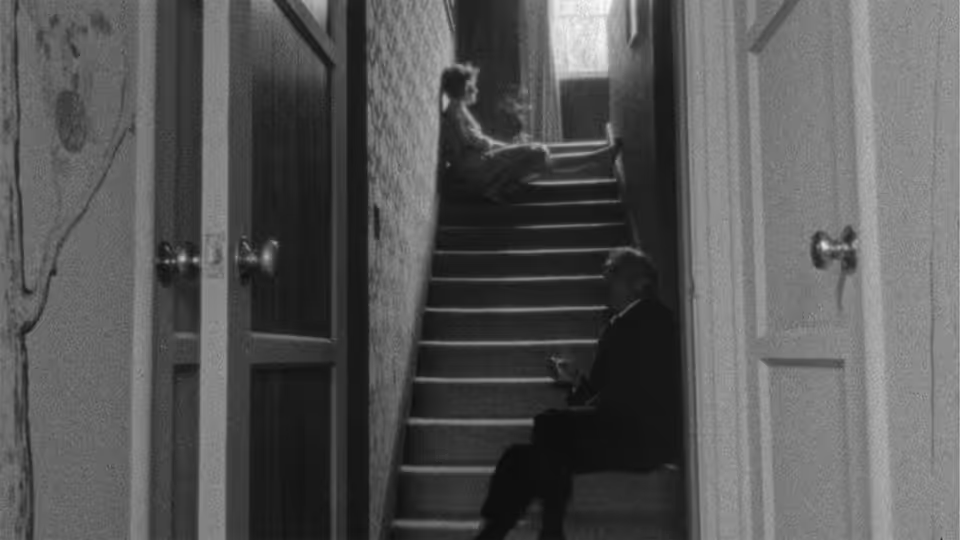
Faces is a demanding marriage drama worth the effort for its unnervingly alert cast. The arguments sometimes outlast their interest, but the hurt beneath them stays persuasive.
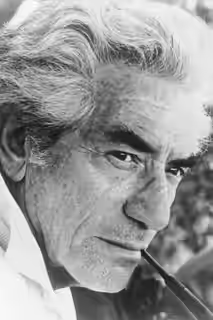
Faces is a good, demanding marriage drama that occasionally mistakes staying with an argument for finding something further in it. John Cassavetes, who writes and directs, puts the work of holding our attention largely in the hands of the cast. That is a sensible decision: the performances make hurt and anger feel uncomfortably close together. We recommend it for those performances, with the warning that 130 minutes is more time than every exchange earns.
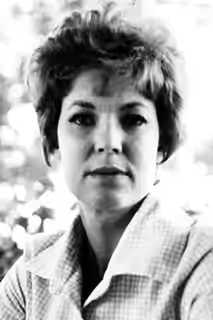
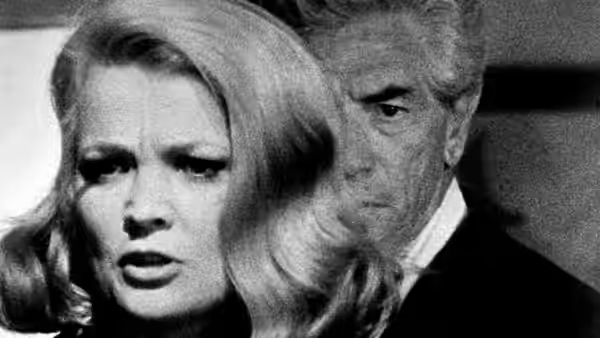
John Marley and Lynn Carlin play Richard Forst and Maria Forst without giving us the comfortable distance of a neatly diagnosed unhappy couple. We can recognise the anger before we are certain what any particular outburst will achieve. The frustration is that people who want to be understood can make themselves so difficult to listen to, and the actors let that frustration remain unpleasant. As a marriage drama, the film asks for a willingness to sit with behaviour we would rather leave behind at the end of an evening.
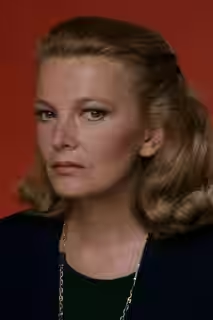
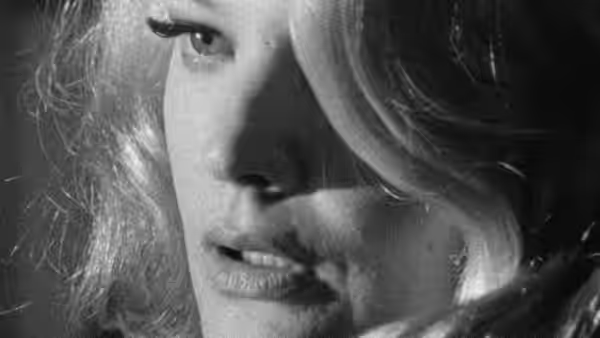
Gena Rowlands, as Jeannie Rapp, gives the flat scenes much of their force. Her performance keeps us interested in the company even as being among these people becomes oppressive. We felt cornered by the anger in these encounters, and the actors’ nervous energy made it hard to dismiss anyone as merely tiresome. A more conciliatory account of marital trouble would have been easier to sit through, but these performances give us good reason to stay.
The cinematography is credited to Maurice McEndree, Al Ruban and Haskell Wexler, and its most persuasive quality is how firmly it directs attention towards the performers. We found ourselves studying reactions as closely as the person commanding an exchange. Phedon Papamichael’s production design is effective on similarly modest terms: Jeannie’s flat holds our interest because of the people in it. Looking elsewhere offers little relief from the discomfort of their company.
The editing, shared by John Cassavetes, Maurice McEndree and Al Ruban, is where our reservations become harder to ignore. Giving an actor room to work is valuable, but there are passages where the same emotional point continues after we have understood it. We began waiting for an exchange to finish rather than wondering what someone would do next. Some firmer cutting would have helped, particularly when the performances have already made the unhappiness clear.
Jack Ackerman’s music supports the unease without competing with the actors for our attention. The voices carry enough agitation without our needing another instruction about how distressed everyone is. The writing is less consistent in finding fresh things for that agitation to reveal. Too often, the intensity increases without changing what we understand about the people, leaving the cast to sustain scenes that have little further to go.
These are difficult people to spend time with, and the cast do not soften them into agreeable company. Their performances remain worth the effort even when the film’s patience exceeds ours. Anyone looking for a marriage drama with a steady supply of explanations should choose something else. We would save Faces for an evening when the two people on the sofa are already getting along.