Angelina Jolie’s account of the Khmer Rouge years, seen through a small girl’s eyes, is serious, tactful and often beautiful to look at. It is also long, and it keeps Loung so quiet that we watch her ordeal more than we share it.
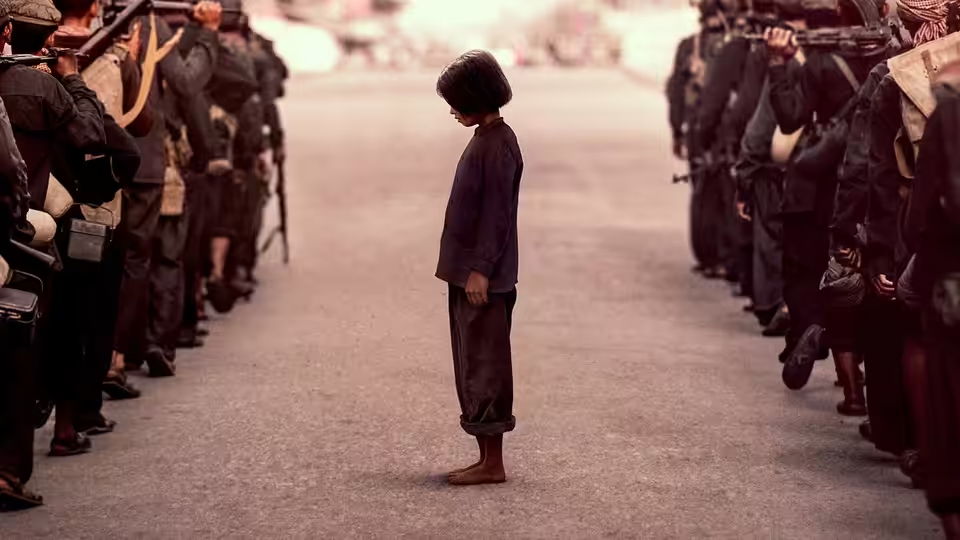
Angelina Jolie’s film is taken from Loung Ung’s memoir of living through the Khmer Rouge years as a small child, and Ung wrote the screenplay with her. It is spoken in Khmer, cast with Cambodian actors, and co-produced by Rithy Panh, whose own films about those years are the standard any newcomer has to meet. Jolie has set herself one rule: we see only what Loung sees, from Loung’s height, and nobody explains to us what nobody explained to her. The rule is honourable and it costs the film a great deal. We admired it for all of its 136 minutes and were moved by it for perhaps thirty.
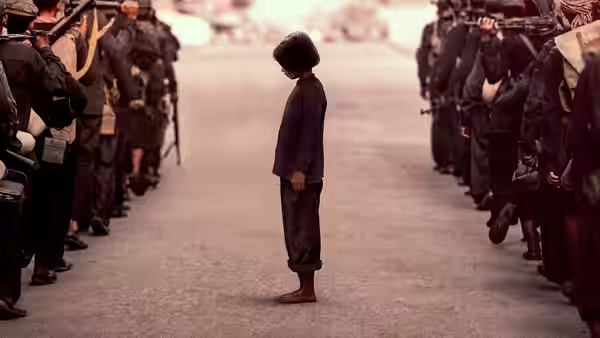
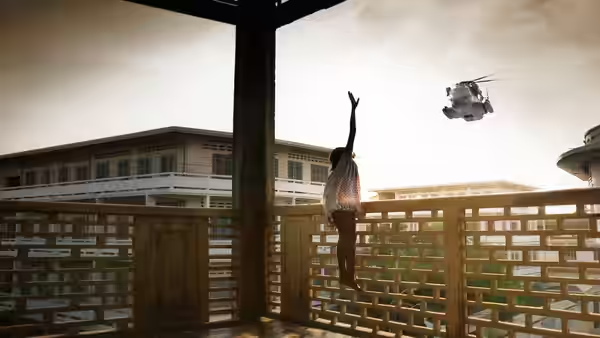
Anthony Dod Mantle shoots most of it handheld at a child’s eye level, so adults are largely belts and rifles and the frame is forever being jostled from behind. Then, every so often, the camera lifts straight up and we look down on a column of thousands on a road, or a paddy cut into squares, or a camp of thatched huts in rows. These overhead shots are the film’s signature and they are beautiful, which is the trouble with them: from up there the country looks like a garden and the people like a pattern. Tom Brown builds the camps from bamboo and mud and nothing else. Ellen Mirojnick does the one thing the costumes have to do, which is take a family’s coloured city clothes and, over a few scenes, turn them the same black as everyone else’s.
Sareum Srey Moch is on screen as Loung almost without a break. She says little, by design, and she has a face the camera can rest on: round, wary, slow to give anything away. There are moments when something she has seen crosses it and no line is needed. There are more moments when Jolie cuts to her for a reaction, the face stays shut, and we are left to supply the feeling ourselves. Phoeung Kompheak, as Pa, is the one adult we come to know, a soft-spoken man lying for his family’s sake and hating the lie. Sveng Socheata’s Ma is sharper and more frightened and gets about a third of his screen time.
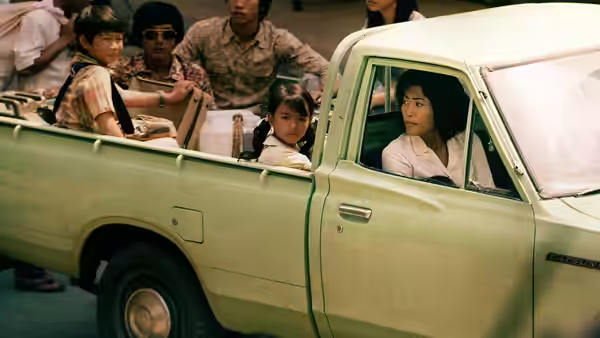
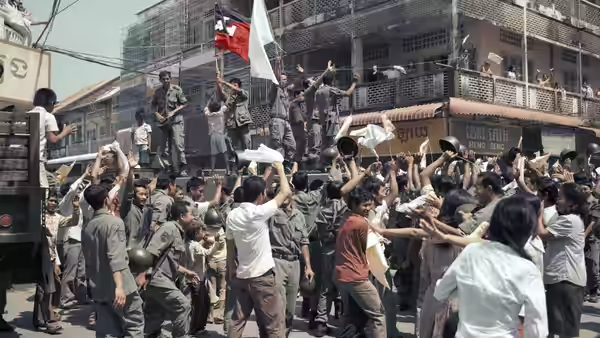
The emptying of Phnom Penh is the stretch that got to us. Jolie and her editors, Patricia Rommel and Xavier Box, let it run: loudspeakers announcing that the Americans are about to bomb, the family carrying what it can, the road filling until it moves like one slow animal, a body in a ditch that Loung looks at and her mother turns her from. At a checkpoint where a soldier asks Pa what he used to do, we were holding our breath, and we have sat through a great many checkpoints. That is the film working as intended: a child’s dread on screen, and the adult knowledge of what is coming supplied by us.
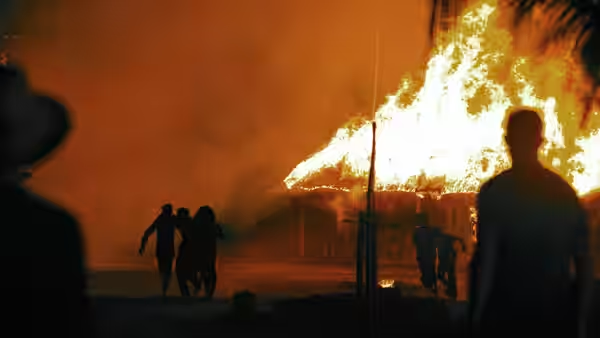
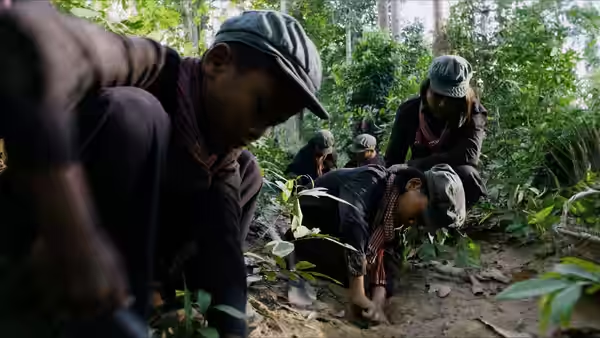
The camp is where it stalls. Digging, rice water, speeches from a cadre (Tharoth Sam) about Angkar and the revolution, children sent away to other camps, more digging. This is faithful, and sameness was the truth of those places, but on screen it is only sameness. Somewhere past the hour we were bored, and ashamed of it, since the people in front of us were dying of the thing we were bored by. Marco Beltrami’s score is spare and respectful, low strings and long silences, and it does nothing to shape the hours; nor do Rommel and Box, who cut the middle of the film at one unvarying pace.
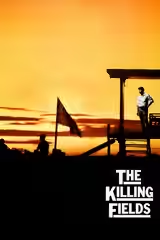
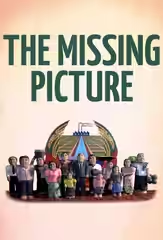
Keeping us inside a child’s head is the choice most critics have divided over, and we come down on both sides of it. It spares us the history lesson, and the film is better than The Killing Fields (1984) at making the terror ordinary, a matter of lists and loudspeakers and a gap where a person used to be. But it leaves Loung’s brothers and sisters as names and faces, and when the film needs us to fear for one of them we realise we were barely introduced. Panh’s The Missing Picture (2013) told the same history with clay figures and a man’s memory and hurt more.
It is a serious film, made with care by people who had every right to make it, and we are glad it exists. Watch it at home with the lights off and the phone in another room, because its effects are quiet and it will not fight for your attention. Bring patience for the middle hour. The last half hour, which we will not describe, repays it.