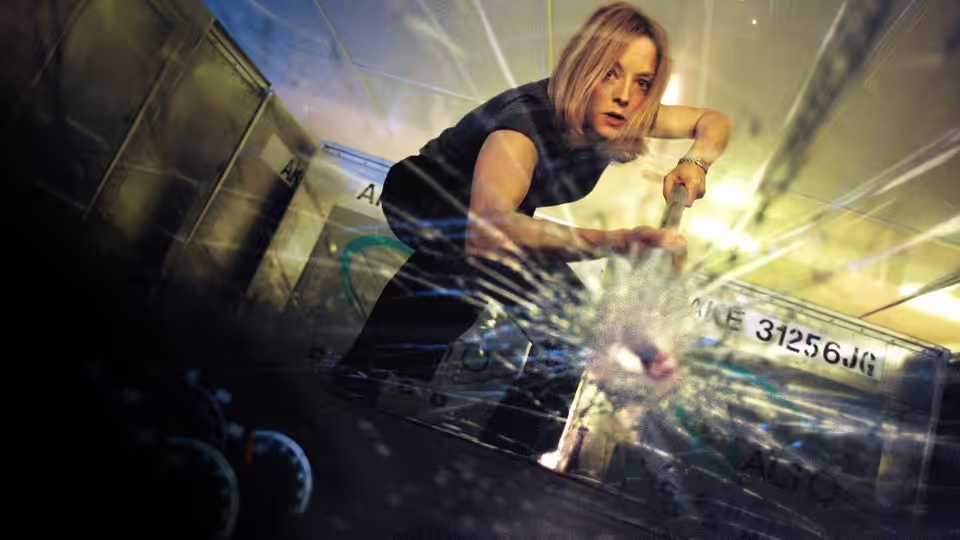
Jodie Foster gives this airborne thriller more conviction than its plotting deserves. Robert Schwentke builds the cabin anxiety patiently, but the move towards action and an implausible explanation make it a qualified recommendation for thriller devotees.
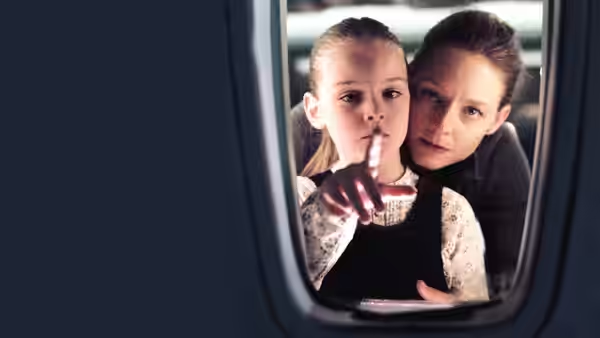
Robert Schwentke’s Flightplan offers an effective stretch of suspense before arriving at an explanation that cannot bear much examination. It is strongest while the aircraft cabin feels oppressive and ordinary behaviour begins to seem suspect. The patient build gives Jodie Foster room to make Kyle’s vulnerability count, and the anxiety is sufficiently persuasive to carry us through some doubtful plotting. The eventual shift towards action costs the film more than it gains.
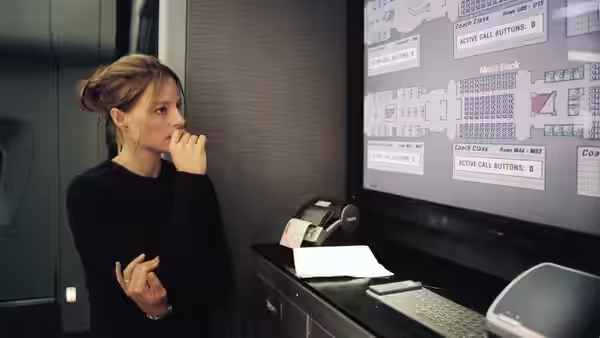
Jodie Foster does the difficult work of keeping Kyle worth following when our confidence in the story begins to slip. She makes Kyle seem capable without suggesting that she has stopped being frightened, which gives the intensity something recognisably human behind it. That performance does grow wearing when the film keeps pressing for the same level of alarm without giving it enough fresh support. Still, her commitment is a substantial reason to stay interested, particularly when the screenplay starts to depend on our goodwill.
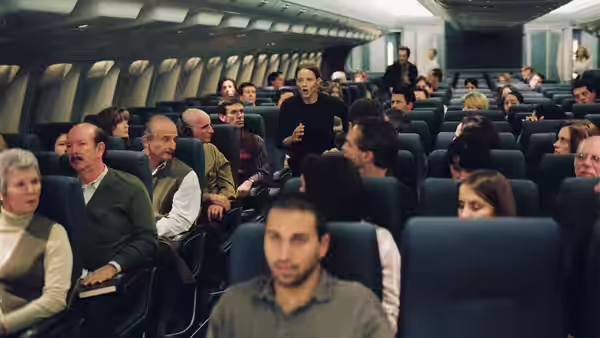
We felt uneasy watching the flight attendants smile. Their professional reassurance looks just wrong enough to make the cabin harder to relax in, and Robert Schwentke sustains that small social discomfort without immediately exhausting it. These encounters give the early suspense something specific to work on: faces we keep studying for a reason to feel reassured. For a while, the everyday business of sharing an enclosed space with strangers is enough to keep us attentive.
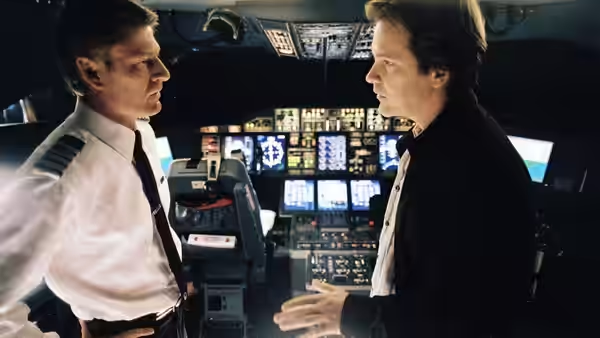
Florian Ballhaus’s cinematography keeps the confined setting oppressive, while Alec Hammond’s production design makes the cabin a credible place to feel trapped. The aircraft remains a useful source of unease because there is so little relief from the presence of other people. Neither contribution needs to become conspicuous for the pressure to register. The surroundings continue to feel restrictive even as the story becomes harder to believe.
Thom Noble’s editing is most effective during the patient build, allowing uncertainty to last long enough to become uncomfortable. Once the film moves towards action, a change of pace cannot make the explanation more convincing. James Horner’s music reinforces the alarm, though the discomfort of those earlier cabin encounters makes the stronger impression. The film increasingly asks its cast and crew to compensate for what the script cannot make us believe.
The screenplay by Peter A. Dowling and Billy Ray puts too much weight on a chain of events that feels convenient when it needs to feel plausible. We will not describe the explanation, but its ingenuity becomes less persuasive the longer it is considered. A thriller can get away with considerable improbability while the immediate danger holds, and demanding documentary realism would be beside the point. Here the move towards action weakens the uncertainty that had made us willing to go along, leaving more time to notice the contrivances.
The Lady Vanishes is the obvious genre comparison, and it points towards what Flightplan briefly gets right: the pleasure of looking closely at ordinary people in a confined space. There is enough of that pleasure here to interest a tolerant thriller viewer, and Jodie Foster supplies the commitment the material needs. At 98 minutes, it does not demand an enormous investment, though the later stretches feel longer than the earlier ones. Try it for the accumulating unease, provided a poor explanation does not spoil a promising mystery for you.