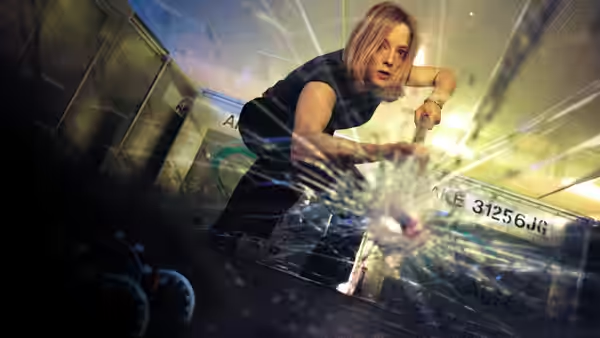
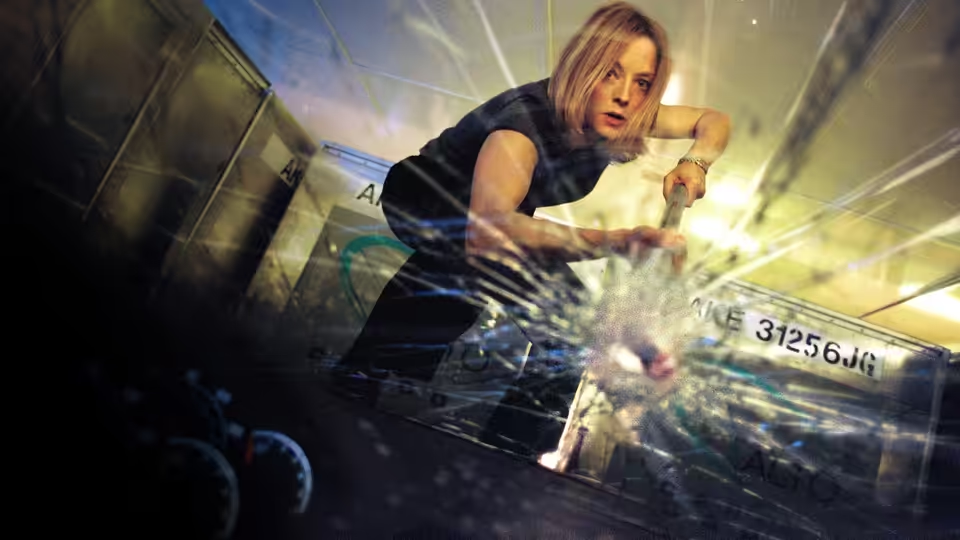
Kyle (Jodie Foster) braces herself against the aircraft fuselage
Film review

Flightplan

2005 · Directed by Robert Schwentke · 1h 38m

In a sentenceJodie Foster makes us worry about the flight; the explanation makes us worry about the script

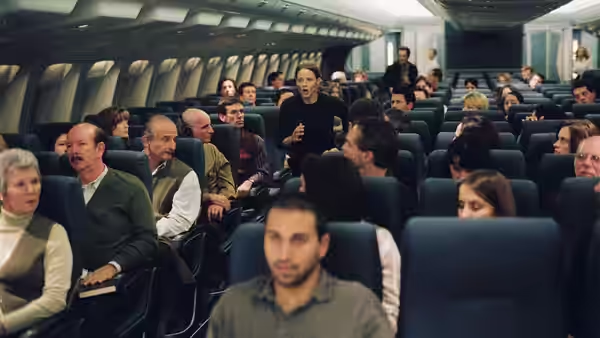
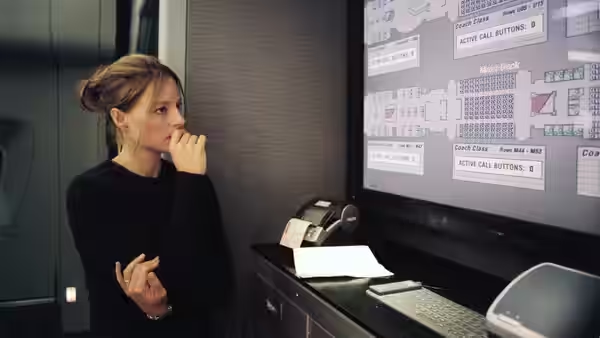
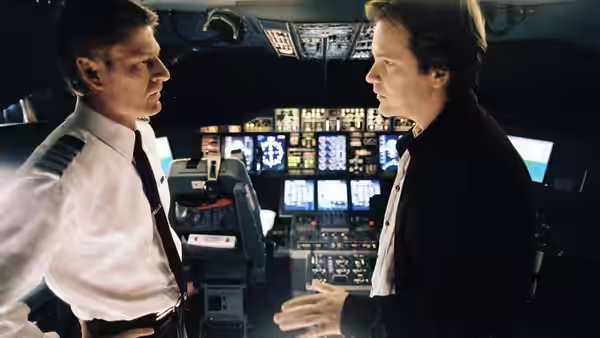
Kyle (Jodie Foster) is at the centre of a mystery aboard an aircraft, with Carson (Peter Sarsgaard), Fiona (Erika Christensen) and Captain Rich (Sean Bean) among the people around her. The cabin is an enclosed space where the flight attendants’ smiles begin to seem unsettling. As Kyle faces mounting pressure, the ordinary anxieties of air travel become harder to put aside. There is little room to withdraw from the other people on board, and familiar routines offer less reassurance than they should. Questions of trust and security begin to dominate the flight.

Fi1m review

Jodie Foster gives this airborne thriller more conviction than its plotting deserves. Robert Schwentke builds the cabin anxiety patiently, but the move towards action and an implausible explanation make it a qualified recommendation for thriller devotees.

Robert Schwentke’s Flightplan offers an effective stretch of suspense before arriving at an explanation that cannot bear much examination. It is strongest while the aircraft cabin feels oppressive and ordinary behaviour begins to seem suspect. The patient build gives Jodie Foster room to make Kyle’s vulnerability count, and the anxiety is sufficiently persuasive to carry us through some doubtful plotting. The eventual shift towards action costs the film more than it gains.

Jodie Foster does the difficult work of keeping Kyle worth following when our confidence in the story begins to slip. She makes Kyle seem capable without suggesting that she has stopped being frightened, which gives the intensity something recognisably human behind it. That performance does grow wearing when the film keeps pressing for the same level of alarm without giving it enough fresh support. Still, her commitment is a substantial reason to stay interested, particularly when the screenplay starts to depend on our goodwill.

We felt uneasy watching the flight attendants smile. Their professional reassurance looks just wrong enough to make the cabin harder to relax in, and Robert Schwentke sustains that small social discomfort without immediately exhausting it. These encounters give the early suspense something specific to work on: faces we keep studying for a reason to feel reassured. For a while, the everyday business of sharing an enclosed space with strangers is enough to keep us attentive.

Florian Ballhaus’s cinematography keeps the confined setting oppressive, while Alec Hammond’s production design makes the cabin a credible place to feel trapped. The aircraft remains a useful source of unease because there is so little relief from the presence of other people. Neither contribution needs to become conspicuous for the pressure to register. The surroundings continue to feel restrictive even as the story becomes harder to believe.

Thom Noble’s editing is most effective during the patient build, allowing uncertainty to last long enough to become uncomfortable. Once the film moves towards action, a change of pace cannot make the explanation more convincing. James Horner’s music reinforces the alarm, though the discomfort of those earlier cabin encounters makes the stronger impression. The film increasingly asks its cast and crew to compensate for what the script cannot make us believe.

The screenplay by Peter A. Dowling and Billy Ray puts too much weight on a chain of events that feels convenient when it needs to feel plausible. We will not describe the explanation, but its ingenuity becomes less persuasive the longer it is considered. A thriller can get away with considerable improbability while the immediate danger holds, and demanding documentary realism would be beside the point. Here the move towards action weakens the uncertainty that had made us willing to go along, leaving more time to notice the contrivances.

The Lady Vanishes is the obvious genre comparison, and it points towards what Flightplan briefly gets right: the pleasure of looking closely at ordinary people in a confined space. There is enough of that pleasure here to interest a tolerant thriller viewer, and Jodie Foster supplies the commitment the material needs. At 98 minutes, it does not demand an enormous investment, though the later stretches feel longer than the earlier ones. Try it for the accumulating unease, provided a poor explanation does not spoil a promising mystery for you.

Critical consensus AI synthesised

58
Positive
3
Mixed
5
Negative
1

The reviews lean towards a mixed response to Flightplan, with praise clustering around its claustrophobic opening and Jodie Foster’s performance. The more favourable accounts find an entertaining thriller in its patient build-up, in-flight anxiety and resourceful, vulnerable heroine. Foster gives the suspense a firm centre for several critics, while the confined setting and uneasy encounters with cabin staff draw praise for making an ordinary flight feel threatening.

The main reservation is plausibility: even sympathetic reviews question how well the plot holds together once its explanations arrive. Some also find that the shift towards action dissipates the earlier tension, though the available verdicts range from tense entertainment to flat contrivance. Slant Magazine admires Foster’s force but finds her intensity increasingly grating. The AV Club offers the strongest dissent, crediting the central twist’s ingenuity while arguing that it relies on an improbable chain of events.

Empire
1 January 2000 · Ian Freer
70*

Freer finds the film an entertaining, suspenseful diversion that ultimately fails to deliver a satisfying resolution. He praises the patient, claustrophobic build and Jodie Foster’s compelling performance, while faulting the final act’s plot holes.

Read the full review →
The Guardian
· Peter Bradshaw
70*

Bradshaw finds it enjoyable despite its wildly implausible plot. He singles out its homeland-security flavour as part of the thriller’s appeal.

Read the full review →
Screen Daily
23 September 2005 · John Hazelton
64*

The page identifies this as a review, but the review text is unavailable. Its verdict and any specific praise or complaint cannot be determined from the accessible text.

Read the full review →
Radio Times
★★★ · Leslie Felperin
60

The available text does not reveal the critic’s verdict. It describes the film as an oppressive action thriller, but offers no accessible comment on what the critic praises or faults.

Read the full review →
Time Out
22 November 2005 · BW
60*

The critic identifies The Lady Vanishes as Flightplan’s obvious, unacknowledged source. The available excerpt offers no clear overall verdict or further praise or complaint.

Read the full review →
Los Angeles Times
23 September 2005 · Carina Chocano
50*

Chocano finds the thriller entertaining but says it loses its initial atmospheric tension as it shifts into action. She praises the director’s use of claustrophobic in-flight anxiety and sinister-seeming flight attendant smiles.

Read the full review →

Straight answers AI written, from our review

Is Flightplan worth watching?
Flightplan is worth considering for thriller devotees who value sustained unease over a convincing explanation; we score it 63/100. We find Jodie Foster persuasive and the enclosed aircraft setting oppressive, but the shift towards action weakens the suspense and exposes plotting that needs more goodwill than it earns.
How long is Flightplan, and what is it rated?
Flightplan runs 1h 38m. It is a thriller and drama film.
Where can I watch Flightplan in Peru?
Flightplan is streaming on Disney+ in Peru. Availability is checked daily; the links above go straight to each service.
How violent or frightening is Flightplan, and is it suitable for children?
Flightplan has a UK 12A certificate, and its oppressive aircraft setting and sustained anxiety make it a cautious choice for children who frighten easily. The tension centres on mistrust, confinement and mounting alarm, with a later move towards action. We would steer sensitive younger viewers away; the certificate requires anyone under 12 to be accompanied by an adult at the cinema.
How does Flightplan compare to The Lady Vanishes?
Flightplan shares the enclosed journey and suspicious fellow passengers of The Lady Vanishes, but we recommend the railway mystery more readily for its tension, humour and attention to people ignoring trouble. Both have plotting weaknesses; Flightplan offers an anxious aircraft setting and Jodie Foster’s conviction, though its implausible explanation makes it the more qualified recommendation.
What should I watch after Flightplan?
After Flightplan, try The Lady Vanishes (1938, Fi1m 88): Another enclosed journey where apparently ordinary fellow passengers become difficult to trust. Then The Vanishing (1988, Fi1m 88): For those who want the unease to survive well beyond the explanation.

Cast

If you liked this, try…

  1. The Lady Vanishes (1938, Fi1m 88)Another enclosed journey where apparently ordinary fellow passengers become difficult to trust.

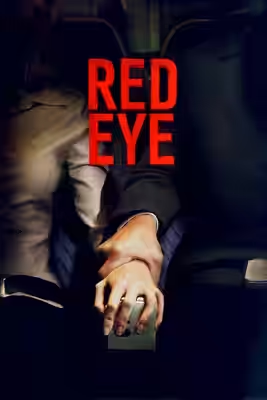
  2. Red Eye (2005) · not reviewed yetA tighter airborne thriller that keeps its central confrontation sharply in focus.

  3. Bunny Lake Is Missing (1965) · not reviewed yetAnxious searching and mounting doubt, with adults proving remarkably poor at offering reassurance.

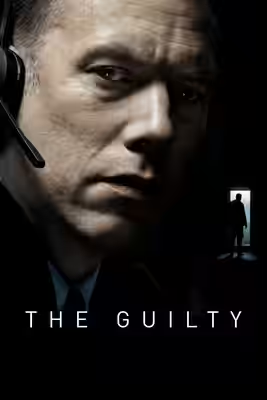
  4. The Guilty (2018) · not reviewed yetA confined setting and a forceful lead performance sustain a difficult moral predicament.

  5. The Vanishing (1988, Fi1m 88)For those who want the unease to survive well beyond the explanation.

Free account

Know what to watch tonight

Two lists that know where things are streaming, collections you can share, your own score beside ours, and Discover that remembers what you have seen.

  • Want to see, sorted by what is streaming now
  • Seen, with your score out of ten
  • No adverts, ever