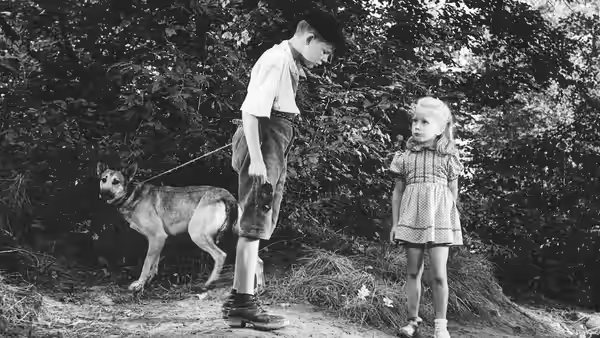
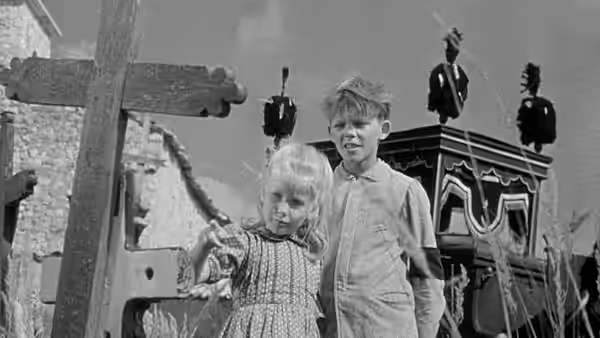
René Clément’s war drama is deeply moving when it stays with its children and their animal burials. The adult feuding is drawn more crudely, but Brigitte Fossey and Georges Poujouly give the film a tenderness that survives the rough edges.
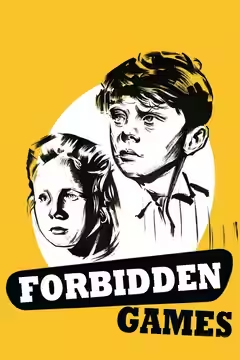
René Clément’s Forbidden Games is a moving war drama with children worth watching closely and adults who are sometimes drawn too crudely. We recommend it for the children’s performances, and for its willingness to let their behaviour remain unsettling. War films about children can become rather pleased with their own sensitivity, leaving little room for children to be difficult or strange. Here, the attempt to understand death takes the form of burying animals.
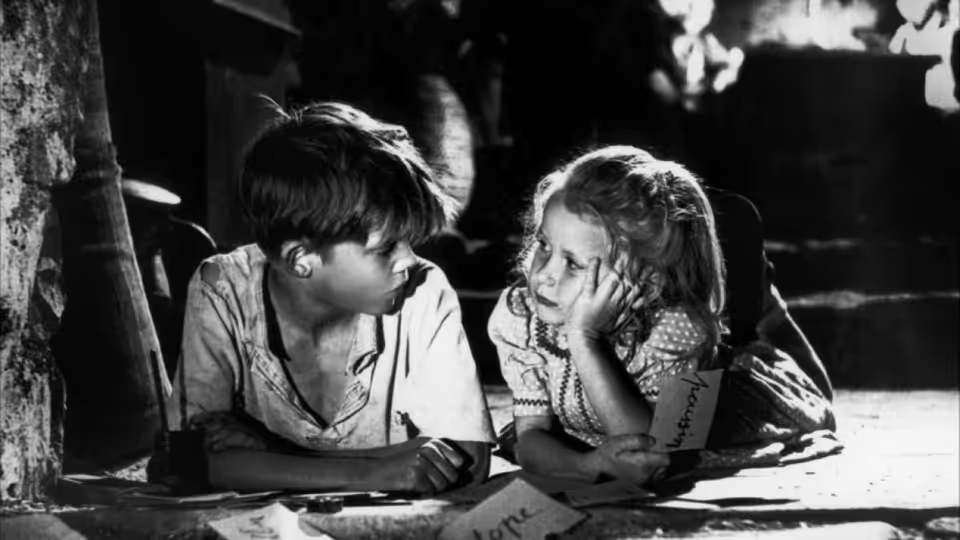
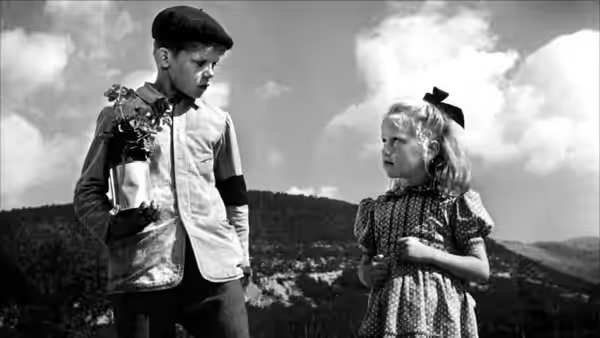
Brigitte Fossey, as Paulette, and Georges Poujouly, as Michel Dolle, give that activity a practical concentration which makes it convincing. Neither performance seems arranged around making the audience feel protective. We were moved by their care for the dead animals, and disturbed by how readily burial becomes a game. The acting allows both responses without insisting that we choose between them, because the children take what they are doing seriously.
The adult scenes are less finely judged. Suzanne Courtal’s Madame Dolle and Lucien Hubert’s Monsieur Dolle belong to the broader comic side of the film, where the family feud gives the grown-ups plenty to occupy them. There is something recognisable about people maintaining their grievances when circumstances ought to have made them irrelevant. But the depiction of peasant life leans too heavily on foolishness, and the quarrelling takes up time we would rather spend with the children.
Robert Juillard’s photography gives the animal burials enough attention for us to understand their importance without accepting the game as harmless. This is delicate work: making the children’s activity absorbing could easily soften what has prompted it. The images keep the dead animals before us as something that needs attending to. That concrete business gives the film more force than a general appeal to pity would have done.
Roger Dwyre’s editing has to accommodate wartime cruelty, the children’s preoccupation with death and the comedy of the feud. The changes of tone mostly work because the game itself already contains something ordinary and something troubling. Occasionally, though, the adult comedy feels like an interruption, and the return to the children requires an adjustment the film has not quite earned. At 87 minutes, it has little spare time for those detours.
Narciso Yepes’s music brings tenderness to material that could easily be treated as a grim lesson. It helps us remain close to the children even when their behaviour is uncomfortable to consider. The performances need little assistance, but the music gives the film room for affection alongside its distress. Without that warmth, the repeated attention to death could become punishing.
It is worth resisting the temptation to call these children innocent and consider the matter settled. Their game asks us to think about what children learn when death becomes part of ordinary life, including things the adults would rather they did not notice. The burials remain troubling even when we understand the need behind them. Choose it when there is time afterwards to sit quietly for a while.