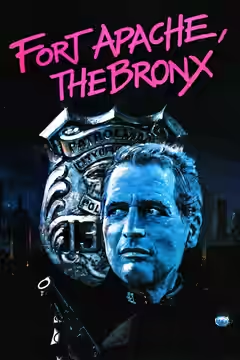
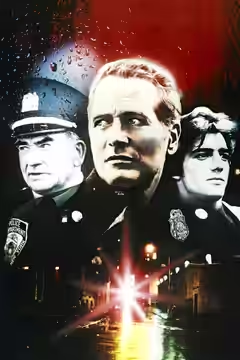
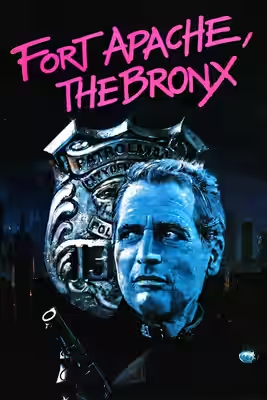
Daniel Petrie sets Paul Newman loose in the burnt-out South Bronx and gets a fine, tired, decent performance out of him. What he does not get is a story: the film is a string of shifts, some of them shocking, none of them adding up to a case.
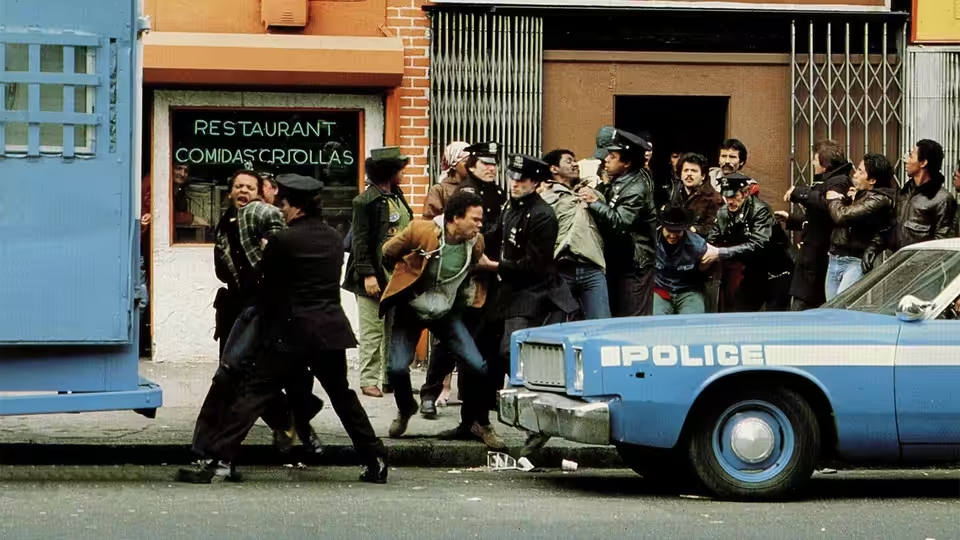
Fort Apache, the Bronx has a place, a man and no plot, and it takes about half an hour to notice that the third thing is missing. Daniel Petrie directs from a script by Heywood Gould, working from a story by Pete Tessitore and Thomas Mulhearn, and what they have made is a week in the life of a precinct rather than a film about anything that happens in it. The opening tells you otherwise. Two rookies in a patrol car, a woman in a red dress, two shots, and the camera does not flinch. We were shaken by it, and we were ready for a picture that would be about those two dead boys. It is not, or not for long.
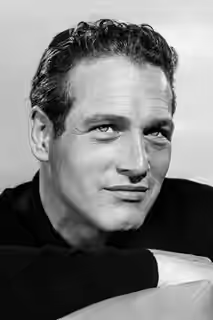
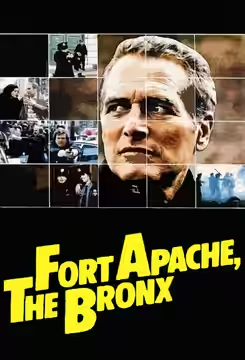
Paul Newman is the reason to sit through the rest. He plays Murphy as a man who has stopped expecting the job to make sense and keeps himself upright with jokes, most of them at his own expense. He is best when the film gives him a room and a problem: a flat with no electricity and a girl in labour on the floor, a man with a knife on a tenement stair who needs talking down rather than shooting. Newman does these scenes quietly, with his hands, and he never once asks us to admire him. It is a performance built out of fatigue, and it is one of the least vain things he did.
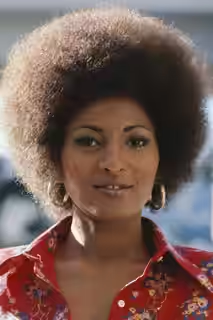
Pam Grier gets the other great piece of acting and about ten minutes to do it in. Her Charlotte kills with a kind of lightness, humming, half-smiling, and the film is at its most frightening whenever she drifts into frame. Then it loses interest in her. The murders that open the picture should be its spine; instead they float to the edge and are dealt with almost as an afterthought.
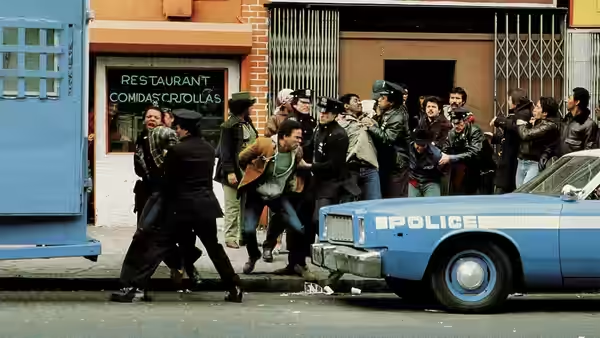
John Alcott shoots the Bronx in flat winter light, grey sky over empty lots, bricks and burnt timber where streets used to be, and he resists making any of it beautiful. That is the right choice and it holds the film together more than the script does. Ben Edwards gives the station house chipped green paint, a wire cage and a desk sergeant buried in paper, and John Boxer keeps Newman in a windcheater that looks slept in. Jonathan Tunick scores it sparingly, and most of the time the sirens do the work.
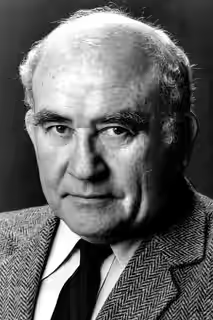
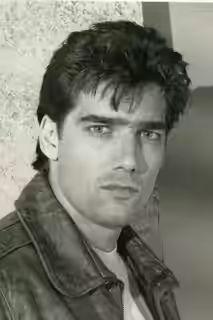
The trouble is shape. Rita Roland cuts the film as a sequence of shifts: a call, an incident, a drink, another call. Gould keeps starting threads, Connolly’s crackdown, Morgan’s temper, the romance with Isabella, and lets them run alongside one another without ever pulling on them. Ed Asner is given one note, the by-the-book commander, and plays it well enough, but he is a position rather than a person. Ken Wahl is a sidekick with a grin. Rachel Ticotin is good in a part written in shorthand; she and Newman have an ease together that the film notices and then neglects.
The second half takes a turn we will not describe. This is the real material, and it is handled as one more incident on the roster. By then we were cross, because the film had shown us, in its first scene, that it could make us feel something, and had spent the following ninety minutes declining to try again.
The title borrows from John Ford’s 1948 Western, and the borrowing is the film’s one big idea. A garrison in hostile country, a tired sergeant, no cavalry coming: it opens with a card insisting it is about the police and not the people they police, and that is honest, because the neighbourhood is mostly scenery here. Against Serpico, which knew what its cop wanted, this feels like a photograph of a precinct with a story pinned on afterwards.
Worth an evening if Newman on a bad week in a worse place is enough for you, and for a while it nearly is. At 125 minutes there are three or four shifts more than it needs, and the 15 certificate covers one opening and one later scene that still land hard.