Twenty-two years on, Lohan and Curtis swap again, and this time take two teenagers with them. Curtis is funny enough to carry it; the four-way plot is not, and the film keeps stopping to check we remember the first one.
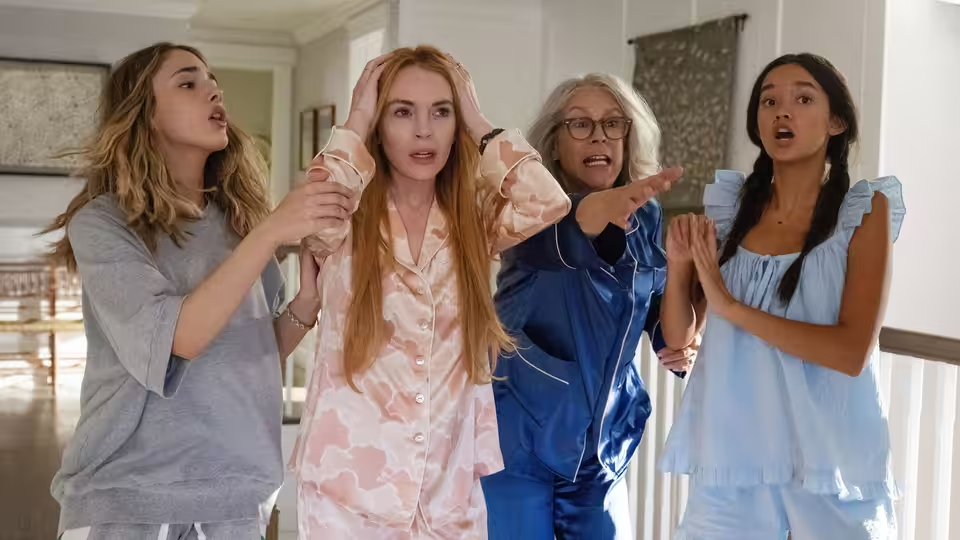
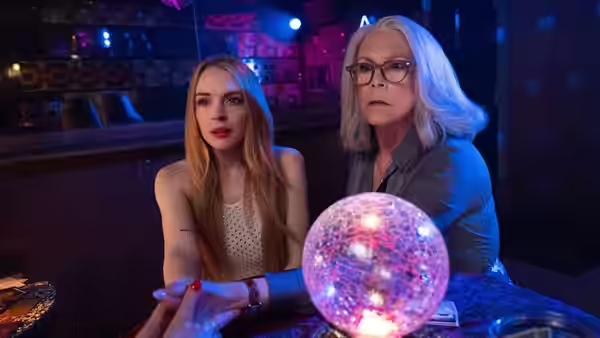
Twenty-two years after Freaky Friday, Lindsay Lohan and Jamie Lee Curtis are back in the Coleman house, and this time the swap has been doubled. Anna manages a pop star and is about to marry Eric Reyes (Manny Jacinto); her daughter Harper and his daughter Lily are at war; a psychic (Vanessa Bayer) shuffles all four of them, mothers into daughters and grandmother into stepdaughter-to-be. Nisha Ganatra’s film is cheerful, busy and about half as funny as it needs to be. It has one thing the first film did not, which is Curtis playing a teenager, and that turns out to be worth a good deal.
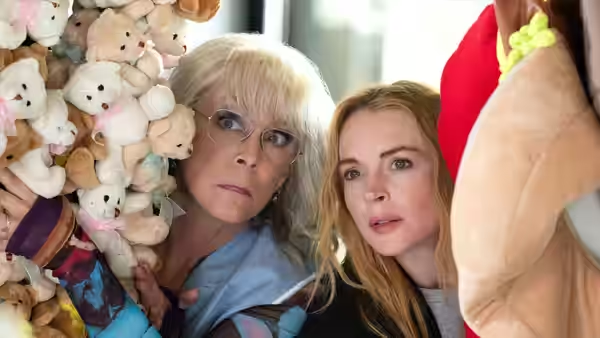
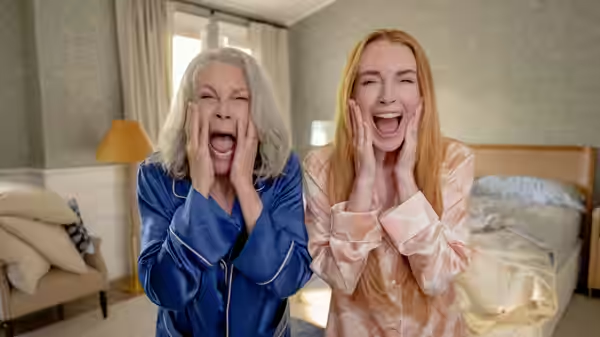
Curtis is the reason to watch. She plays Lily inside Tess as a girl appalled to have woken up in this body, and she does most of it below the neck: the slump, the phone held at arm’s length, the way she inspects her own hands as if they had been handed to her at a lost property counter. When she is required to be a grandmother in public she does it like a hostage reading a statement. We laughed out loud four or five times, and every one of them was her. It is broad, she knows it is broad, and she commits to it without once winking at us.
Lohan has the quieter job. Harper inside Anna is a sulky teenager with a mortgage, and Lohan plays her poised and slightly bored, which is right for the character and leaves her with less to do than her co-star. Julia Butters, as Anna inside Harper, gets the panic of a grown woman stuck in a school corridor and handles it well. Sophia Hammons has to be Tess in a teenager’s body and finds the manners without the mannerisms. Maitreyi Ramakrishnan, as Anna’s client Ella, is in it too briefly.
The trouble is arithmetic. Jordan Weiss’s screenplay doubles the swaps and so halves what each one can mean. The 2003 film had one mother, one daughter, one lesson each, and the whole running time to learn it. This one has four people in the wrong bodies and has to keep cutting between them. Eleanor Infante cuts fast, but there were stretches in the middle where we lost track of who was inside whom, and a family film should not need a seating plan. The wedding, the pop star and the school all queue politely for their turn.
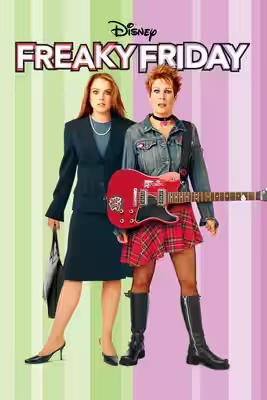
Then there are the returns. Chad Michael Murray’s Jake, Mark Harmon’s Ryan, Stephen Tobolowsky’s Mr Bates, Rosalind Chao and Lucille Soong from the restaurant: each arrives with a pause and a beat for recognition, and each pause stops the film. Around the hour mark we noticed it was waiting for applause that a living room cannot supply, and we felt a small, ungenerous impatience with it. Ganatra is kind to her supporting cast, which is her best quality as a director and also why the film runs 110 minutes with roughly eighty of story.
Matthew Clark shoots Los Angeles in flat, bright, even light, so that every kitchen and classroom looks like the same clean daytime, and it suits the material without ever surprising it. Kay Lee’s production design keeps the Coleman house recognisable and fills Anna’s life with a working mother’s clutter, guitars and school forms and a fridge covered in other people’s schedules. Natalie O’Brien’s costumes do more storytelling than the script does: you can usually tell who is inside whom from the jacket before anyone speaks. Amie Doherty’s score is bright and pop-shaped and tells us when to feel things a beat before the actors do.
And yet. There is a scene late on, which we will not describe, that got to us more than a sequel this calculated has any right to, and it works because Curtis and Lohan stop performing for a minute and look at each other like two people who have known each other for twenty-two years, which they have. The 2003 film understood that a body swap is a punishment for two people who have stopped listening. This one understands it too; it just keeps getting distracted.
Take a child who has seen the first one, or watch it at home with someone who has, where the callbacks land more softly and nobody is waiting for a cheer. It carries a PG and runs 110 minutes. Curtis is on screen for a good proportion of them, which is the best thing we can tell you about it.