Ryan Reynolds and Jodie Comer make Shawn Levy’s video-game comedy agreeable company, despite its overcomplicated plot. The jokes land often enough, but the explanations and franchise references keep getting in their way.
Shawn Levy’s Free Guy is pleasant company, provided we do not ask too much of its plot. The idea of giving a video-game background character a life of his own is a good starting point for a comedy, and the film has enough warmth to make us care. Its difficulty is knowing what to do once that concern has been established. At 115 minutes, it spends too long explaining the business outside the game and too little exploring the people inside it.
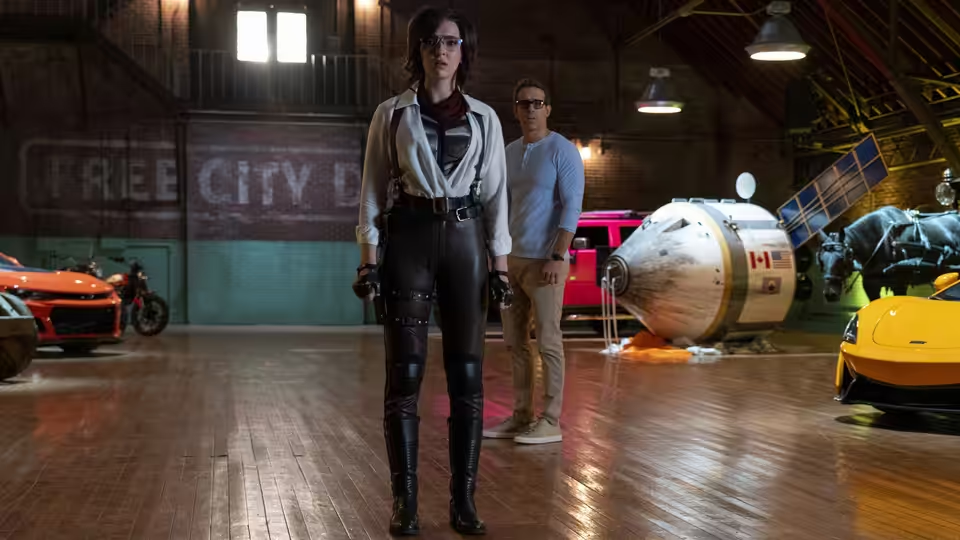
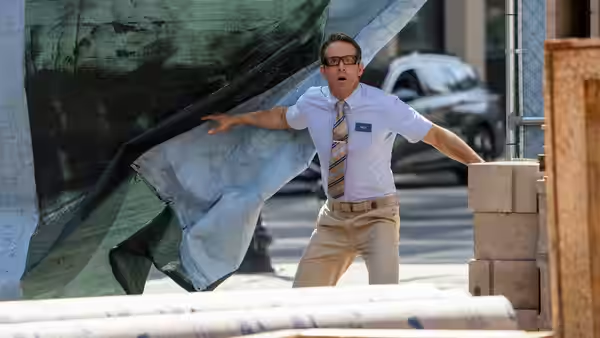
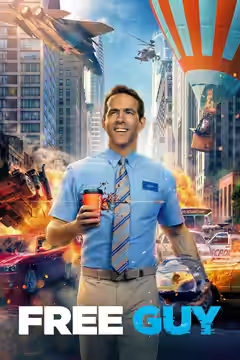
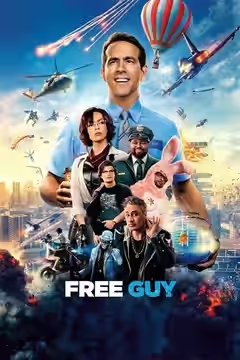
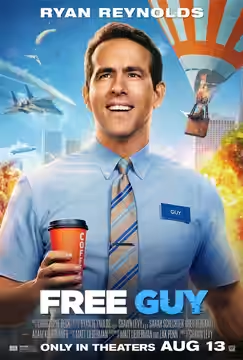
Ryan Reynolds plays Guy with a sweetness that suits his limited understanding of what surrounds him. The early routines of the game’s non-player characters give that performance something precise to work against: their lives repeat, and the comedy comes from how readily they accept it. We laughed at those routines because the characters take their prescribed behaviour so seriously. Lil Rel Howery, as Buddy, gives him an agreeable comic partner, and their exchanges make the question of what these artificial lives are worth matter to us.
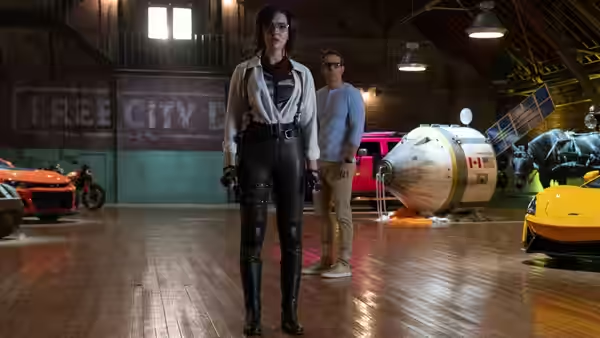
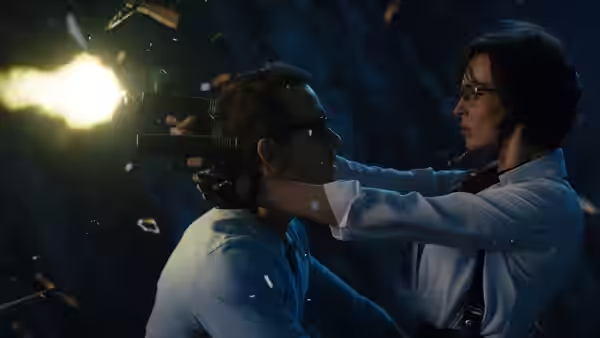
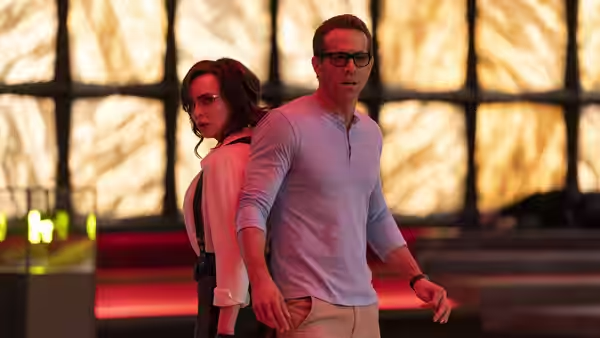
Jodie Comer is the stronger reason to stay interested as the story grows busier. Playing Millie Rusk and Molotovgirl, she gives the film both vulnerability and game-world confidence without making either seem a strain. She also has an easy connection with Joe Keery’s Keys, giving the real-world scenes some feeling when they threaten to become instructions. The film is more persuasive whenever it lets these actors talk without making them explain the next complication.
The early repetitions also give editor Dean Zimmerman the film’s cleanest comic rhythms. Once there is more action and more explanation to accommodate, the pace remains quick but the jokes have less room. George Richmond’s photography and Ethan Tobman’s production design make the game world readily understandable, although neither gives it much strangeness beyond the premise. We can follow the spectacle without finding much to look at twice. Christophe Beck’s music helps the sentimental passages along, but the actors are doing most of the work there.
Matt Lieberman and Zak Penn’s screenplay keeps interrupting the appealing business of Guy discovering possibilities with a corporate-property dispute. That material needs clarity and comic bite, and too often settles for another explanation. Taika Waititi’s Antwan, the gaming-company owner, supplies plenty of emphasis without making the interruptions more interesting. The performance is deliberately broad, but its insistence becomes wearing because it keeps making much the same point about the man.
The other disappointment is how cautiously the film handles its invitation to think for ourselves. Its familiar franchise references are meant to be pleasures, yet they make the talk of originality harder to take seriously. A comedy about escaping a prescribed role can reasonably be expected to try a few less familiar moves. There is no need for a lecture about artificial intelligence, but the film raises questions it seems too busy to consider.
Still, the sweetness is welcome in a genre that can mistake constant wisecracking for humour. Ryan Reynolds and Jodie Comer give the film enough appeal to survive its muddled rules, although not enough to make those rules worth puzzling over afterwards. Choose it for the actors; the explanations will not improve with closer attention.