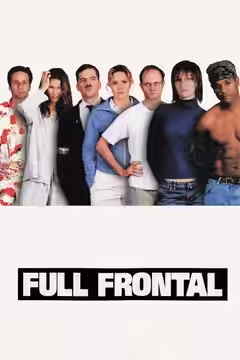
Steven Soderbergh takes a camcorder, a dozen famous friends and one day in Los Angeles and comes back with a home video. Catherine Keener and Nicky Katt make it bearable; the rest is a director amusing himself and expecting company.
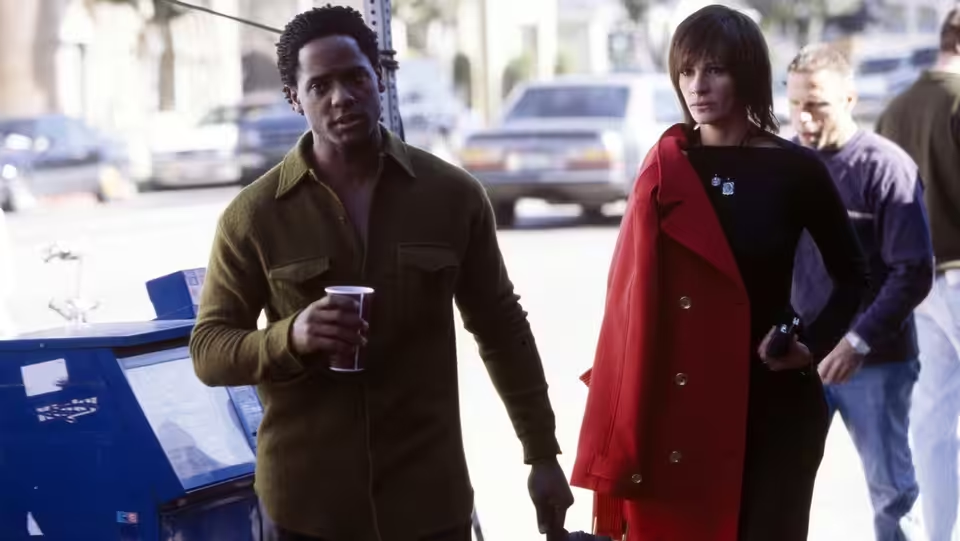
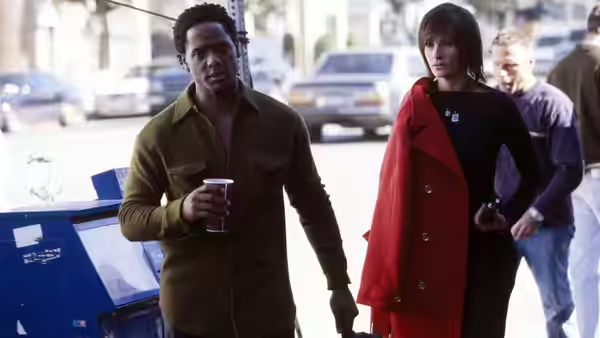
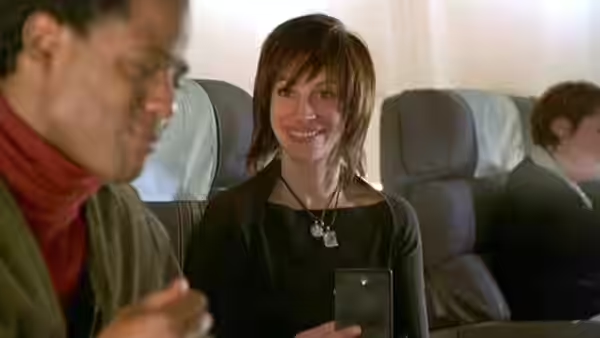
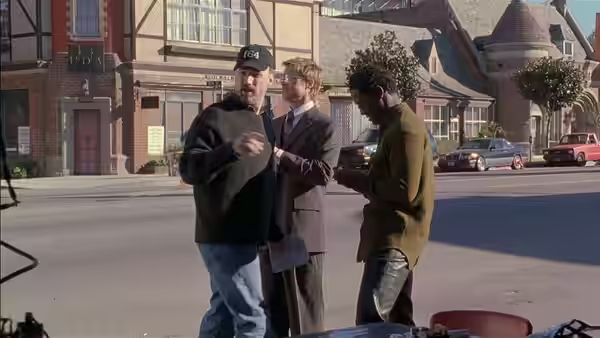
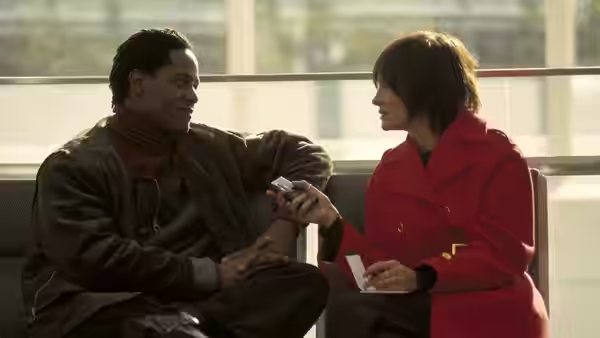
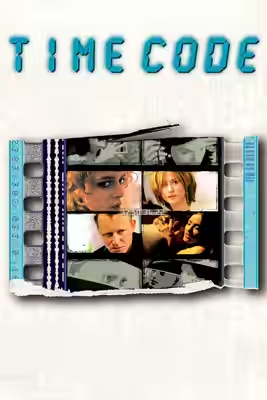
Steven Soderbergh made this the year after Ocean’s Eleven (2001), and it looks like a holiday from it. He took a digital camcorder, a script by Coleman Hough, a dozen well-known actors and one day in Los Angeles, and shot the lot himself. Inside the film is another film, a glossy romance called Rendezvous, on proper 35mm, in which Julia Roberts and Blair Underwood play actors playing a magazine writer and a film star. Around it, on smeared video, are the people connected to it, all drifting towards a producer’s birthday party. It runs 112 minutes and it is a poor film, though not a dead one; there are perhaps thirty good minutes in here, and they belong to the cast.
The video half is where most of the people are. Catherine Keener plays Lee, who works in personnel and spends the day sacking people, sitting each one down first and asking them to name the countries of Africa. Her husband Carl (David Hyde Pierce) writes for a magazine and is having a worse day than he lets on. Her sister Linda (Mary McCormack) is a masseuse with a plane to catch and an internet date at the other end. Nicky Katt is an actor playing Hitler in a small theatre, in a play called The Sound and the Führer written by Arty (Enrico Colantoni). Gus (David Duchovny) is the producer with the birthday. Everyone is unhappy, and everyone has been encouraged to talk about it at length.
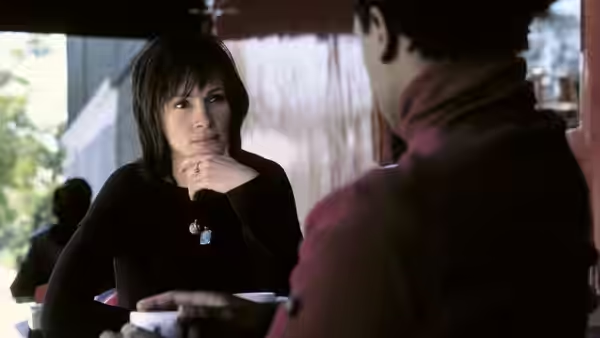
Keener is the reason to stay. She plays Lee’s cruelty as exhaustion, as though firing people were a chore like the washing-up, and she gets the film’s only real laughs out of the flat way she asks a frightened man to try Africa again. Katt is nearly as good: his Hitler is a preening actor who lectures the cast between scenes about his process, and the rehearsal footage is the one place where the improvisation earns its keep. Roberts, in the 35mm scenes, is loose and amused and plainly enjoying being asked to be bad on purpose. Hyde Pierce does humiliation with precision. The one time we felt anything was a scene between Keener and McCormack, two sisters on a bed talking about not much, where the camera sits still long enough for a real face to appear; it lasts a couple of minutes and the film moves on.
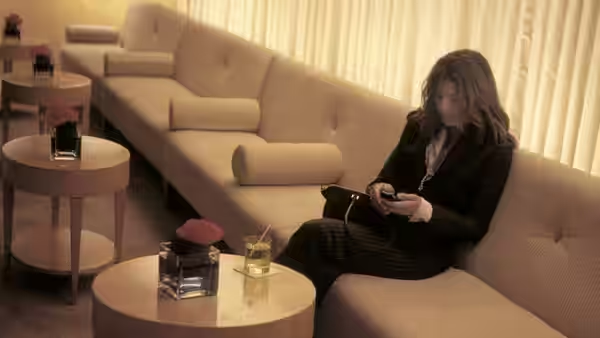
Then there is the camera. Soderbergh shot the video himself, and he has made it as ugly as he could. Windows blow out to white, faces go the colour of putty, the grain sits on everything like sand. The 35mm scenes are lit like a perfume advert to make the point. Sarah Flack cuts between the two, and the trick is fully understood within ten minutes: this is real, this is the film, this is real again. It then repeats for another hundred, and nothing is added to it. Jacques Davidovici’s music comes and goes under the video scenes, and an hour later we could not have hummed a bar of it.
We were bored by the hour mark, and then we were annoyed, because the boredom felt like part of the plan. Scenes run past the point where anyone has anything left to say. Characters explain the difference between the film and the film inside it, in case we had missed it. The jokes are about Hollywood and are for people who work there: a studio note, a bad headshot, a producer nobody can reach. Jeff Garlin’s credit reads ‘Harvey, probably’, which tells you how seriously the whole thing was taken and who it was taken seriously for.
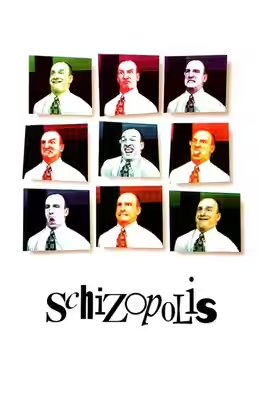
Soderbergh has done cheap before, and better. sex, lies, and videotape (1989) was also people in rooms talking about sex to a camcorder, and it had a story, and the video was the story rather than the wallpaper. Schizopolis (1996) was also a home video full of in-jokes, and it was funnier because it never pretended to be about anything. This one wants the freedom of both and the weight of neither, and what we get is a director amusing himself for 112 minutes while a good cast waits to be given a scene.
It was made for the people in it, and they seem to have had a lovely week. Watch it at home on a small screen, where the video stops looking like a choice and starts looking like 2002. That does not make it better, but it makes it easier to forgive.