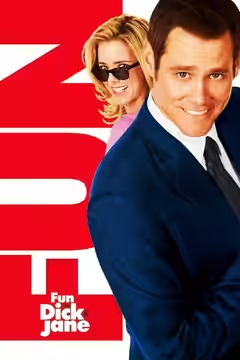
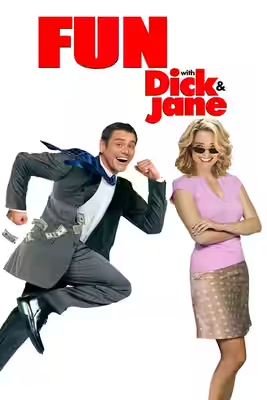
Jim Carrey and Téa Leoni make an agreeable pair, but Dean Parisot’s comedy lets slapstick blunt its attack on corporate greed. A few laughs survive a script too fond of the comforts it wants to mock.
Dean Parisot’s Fun with Dick and Jane aims its jokes at corporate greed, a subject with plenty of room for anger and absurdity. Jim Carrey and Téa Leoni give it an appealing central partnership. We get occasional laughs, but the satire is too mild to earn a recommendation. The film spends so much effort keeping things cheerful that its complaints about dishonesty seldom amount to much.
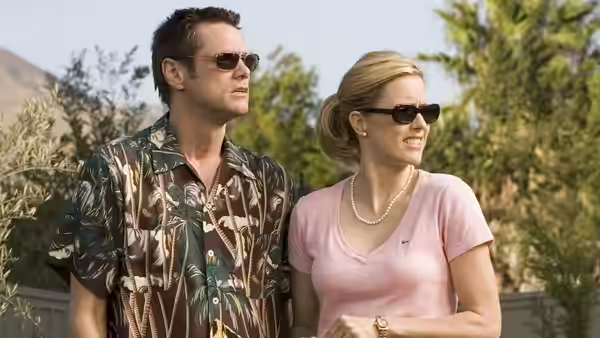
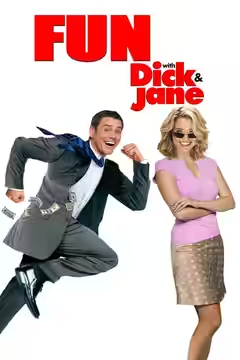
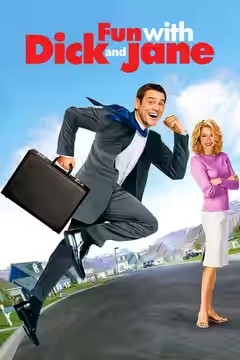
Jim Carrey and Téa Leoni are the main reason to persist. Her calmer delivery gives his restless antics somewhere to land, and she can suggest a shared understanding without joining him at full volume. We laughed at Jim Carrey’s I Believe I Can Fly moment: his enthusiasm is funny because it is so pleased with itself. These performers can make a broad joke feel like something happening between a couple, and their ease together briefly makes the material seem more substantial than it is.
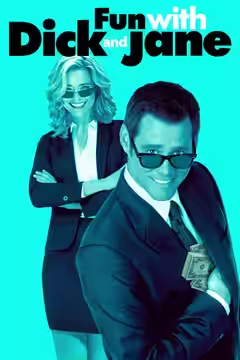
Judd Apatow and Nicholas Stoller’s screenplay is less persuasive about why we should care. Dick Harper and Jane Harper want wealth, and the comedy is reluctant to ask much of them beyond that. There is room for a sharp joke about people who resent dishonest money-making chiefly when somebody else benefits, but the film does not push that discomfort far enough. Their appetite for the good life is treated too indulgently for the attack on greed to carry much force.
The slapstick creates another problem for Dean Parisot. Jim Carrey’s excess can be funny when Téa Leoni has room to answer it, but the mugging too often becomes the entire joke. We find ourselves waiting for him to finish, which is a poor position for a comedy to put its star in. The broader routines keep interrupting whatever interest the corporate dishonesty has generated, without consistently supplying enough laughter in return.
Jerzy Zieliński’s cinematography and Barry Robison’s production design give the film a gloss that suits people attached to material comfort. That polish works as an attraction, though it does little to make the couple’s priorities look ridiculous. Everything remains agreeable enough for the complaint about wealth to feel safely contained. We do not need a comedy to punish its characters for liking money, but we do need it to notice what is funny about their priorities.
Don Zimmerman’s editing cannot quite turn the separate comic episodes into a story that gathers pace. At 90 minutes, this ought to be a brisk diversion, yet it keeps seeming to start again. Theodore Shapiro’s music cannot make the switches from satire to slapstick feel more natural, either. The trouble begins with the writing and direction, and neither the cutting nor the scoring can make an uneven sequence of gags feel properly connected.
The crime-comedy premise ought to let bad decisions build on one another, but the film keeps settling for another turn from its star. That is frustrating because the partnership could support something tougher without losing its warmth. If the cast alone is enough to settle the evening, lower expectations of the satire and accept that the laughs arrive separately.