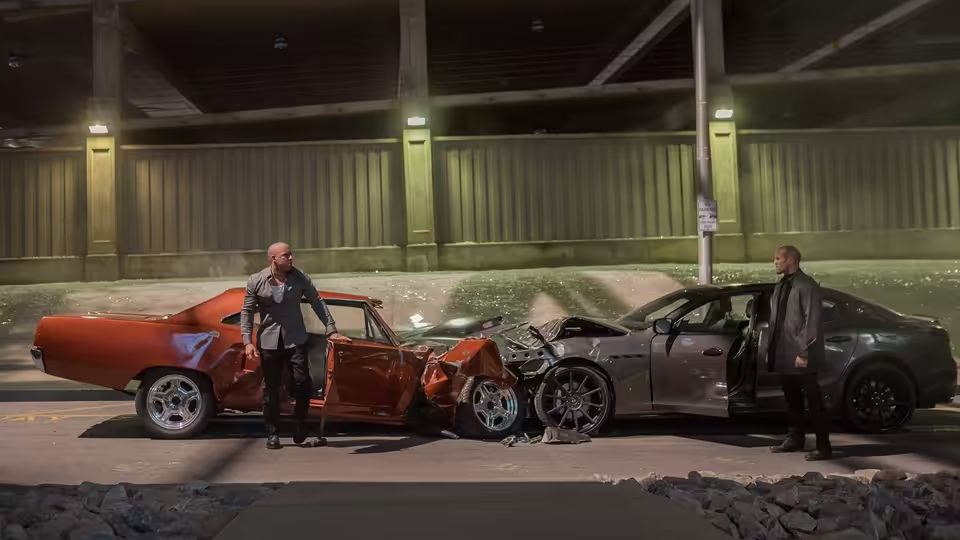
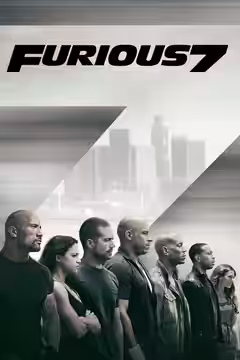
James Wan’s seventh lap is the loudest and silliest yet, cut so fast you cannot always tell who is punching whom. Then it stops, says goodbye to Paul Walker, and for five minutes becomes a different and better film.
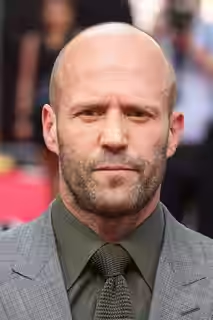
Seven films in, a series that began with men stealing DVD players from lorries has arrived at a plot in which a government agent (Kurt Russell) sends a street racer to recover software that can see through every camera on earth. Deckard Shaw (Jason Statham) wants revenge for his brother, and the only way to find him is to run Russell’s errand first. Furious 7 is the biggest, loudest and least coherent entry yet, and for five minutes at the end it is also the one with the most feeling in it. We had a good time and could not tell you much of what happened.
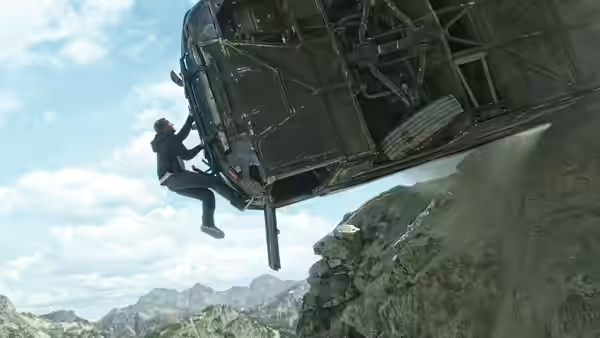
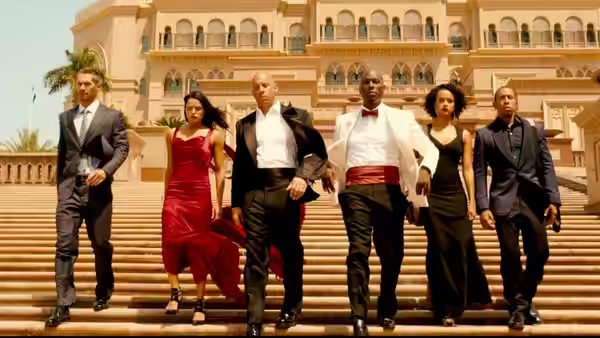
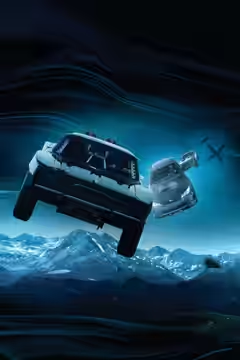
Two set pieces are the reason to be here. In the first, the crew drives its cars out of a cargo plane and parachutes them onto a mountain road. Stephen F. Windon and Marc Spicer put cameras on the bonnets and inside the cabins, so we fall with the cars, and shoot the road in clear daylight with a drop on one side we never forget. We laughed when the first car cleared the ramp. The second, in Abu Dhabi, puts Dom and Brian in a borrowed supercar at the top of a tower and sends them out of the window into the next tower, and then the one after that. Bill Brzeski’s penthouse, white marble and gold, is built to be driven through.
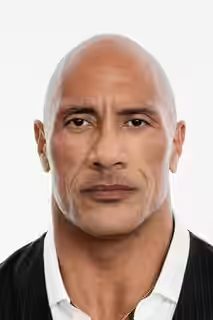
James Wan does what he can with the rest. He shoots the fights with a camera that rolls over as the bodies do, so when Dwayne Johnson’s Hobbs puts Statham through a glass table the whole room turns with him. It works once. Four editors are credited, Dylan Highsmith, Kirk M. Morri, Christian Wagner and Leigh Folsom Boyd, and the film cuts as if shared out between them: a punch, a face, a boot, a face, rarely two seconds without a join. Tony Jaa, who can do this for real, is chopped so fine we never see one move finish. Brian Tyler’s score thumps at the same level whether a car is falling or two people are talking.
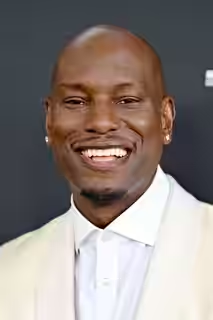
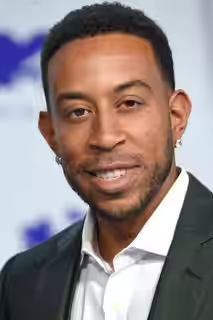
Vin Diesel delivers each line about family as if laying a wreath. Statham is the best villain the series has had and Chris Morgan’s script does not know what to do with him, so he keeps arriving at the end of other people’s scenes like a bus, firing a few rounds and leaving. Djimon Hounsou’s Jakande is a second villain with a helicopter and no character. Nathalie Emmanuel’s Ramsey, the hacker who built the thing, spends most of the film being carried from one car to another. Russell has the most fun, turning up with a cold beer like a man who has read Dom’s file and enjoyed it. Tyrese Gibson and Ludacris bicker as before, and it has worn thin.
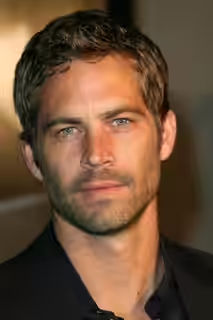
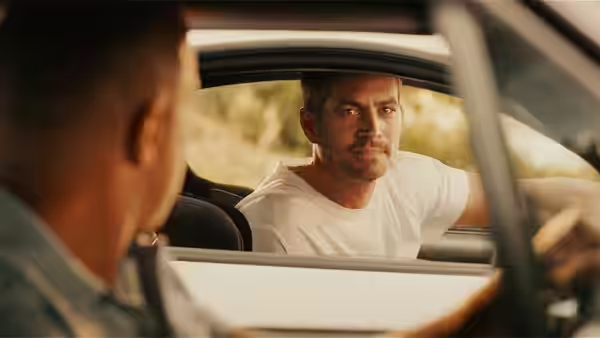
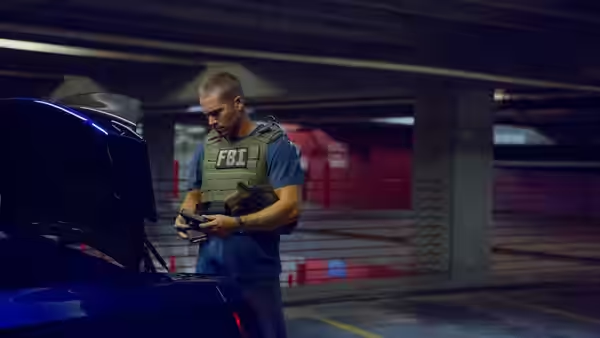
Then there is Paul Walker, who died in a car crash in November 2013 midway through filming. It was finished with doubles and digital work, and mostly we could not tell; once or twice Brian keeps his face from the camera a beat too long. The script gives him quiet scenes with Jordana Brewster’s Mia about whether a man with a small son should still be doing this, and they are thin on the page, and it does not matter. The last few minutes step outside the story to say goodbye to him; we will not describe them. We had spent two hours not much caring who lived, and then we were crying in a 12A about a car.
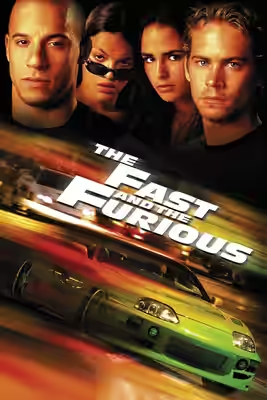
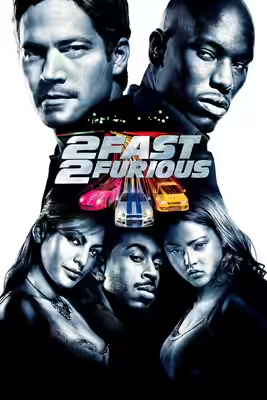
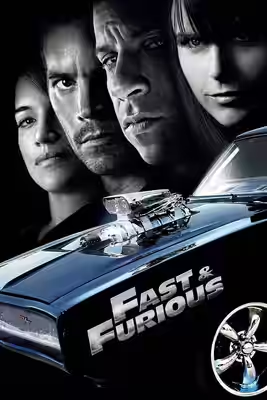
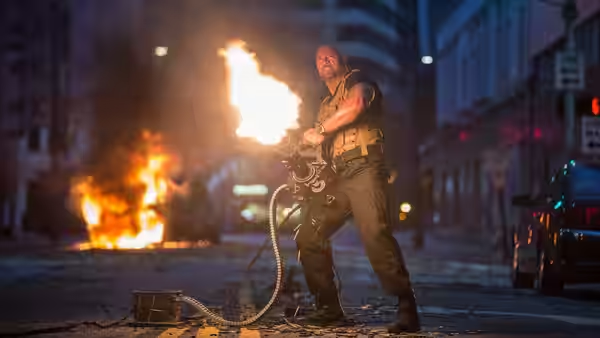
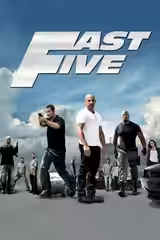
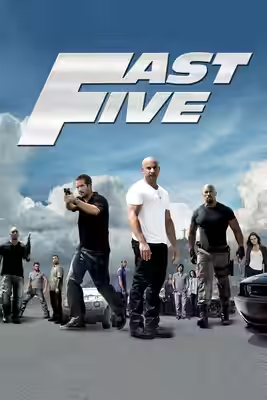
Fast Five (2011) found the formula, a heist and a safe dragged through Rio, and it still has the best action in the series because you could follow it. Furious 7 has more of everything and less of that. It runs 138 minutes, twenty too many, and the fat is in the Los Angeles finale, where a drone shoots up a car park as if the film had forgotten Abu Dhabi. See it with people who like the earlier films. Stay for the ending, which does something none of the other six managed, and which the rest of this one has not quite earned.