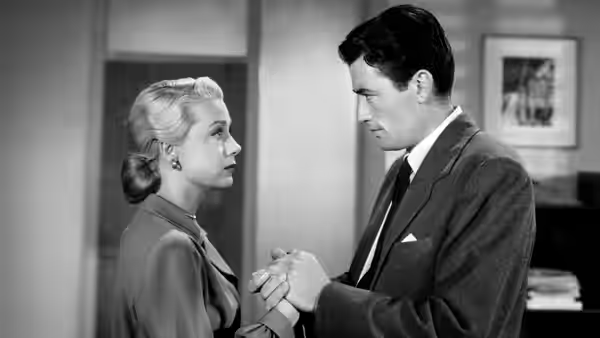
Elia Kazan’s drama about a journalist who passes as Jewish was brave in 1947 and is well acted, above all by John Garfield and Celeste Holm. It is also a lecture, and the woman it asks us to love is the problem it describes.
Darryl F. Zanuck bought Laura Z. Hobson’s novel, gave it to Moss Hart to adapt and to Elia Kazan to direct, and the result is a Hollywood studio saying out loud, two years after the war, that a good many Americans did not like Jews and that the polite ones were as much the trouble as the loud ones. That took nerve in 1947. It is also a well-acted, well-meant, talkative film that makes its point in the first half hour and then makes it again, at a dinner party, a hotel desk, a doctor’s visit, until we could have delivered the closing speech ourselves. It is worth an evening. It is not the film its reputation said it was.
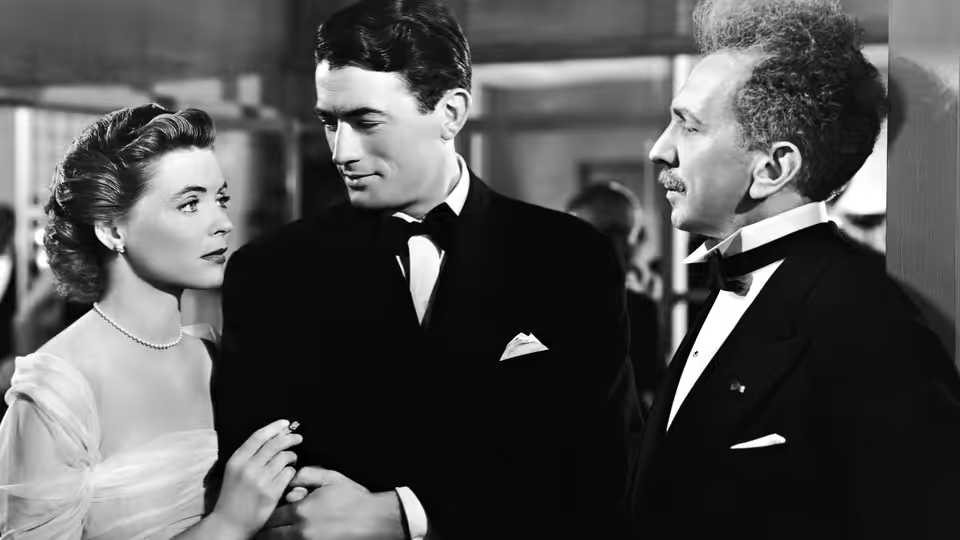
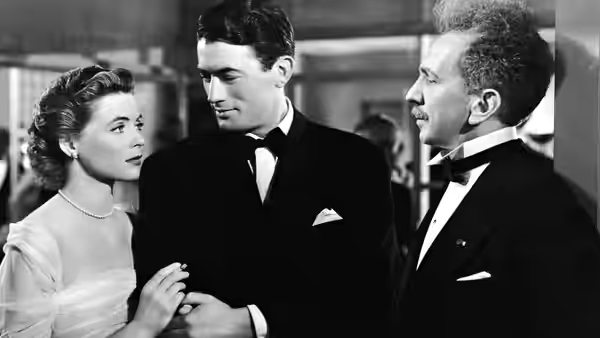
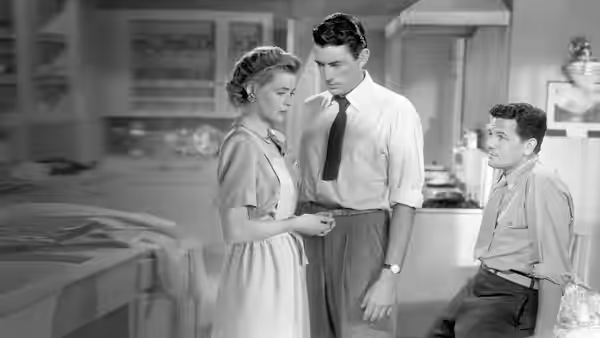
The premise is a reporter’s trick. Phil Green cannot find a way to write about antisemitism until he decides to say he is Jewish and see what changes: a doctor who lets a remark drop, a hotel with no vacancies, a secretary who got her job only after she changed her name. Hart writes it as conversation and Kazan stages it that way, two or three people in a room, medium shot, nobody moving much. When the people are Celeste Holm or John Garfield this is enough. When they are Gregory Peck and Dorothy McGuire it is not.
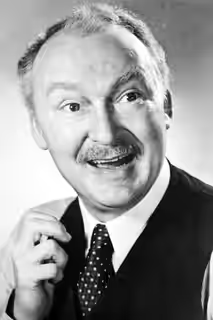
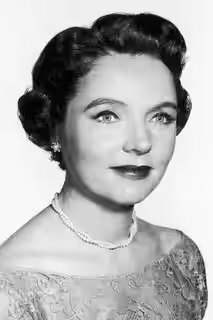
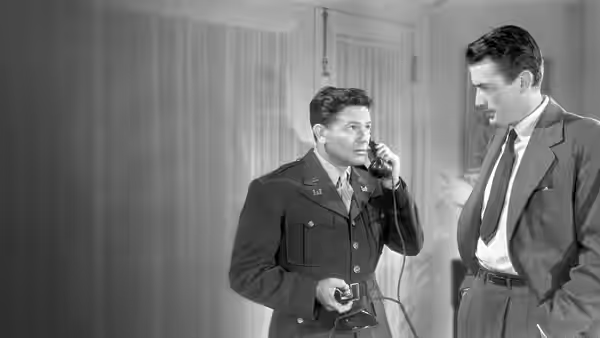
Garfield is the reason to see it. His Dave Goldman is a Jewish soldier back from the war, tired, amused, looking for a flat, and he plays every scene as a man who has heard all of this before and has stopped expecting it to change. He is on screen for perhaps twenty minutes and nothing in them surprises him. Holm’s Anne Dettrey, the fashion editor who says what she thinks, gets the best lines and throws them away. Anne Revere, as Phil’s mother, is dry and unfooled. June Havoc has one good scene as the secretary and makes it sting.
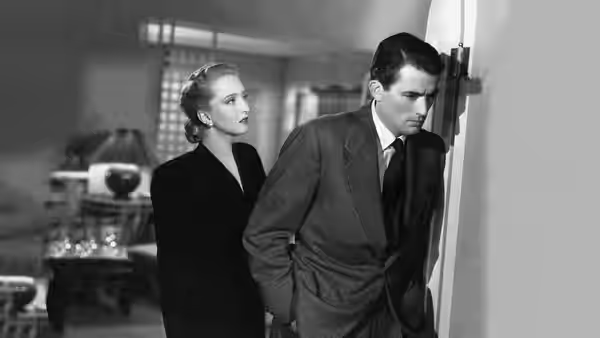
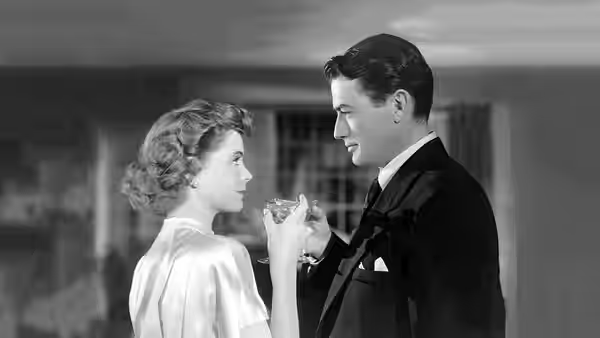
Arthur Charles Miller photographs it cleanly, in the grey light of offices and restaurants, and keeps the camera still; Kazan asks for nothing else. Kay Nelson puts Peck in the same dark suit for most of the picture and dresses McGuire so that we know she has money before she says a word. Alfred Newman’s score comes in under the important speeches to tell us they are important, and the actors were doing that already.
The trouble is Phil and, more than Phil, Kathy. Peck plays the reporter as granite, upright to the point of stiffness, and the script gives him little to do but be indignant on other people’s behalf. Kathy is worse. She suggested the series; she is also someone who hears a slur at a party, says nothing, and goes on to lunch. The film knows this. Then it treats her romance with Phil as the story we are meant to care about, and we did not.
One scene got past our guard. Tommy comes home from school having been called a name, and Phil, kneeling on the floor, has to explain what the word means and why it is a lie, and Dean Stockwell cries the way children do, in gulps. We were moved. A moment later, when somebody comforts him with the wrong reassurance, we were angry, because the film had shown us what it was about and put it in the mouth of the person we are supposed to love.
The prejudice here is the country club kind: a remark, a refused booking, a friend who would rather not. Nobody is hurt. Most critics have come to think this superficial, and the reviews so far are split on it. We would put it more gently: the film picked the fight it could win in a cinema in 1947, and won it, and the fight looks small now.
See it for Garfield and Holm, for the boy on the floor, and because somebody made it at all. It runs 118 minutes and carries a U, which is right; it was made to be shown to everybody, and it still talks to us as if we might need it spelled out.