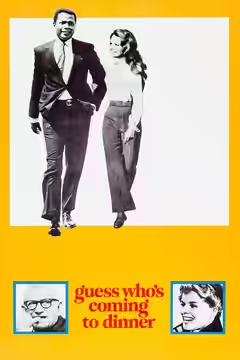
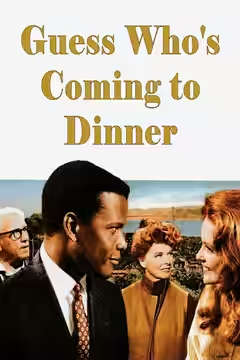
Stanley Kramer’s drama about a liberal couple meeting their daughter’s black fiancé is stagey, contrived and pleased with itself. It is also the last time Spencer Tracy and Katharine Hepburn acted together, and they, with Beah Richards, make the evening worth having.
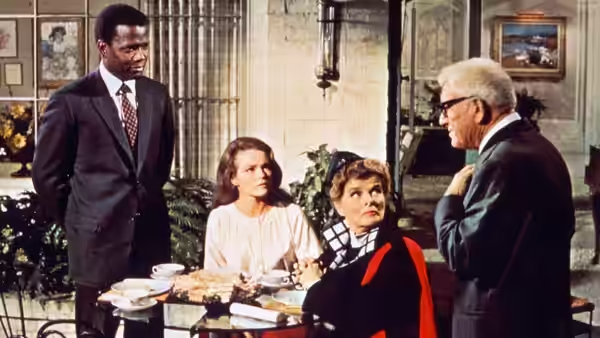
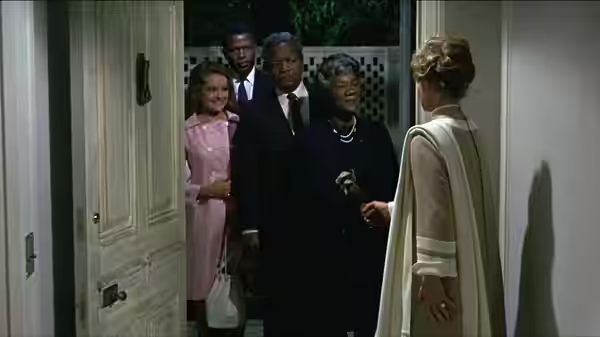
Stanley Kramer made films that took a position and stood by it, and Guess Who’s Coming to Dinner is the plainest of them. William Rose’s script gives the problem a single day. Joey Drayton comes home with a black fiancé, her liberal parents have until his flight that evening to decide whether they meant what they taught her, and everyone who walks through the door has an opinion. It runs 108 minutes, it carries a U certificate, and it means every word it says. It is worth your evening for three performances, and we would not pretend it is worth it for much else.
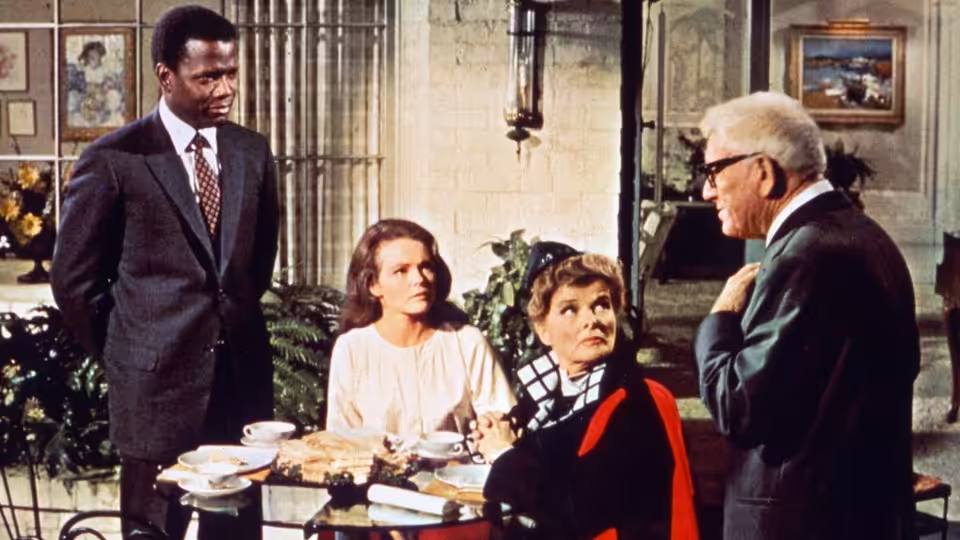
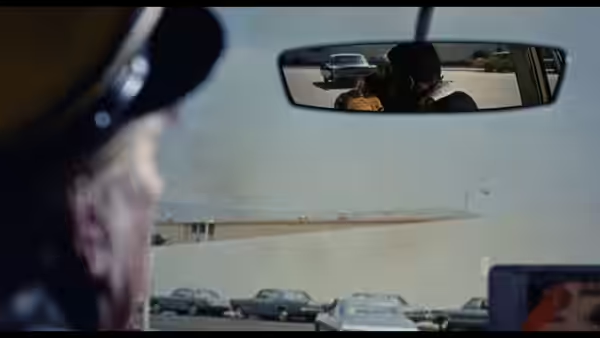
Two of those are Tracy and Hepburn, who had been acting opposite each other since the 1940s and knew this was the last time. Tracy plays Matt as a man who wants to be left alone with a problem and keeps being interrupted: by his wife, by his daughter, by a priest who will not stop being cheerful. Hepburn plays Christina watching him, and there are moments when she is not watching Matt at all. The best stretch of the film is a detour to a drive-in where Matt orders an ice cream he cannot name, gets the wrong flavour from a carhop (Alexandra Hay), decides he likes it, and reverses into a young man’s car (D’Urville Martin). For five minutes nobody is making an argument.
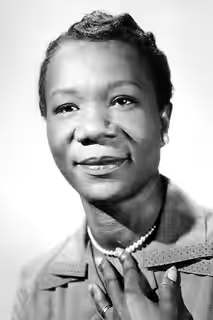
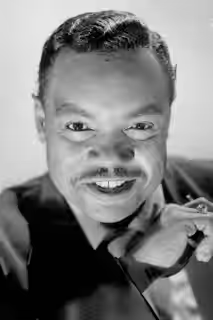
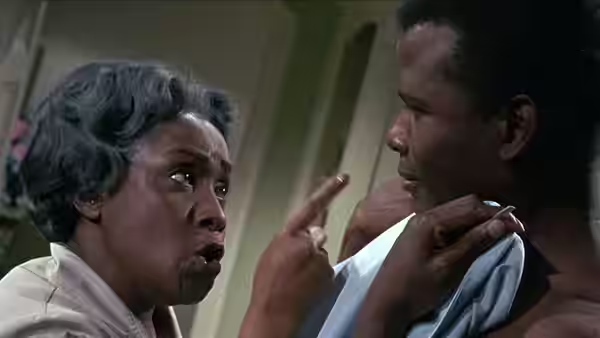
The third performance is Beah Richards as John’s mother, who arrives with her husband (Roy Glenn) to find the two fathers in agreement and the two mothers not. Her conversation with Tracy on the terrace, in which she tells him quietly what she thinks has happened to men his age, moved us more than we expected. Sam Leavitt holds the two of them against the bay as the light goes, Frank De Vol’s score stays out of it, and Richards never raises her voice. Poitier gets one scene of comparable weight, with Glenn, late on, and takes it.
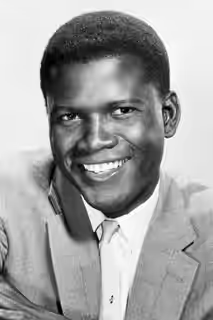
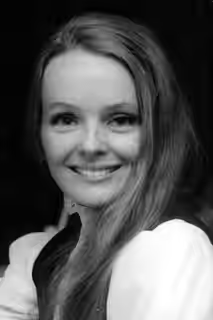
The trouble is John Prentice himself. Rose has written him as a doctor whose achievements are read aloud like a CV, widowed, patient, quick to smile and never once out of temper, so that the only thing anyone could hold against him is his colour. That is the point, and it is also the problem. Poitier plays it with grace, but he is playing a brochure. Katharine Houghton, Hepburn’s niece, has the harder part, because Joey is written as a girl who has never noticed anything and is asked to say so at length.
The house is the other lead. Robert Clatworthy has built the Draytons a hilltop home that is mostly glass, with a terrace hanging over San Francisco Bay, and every private conversation is taken outside so the view can listen. Leavitt lights it evenly and brightly, like a magazine spread, and nothing in it throws a shadow. Kramer stages talk in two-shots and lets people finish their paragraphs; Robert C. Jones cuts when they have. Joe King dresses everyone as people who have never seen a bill. It all looks expensive and it all sits still.
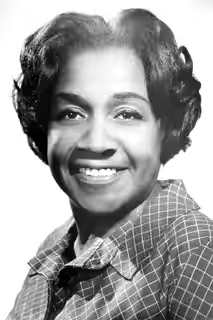
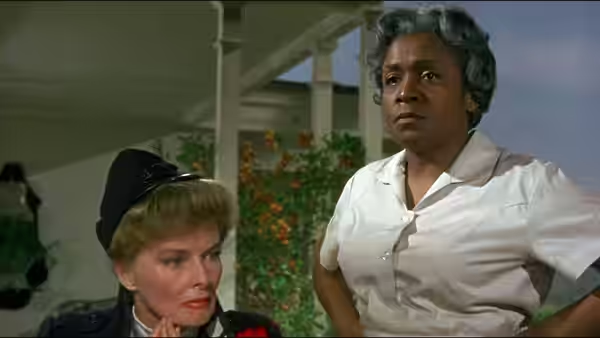
We grew restless around the hour. Christina’s gallery assistant Hilary St. George (Virginia Christine) turns up to say something snobbish and be dealt with, and the scene is arranged so we can enjoy it without cost. Tillie the housekeeper (Isabel Sanford) is allowed to disapprove of John, loudly, in a way the white characters are not, and the film treats this as comedy. By the time it builds towards its last long speech, we knew what the verdict would be and were only wondering how long it would take to arrive. We will not say what is decided, except that nobody in 1967 or since has been surprised by it.
Poitier had three films out that year, and this is the softest of them. It has become a record of what a well-meaning studio thought bravery looked like in 1967, and it is honest about that, which counts for something. Watch it for Tracy, Hepburn and Richards, and treat the rest the way the Draytons treat their guests: politely, and with one eye on the clock.