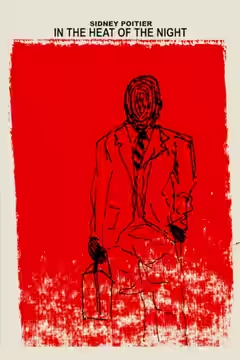
Norman Jewison’s Mississippi murder story holds up better than most films of its year, because Sidney Poitier and Rod Steiger are playing people rather than positions. The mystery is thin and the solution is tidied away too quickly, but the two men are not.
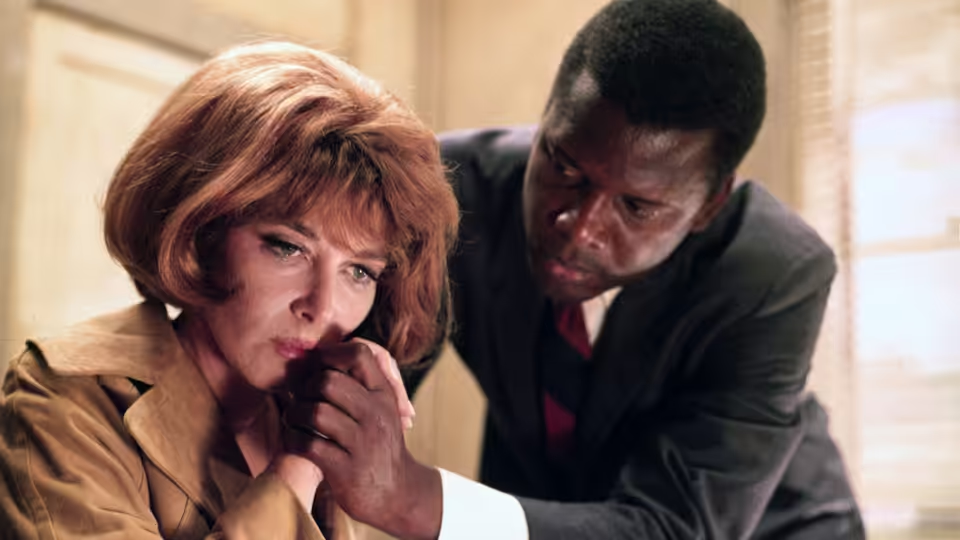
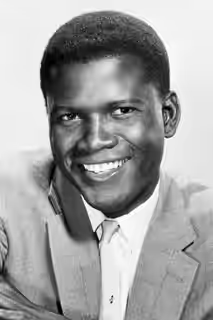
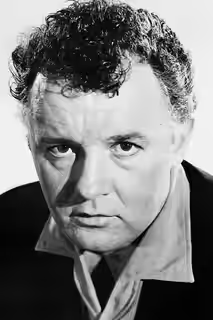
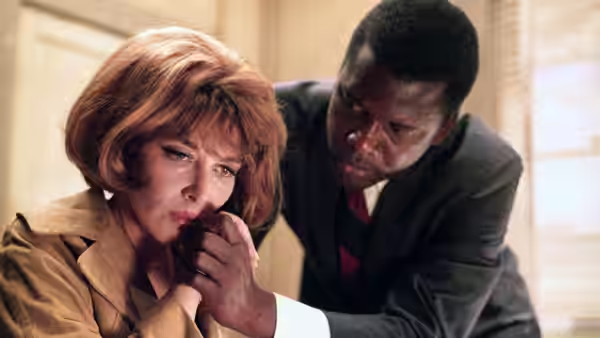
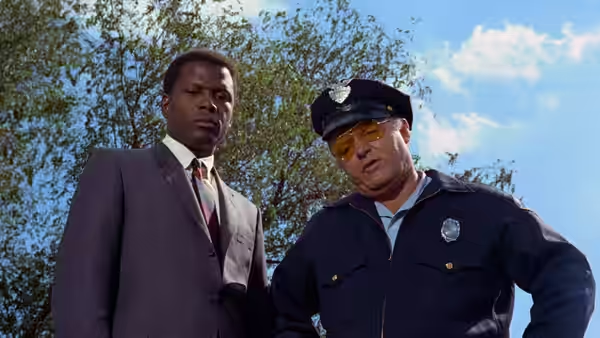
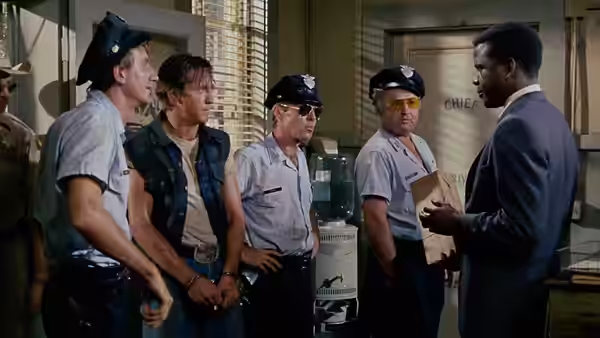
Norman Jewison’s film is a murder mystery with a poor murder in it, and that turns out not to matter much. A wealthy northerner is found dead in the road in Sparta, Mississippi, and the town’s police chief, Bill Gillespie (Rod Steiger), spends the night arresting the wrong men. The first is Virgil Tibbs (Sidney Poitier), pulled off a bench at the railway station for being black, well dressed and awake at that hour. Tibbs is a homicide detective from Philadelphia. Stirling Silliphant’s screenplay, from John Ball’s novel, keeps finding reasons to hold him in town, and every one of them is flimsy.
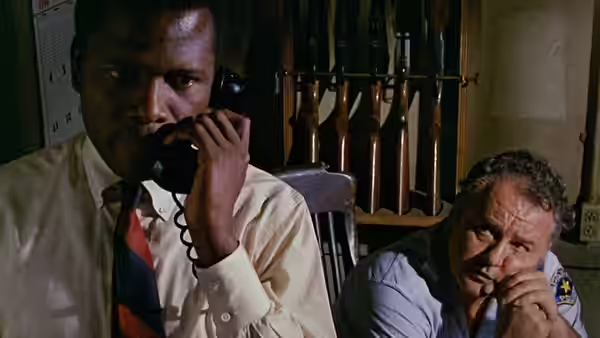
It is as good as its reputation and better than its plot. We would recommend it to anyone with an evening and a taste for police work, with one caveat: who killed the man is the least interesting question it asks. The interesting one is how long two men who cannot stand each other can share a room, and Jewison keeps finding new rooms.
The first interrogation sets the terms. Gillespie asks what Tibbs earns up north, Tibbs tells him, and Steiger’s face does the arithmetic and does not like the answer. Poitier is asked what they call him in Philadelphia and gives the line everyone knows, and the reason it still works is that he says it quietly. Steiger chews gum through the whole film, playing a man who needs his mouth busy so it will not say what he is thinking. Poitier does almost nothing with his body. Between them they turn a procedural into a fight about manners.
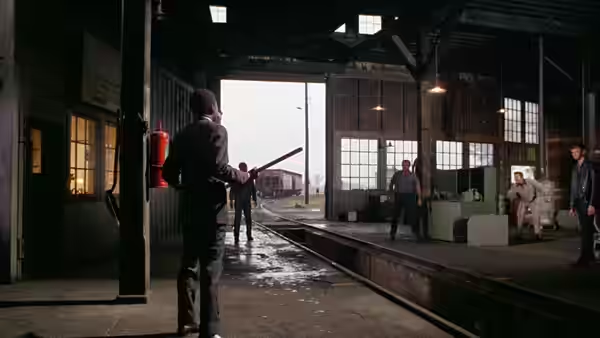
Haskell Wexler shoots the town in two kinds of light. At night it is oily and yellow, the diner’s neon and the patrol car’s headlamps and not much else, so faces come at us out of the dark. By day it is white and hazy, heat you can see. Hal Ashby’s editing holds on faces longer than the period usually allowed; the autopsy scene, Tibbs at work over a body while men who have never watched one stand about, is cut entirely on who is looking at whom. Quincy Jones opens the score with Ray Charles singing the title song over a train coming in, then drops to harmonica and guitar under the night scenes. It is loud, and in the chase sequence it is too loud. Alan Levine has dressed Tibbs in a grey suit and tie, and half the film’s trouble is that suit.
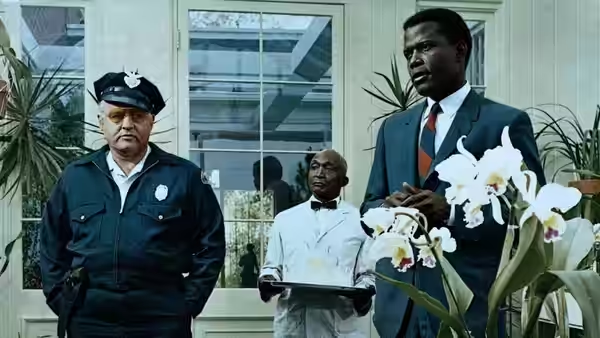
The scene that got at us is in a greenhouse. Eric Endicott (Larry Gates) is a cotton man who grows orchids, and he slaps Tibbs, and Tibbs slaps him back. We knew it was coming; everyone has seen the clip. We still sat forward, and not for the slap. It was for the moment after, when Jewison holds on Gates while the old man’s mouth works and nothing comes out, and then on Steiger in the doorway, who has watched all of it and does nothing. The film’s honesty is in what Gillespie fails to do.
Around the two leads the town is well cast. Warren Oates is Sam Wood, the night deputy, sweating and slow and more pitiable than the script strictly requires. Lee Grant has one long scene as the widow, Mrs Colbert, and plays the only person in town who can see what is in front of her. Scott Wilson is Harvey Oberst, a boy running across a bridge with a dead man’s wallet, and Anthony James, as Ralph behind the diner counter, has a face Wexler lights like a lamp.
The flaws are of their year. The mystery is solved the way television solved mysteries in 1967, by somebody saying the right thing at the right moment, and we did not believe a word of it. The strand involving Delores Purdy (Quentin Dean), a teenager who undresses in front of her kitchen window, is written with a leer the rest of the film is too grown up for. Tibbs is allowed to be angry only in ways that make him more admirable, which is a kind of flattery. The one serious dissent among the reviews we have read called the whole thing contrived, and we can see what was meant, though it undervalues how little the film lets the two men like each other.
Watch it late, with the window open, and do not worry about the plot. At 109 minutes it wastes little, and the 12 certificate is fair: the worst violence in it is a slap, and the film knows exactly how bad that is.