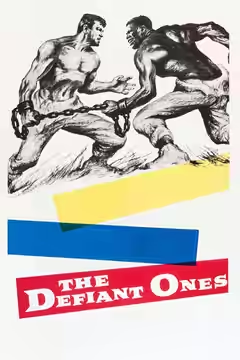
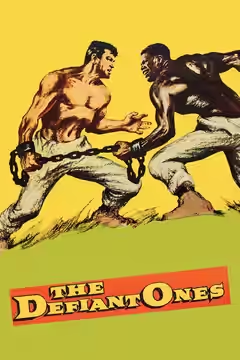
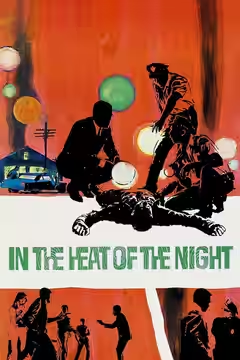
Stanley Kramer’s chase film chains a white convict to a black one and runs them through the swamps of the South. The message is spelled out more than once, but the running is fierce and Curtis and Poitier make the chain feel real.
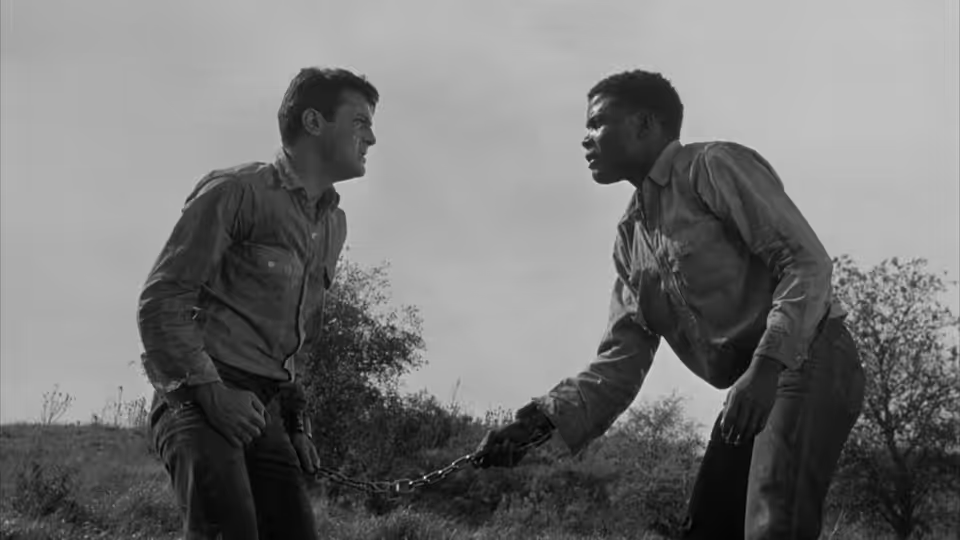
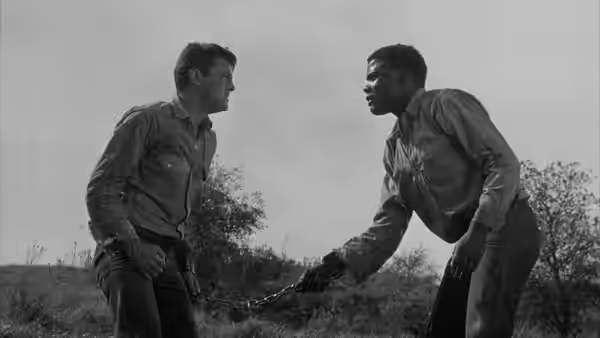
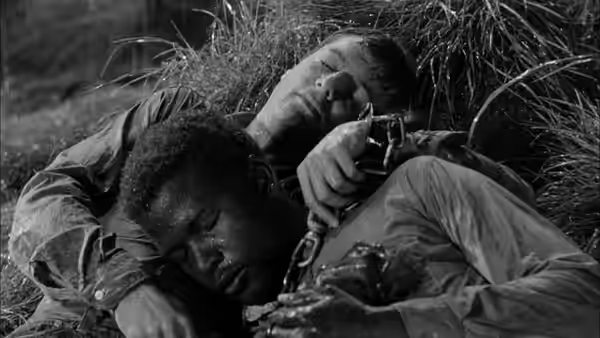
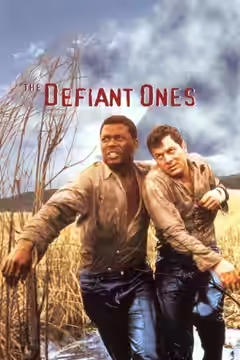
Stanley Kramer’s film begins with a crash and never quite stops moving. A prison truck goes off a wet road in the American South, and two of the men inside walk away from it chained at the wrist: John ‘Joker’ Jackson (Tony Curtis), white, mouthy and certain the world owes him something, and Noah Cullen (Sidney Poitier), black, watchful and expecting nothing. They cannot stand each other. They have one chain and no choice. That is the whole idea, and Nedrick Young and Harold Jacob Smith’s script tells us so, more than once, in words. The chase is good enough that we forgave the lesson.
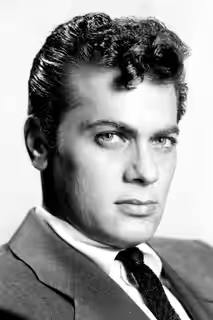
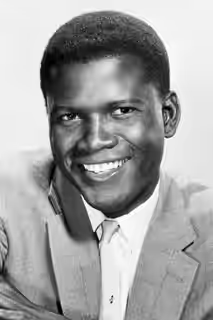
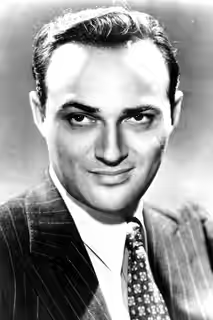
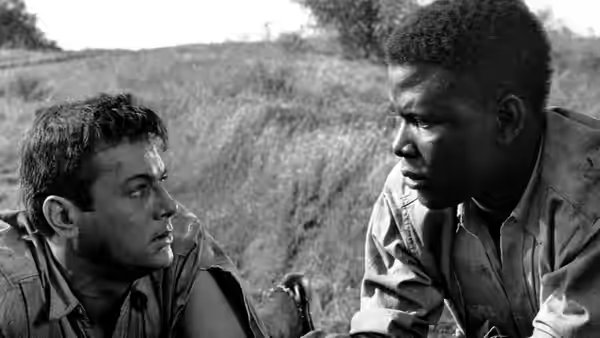
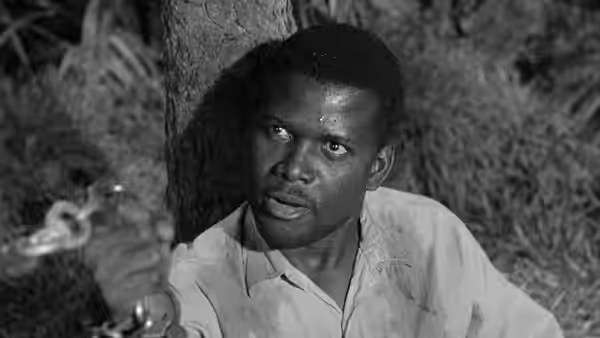
Curtis plays Joker with a two-day beard and a grudge against everyone who ever had more than him, and it is the best thing we have seen him do. He whines, he bargains, he picks fights he cannot win, and slowly the whining stops. Poitier gives Cullen a stillness that does most of the work. He sings a song about a man who got clean away, in a low unbothered voice that drives Joker mad, and saves his anger for the two or three moments when it will land. Between them they make the chain a third character.
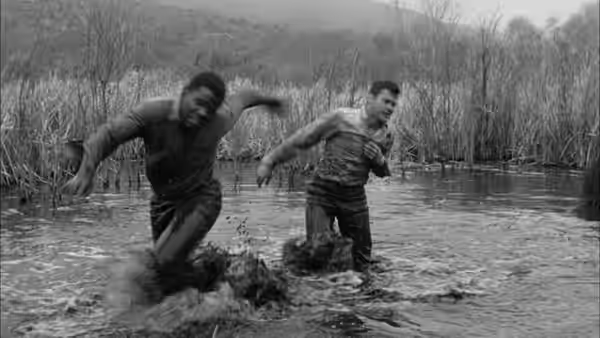
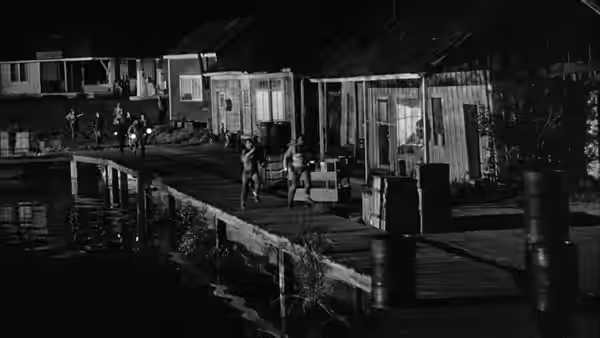
Sam Leavitt shoots it in black and white, and the first reel is all rain and mud, two men slithering through it with the light behind them so they are shapes before they are faces. In daylight he lets the sun come in hard and flat, and the men look as tired as they say they are. The clay pit is the sequence we will keep. The two are at the bottom of a steep wet pit, and every time one gets a handhold the chain drags him back down onto the other, and the film simply watches them try. We held our breath, and then noticed our hands were clenched, and then noticed the film had told us everything about these two without a line of dialogue. Frederic Knudtson cuts between fugitives and posse without fuss; the pace comes from the men’s exhaustion rather than the edit.
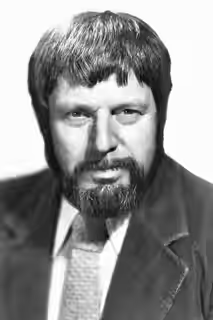
Theodore Bikel’s Sheriff Max Muller is the film’s conscience, a large soft-spoken man who wants the pair brought back alive and keeps the dogs on their leads. Charles McGraw’s Capt. Frank Gibbons, the state man, would rather let them loose, and their argument runs alongside the chase as a second, quieter one. Bikel is good, but here the writing puts its thumb on the scale: Muller says the decent thing so plainly that we can feel ourselves being asked to nod. Lon Chaney Jr. turns up later and gives the film a surprising few minutes of quiet.
The film shows its age in the mouth. Joker and Cullen argue about race in speeches, and the speeches were written to be quoted. Cullen is asked to be patient, wise and forgiving; Joker is allowed to be wrong and to grow, and the film’s sympathy sits with the man who changes rather than the one who was right all along. That nagged at us, though it does not sink the picture. The last third brings in a woman living alone (Cara Williams) and her boy Billy (Kevin Coughlin), and the pace sags while everyone sorts out what they think. Ernest Gold’s score is loudest under the titles and the dogs; the film is at its best when it leaves the music to Poitier. Rudolph Sternad has little to build, since nearly all of it happens outdoors; the few interiors are bare boards and a lamp.
Kramer went on to make bigger and worthier things, Judgment at Nuremberg (1961) and Guess Who’s Coming to Dinner (1967) among them, and most of them now play as long debates. This one wears better because there is a chase under the argument, and when the argument runs out the chase keeps going.
Watch it for the two men, the pit and the river. Forgive it the speeches, which were probably necessary in 1958 and are merely audible now. It carries a U certificate, runs 96 minutes and does not waste many of them.