Film review

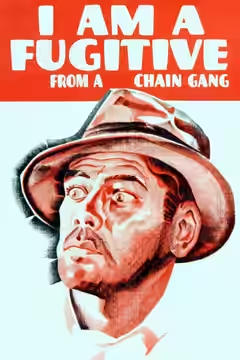
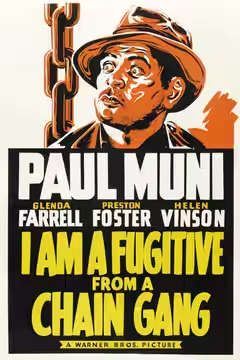
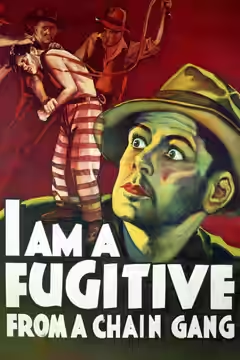
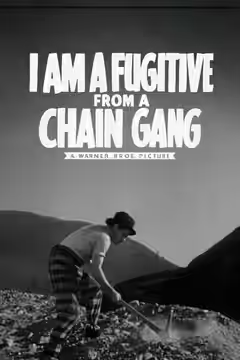
I Am a Fugitive from a Chain Gang

1932 · Directed by Mervyn LeRoy · 1h 32m · MPA NR

In a sentenceA war hero comes home wanting to build bridges and gets a rock pile and a sledgehammer instead

DramaCrime

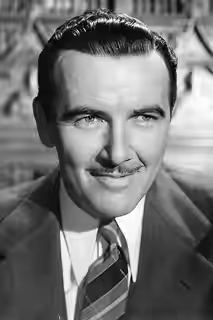
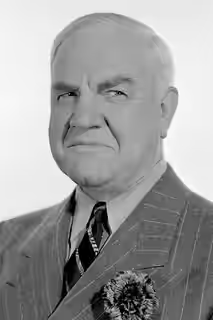
James Allen (Paul Muni) comes home from the war with a medal and no wish to return to his factory desk. His mother (Louise Carter) and his brother, the Reverend Allen (Hale Hamilton), want him settled; he wants to build bridges. He drifts around looking for construction work and ends up broke in a flophouse, where a fellow drifter, Pete (Preston Foster), buys him a hamburger, then robs the counter, pushing the money into Allen’s hands. The police arrive. Pete is shot and Allen is caught holding the cash. The Judge (Berton Churchill) gives him ten years’ hard labour, and a lorry takes him to a Southern chain gang, where the Warden (David Landau) runs the camp and Bomber Wells (Edward Ellis) explains the rules.

Plays from YouTube when you press play; nothing loads from them until then.

Fi1m review

Mervyn LeRoy’s chain gang film is fast, plain and still angry, and Paul Muni’s face carries it. The women are thinly written and the argument is said aloud once too often, but nothing in it has gone soft.

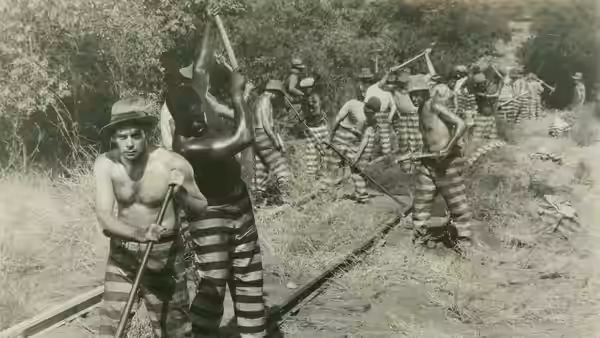
I Am a Fugitive from a Chain Gang is taken from Robert E. Burns’s account of his own imprisonment, and it plays like a man telling you something he needs you to hear before the door closes. Mervyn LeRoy directs it in 92 minutes with almost no fat. A man comes home from the war, wants to build things, falls into a robbery he did not plan, and is sent to break rock in leg irons. What happens after that we will describe only up to a point. It is as good as its reputation, and it is angrier than most prison films made since, which is not what we expected from something this old.

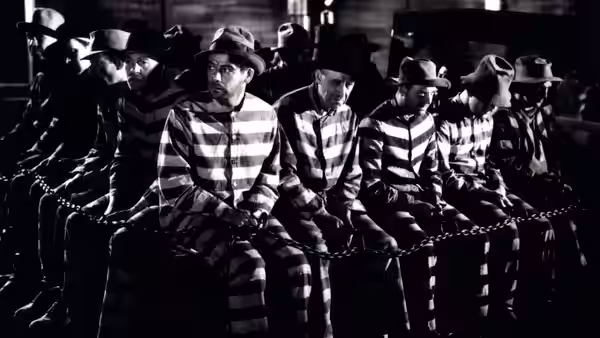
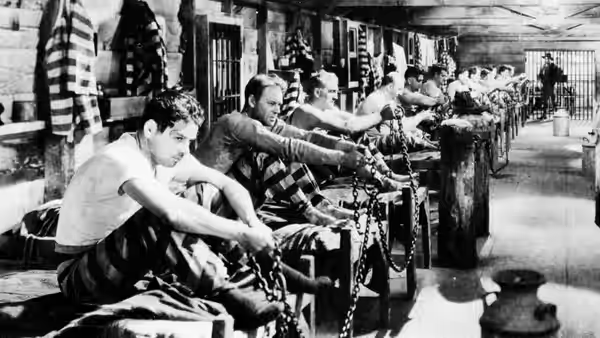
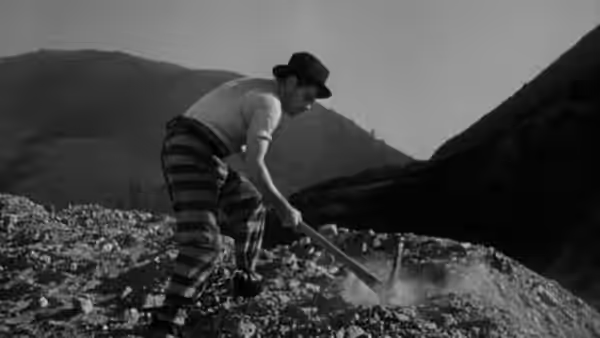
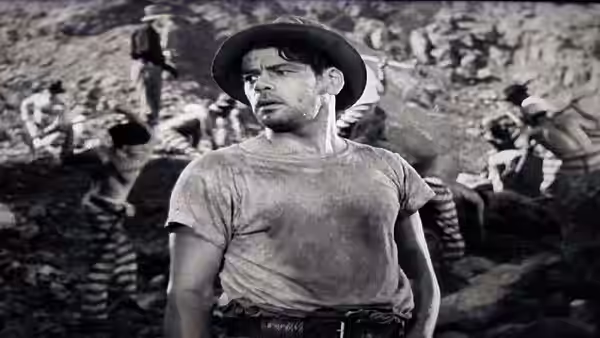
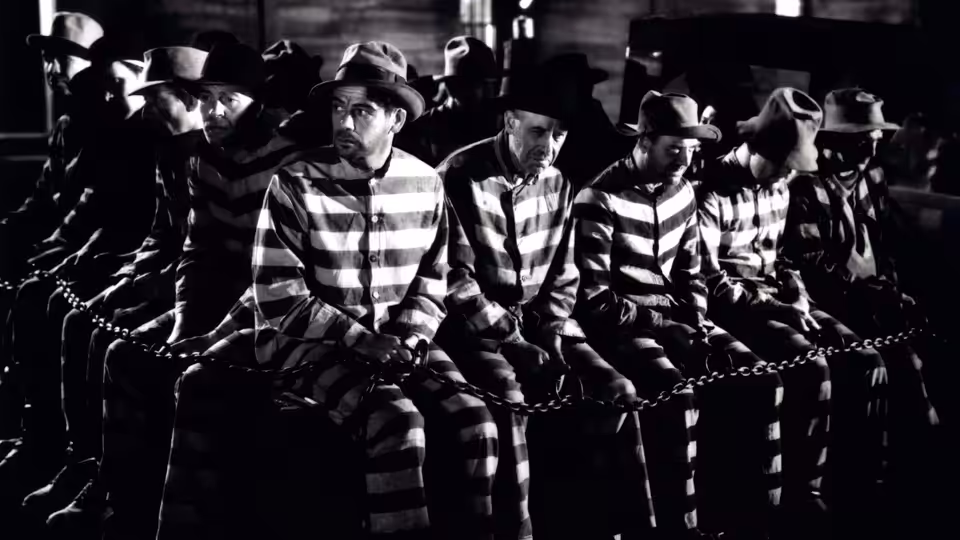
The camp is the film’s best stretch. Sol Polito shoots it in hard daylight and lamp-lit bunkhouse gloom, so the men’s stripes and the sweat on their faces are all you see, and the guards stand mostly in silhouette. William Holmes cuts the rock pile to the beat of the hammers, a row of men swinging in turn, and it goes on long enough that you feel it in your shoulders. The convicts eat fried dough and grease from tin plates. When a man is taken out to be strapped, LeRoy keeps the camera on the others in the bunkhouse, waiting for the sound. It is far worse than watching.

The first escape is the scene everyone remembers and it deserves to be. Allen has his shackles hammered thin on the rock face so he can bend them, and then he runs: through scrub, into a swamp, under the water with a reed in his mouth while the bloodhounds go past above him. We held our breath with him, and we knew how the scene ended. There is no music under any of it. Leo F. Forbstein and Bernhard Kaun’s score is confined mostly to the titles, as it often was in early sound pictures, and here the silence is the right choice. You hear dogs, water and a man breathing badly, and that is all you need.

The middle of the film moves north and changes register. Orry-Kelly puts Muni in good suits and a clean collar, and the change in his bearing is the point: this is a man who has become somebody and is waiting for it to be taken away. Glenda Farrell plays Marie Woods, the landlady who works out who he is, and Helen Vinson plays Helen, the woman he would rather be with. Neither part is written with much care. Marie is a harpy from her first scene and Helen is a coat and a kind voice. Farrell does what she can with a role that only asks her to sneer, and she sneers well. It is the one section where the film’s speed costs it something.

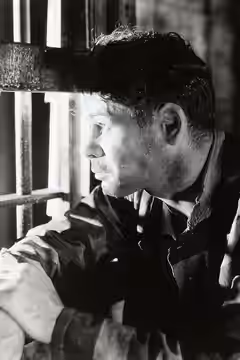
Muni is the reason the rest holds. In the camp he does very little, a glance at the guards, a hand flexing in the irons, and it counts. He is broader in the early scenes, the speeches about wanting to build and not to be pinned to a desk, and there the writing by Howard J. Green, Brown Holmes and Sheridan Gibney is at its weakest: the argument is stated aloud, then stated again by the brother from his pulpit. The film does not trust us to draw the moral from the rock pile, though the rock pile has already drawn it. Edward Ellis, as Bomber Wells, and Allen Jenkins, as Barney Sykes, are better served, two lifers who explain the rules with the dry courtesy of men who have stopped expecting anything.

LeRoy had made Little Caesar the year before, and this is the same studio’s plain, quick style pointed at a different target. It is a film that wants to change a law rather than admire a criminal, and it is unusually willing to make an audience uncomfortable to get there. The second half takes a turn we will not describe, except to say that the film’s view of the state’s word is not a hopeful one, and that the last minute chilled us more than anything in the camp. It is a fade to black and a line of dialogue, and it has not lost its edge.

Watch it in one sitting, in the evening, and do not expect comfort. It was made to make people angry, and it still does.

Critical consensus AI synthesised

81
Positive
7
Mixed
0
Negative
0

All seven reviews are positive, and they agree on why. Paul Muni’s performance as the wrongly convicted man is praised across the board, described variously as harrowing, understated and riveting. The chain gang sequences draw equal attention: critics find the floggings, hard labour and misery convincing rather than staged, and the escapes are singled out as among the tensest of their era. Empire credits Mervyn LeRoy’s staging of the set-pieces, and several reviews note that the film’s anger at organised cruelty has not softened with age.

The spread is narrow, running from good to strong, and reservations are few. Time Out finds some of the social commentary heavy-handed. The two reviews written on release, from The New York Times and The New Yorker, are the coolest, treating it as honest, instructive melodrama rather than anything exceptional, while later critics are readier to rank it above Warner’s other social problem pictures of the period.

Slant Magazine
22 May 2005 · Jeremiah Kipp
90*

The film remains a gripping, uncompromising prison drama whose hard-edged anger has not dulled over time. The critic singles out the blunt, effective prison sequences and Muni's riveting performance as a man desperate for freedom.

Read the full review →
The AV Club
17 May 2005 · Noel Murray
90*

The film is a vivid social-problem picture that does not flinch from the grim realities of Southern chain gangs and connects them to broader issues of justice and aspiration. It features one of the most nerve-wracking escape sequences in movie history.

Read the full review →
Variety
31 December 1931 · Variety Staff
90*

The picture has guts, gripping with stark realism and packing lots of punch as a sympathetic cinematic transposition of the Robert E. Burns autobiography. Muni turns in a pip performance amid the story of dual escapes from the chain gang and the realistic finale.

Read the full review →
Empire
1 June 2006 · Kim Newman
85*

The critic calls it the most powerful of Warner Brothers’ early 1930s ‘social problem’ films, an indictment of organised cruelty that remains potent, hard-hitting melodrama. They single out Mervyn LeRoy’s staging of classic set-pieces and Paul Muni’s harrowing, understated performance.

Read the full review →
The New Yorker
12 November 1932 · John C. Mosher
70*

The film delivers a substantial, deliberate and honest account of life in Southern prisons with no modern reform amenities, remaining ruthless, shocking and instructive. The prison scenes have a convincing ring, with stirring depictions of floggings, hard labor and misery, and the escapes are exciting.

Read the full review →
The New York Times
11 November 1932
70*

The film is a vehement attack on convict camps with most details from the source book, presented as a stirring melodrama without the usual concessions to popular appeal. Paul Muni gives a convincing and earnest performance as the central figure victimized by circumstances in the chain gang system.

Read the full review →

Cast

Awards

National Board of Review Award for Best Film, 1932

Won
National Board of Review Award for Best Film

If you liked this, try…

Cool Hand Luke poster

Cool Hand Luke

1967 · The same Southern rock pile thirty-five years on, with Paul Newman grinning through it

A Man Escaped poster

A Man Escaped

1956 · Bresson strips a prison break down to hands, string and a spoon

Brute Force poster

Brute Force

1947 · Dassin’s cell block is a pressure cooker and Hume Cronyn is the flame

Sullivan's Travels poster88

Sullivan's Travels

1941 · A Hollywood director lands on a chain gang and Sturges finds the comedy in it

Hunger poster86

Hunger

2008 · McQueen’s Maze prison film is nearly silent and impossible to look away from