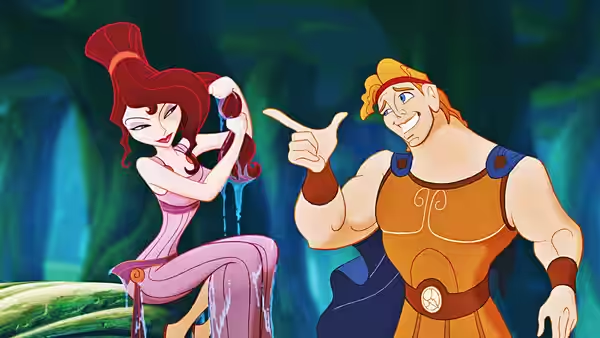
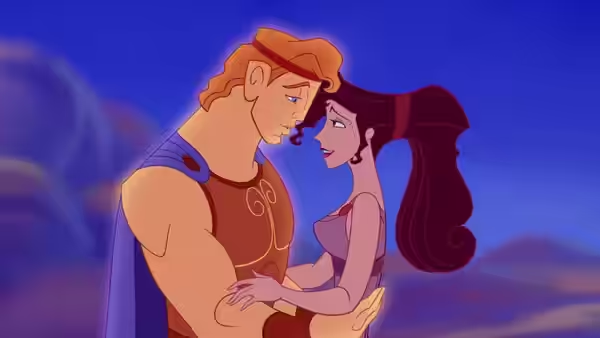
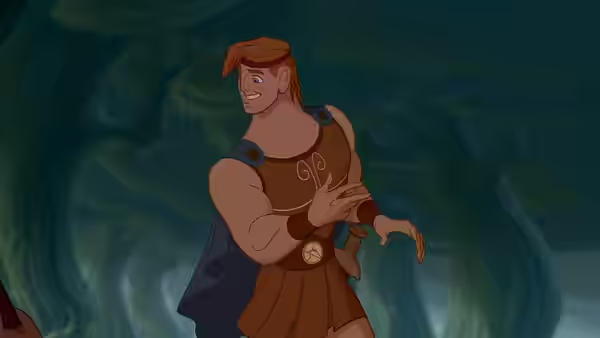
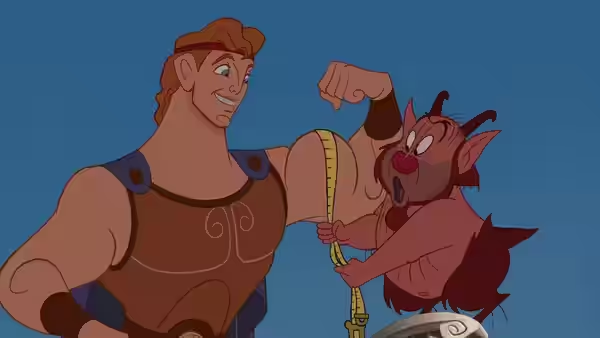
Musker and Clements turn Greek myth into a showbusiness comedy, drawn by Gerald Scarfe as if scraped off a vase, and James Woods’s Hades steals every scene he is in. The songs are strong, the hero is a blank, and the children will not mind.
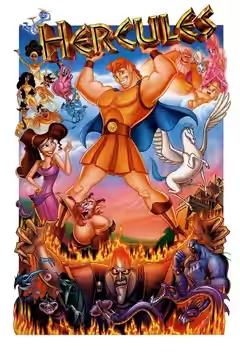
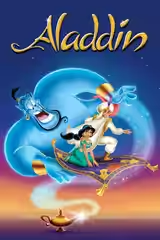
John Musker and Ron Clements made The Little Mermaid and Aladdin, and Hercules is what happens when that team decides the Greek myths are really about fame. Their Hercules is not a tragic strongman but a small-town boy who wants to be somebody, and once he reaches Thebes the film treats heroism as a career: merchandise, endorsements, and a chorus of five Muses who sing his progress like a girl group. It reached British cinemas on 10 October 1997, and it is a brisk, noisy, often funny 93 minutes with one great villain and a hero who barely registers. Worth your evening if the genre is yours, and the children will not need persuading.
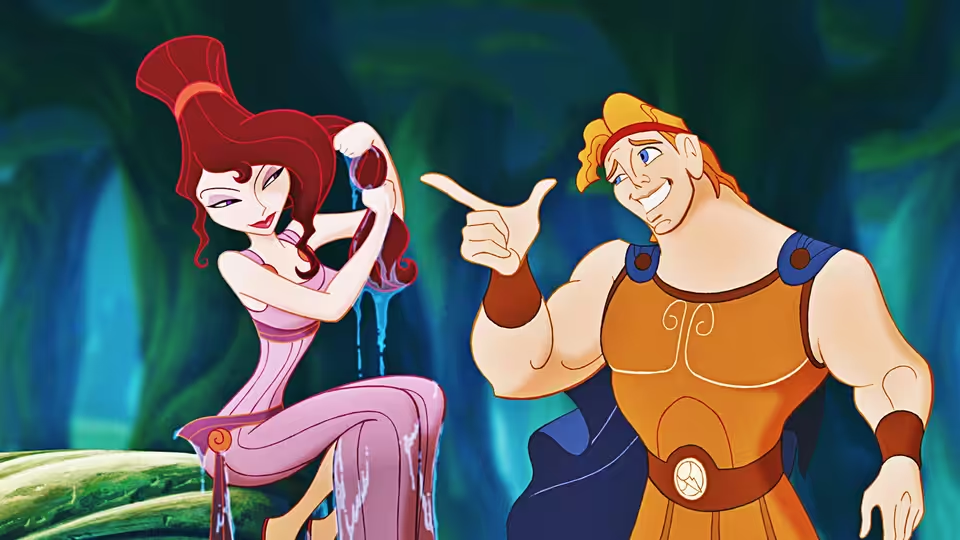
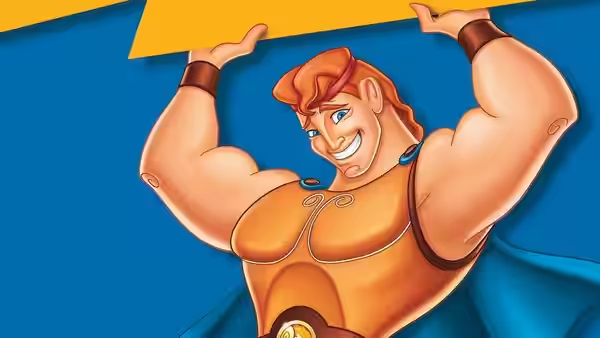
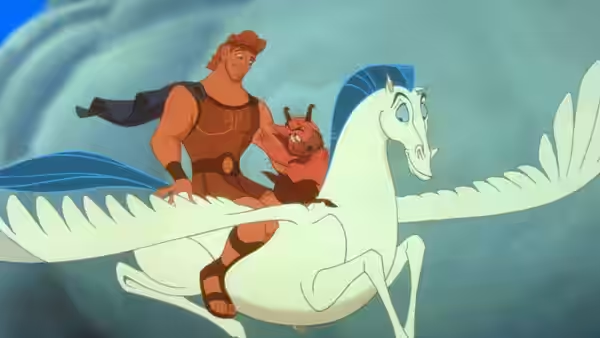
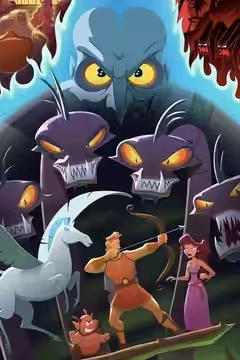
The look is the first thing you notice, and it is Gerald Scarfe’s. The production designer draws people as if they had been scraped off a black-figure vase: long noses, jutting chins, feet like paddles, and a Hades whose hair is a blue flame that turns red when he loses his temper. It is the most distinctive Disney looked in that decade, and it is not always pretty. Scarfe’s angles fight the studio’s rounder house style, and in the crowd scenes you can see the two arguing. Tom Finan and Robert W. Hedland cut the musical numbers hard on the beat, and the film never sits still for long.
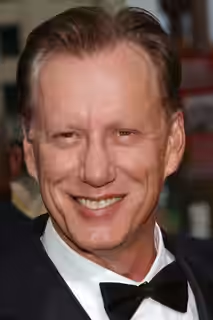
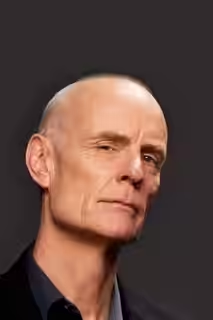
James Woods is the reason to watch it. His Hades is a fast-talking salesman, all “babe” and “name your price”, and Woods plays him as a man who has been stuck in a dead-end job for several thousand years and knows exactly whose fault it is. We laughed out loud, more than once, at nothing more than the speed of his complaining when a plan goes wrong. Bobcat Goldthwait and Matt Frewer, as Pain and Panic, are his shape-changing stooges and get the best physical gags; a scene in which they turn up wearing the hero’s own merchandise is the film’s neatest joke about itself.
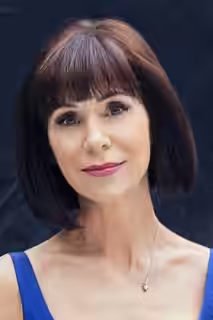
Alan Menken’s songs are the other good reason. Instead of an orchestra and a princess he gives the film gospel: the Muses, five women in white, open the story by telling the stuffy narrator to sit down, and “Zero to Hero” is the best number, built to be sung along to in the car. Susan Egan, as Meg, gets “I Won’t Say (I’m in Love)” in a garden of statues, with the Muses turned to stone cherubs and singing back at her. We were more moved by it than we expected to be. Meg is the only character with anything to hide, and Egan sings like a woman who has been let down before and would rather not discuss it.
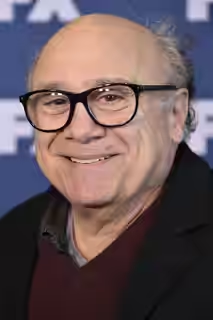
The hero is the problem. Tate Donovan’s Hercules is amiable, gangly and blank; he wants to be a hero because the film needs him to, and once Danny DeVito’s Philoctetes, a goat-legged trainer with a rasp and a whistle, has knocked him into shape, there is not much left to learn about him. DeVito is good value, but he is doing the sidekick job Robin Williams did in Aladdin, and doing it smaller. Then there is the satire. Thebes fills up with Hercules sandals, Hercules drinks and a Hercules Store, and the joke is that fame is a racket. We laughed, and then felt slightly used, since the joke was being told by a company that knows a great deal about selling sandals.
Kate Bergh is credited with costume design, which in a cartoon means deciding that Meg wears purple slit to the hip and Hades a robe that hangs like smoke, and both decisions are right. Against the directors’ own work the film sits below Aladdin and The Little Mermaid, both of which had a lead you cared about. Most critics land roughly where we do, and the affection the film has gathered since is mostly for Woods and Scarfe, which seems fair.
It is a U, and it earns it: nothing here will frighten anyone, and the Underworld is a place of green light and grumbling rather than dread. Put it on for children who like their heroes loud, and stay on the sofa for the villain. He is the only one on screen who seems to be enjoying himself.