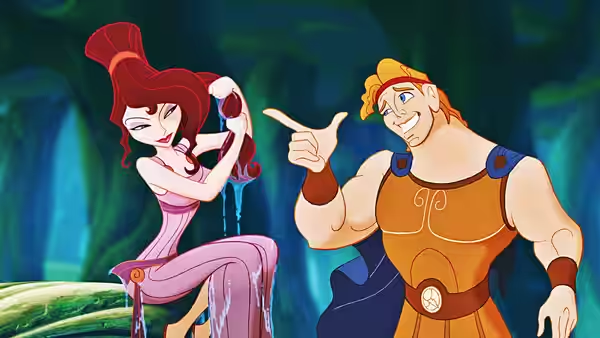
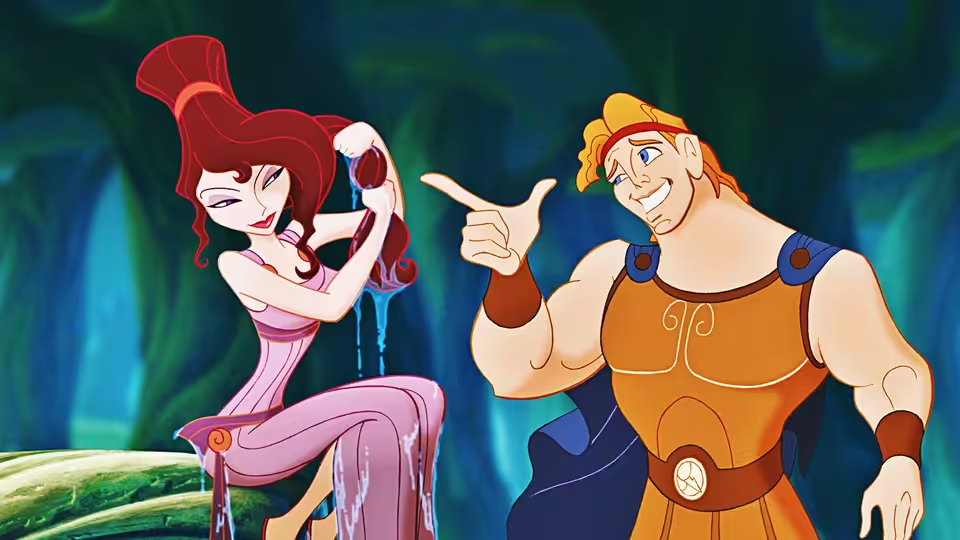
Meg (Susan Egan) wringing water from her hair as Hercules (Tate Donovan) points
Film review

Hercules

1997 · Directed by Ron Clements, John Musker · 1h 33m

In a sentenceHades talks like a Hollywood agent, the Muses sing like a girl group, and Hercules is the dullest man in his own film

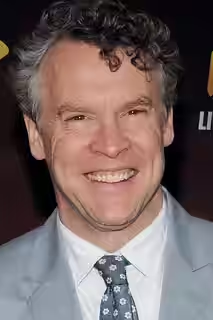
On Mount Olympus, Zeus (Rip Torn) and Hera (Samantha Eggar) are celebrating the birth of their son when Hades (James Woods), lord of the Underworld, arrives with a gift and a grudge. The Fates tell him the boy will one day stand in the way of his plan to overthrow Zeus, so he sends his minions Pain (Bobcat Goldthwait) and Panic (Matt Frewer) to kidnap the baby and turn him mortal. The potion is not quite finished, and two farmers, Alcmene (Barbara Barrie) and Amphitryon (Hal Holbrook), find the child with his strength intact. Grown into a clumsy teenager (Josh Keaton) who wrecks the marketplace, Hercules (Tate Donovan) learns who his father is and goes looking for Philoctetes (Danny DeVito), a retired trainer of heroes, to earn his way back to Olympus.

Fi1m review

Musker and Clements turn Greek myth into a showbusiness comedy, drawn by Gerald Scarfe as if scraped off a vase, and James Woods’s Hades steals every scene he is in. The songs are strong, the hero is a blank, and the children will not mind.

John Musker and Ron Clements made The Little Mermaid and Aladdin, and Hercules is what happens when that team decides the Greek myths are really about fame. Their Hercules is not a tragic strongman but a small-town boy who wants to be somebody, and once he reaches Thebes the film treats heroism as a career: merchandise, endorsements, and a chorus of five Muses who sing his progress like a girl group. It reached British cinemas on 10 October 1997, and it is a brisk, noisy, often funny 93 minutes with one great villain and a hero who barely registers. Worth your evening if the genre is yours, and the children will not need persuading.

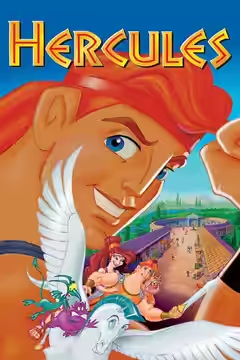
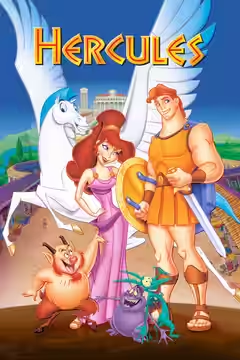
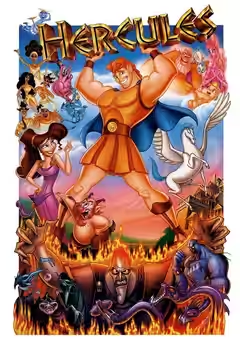
The look is the first thing you notice, and it is Gerald Scarfe’s. The production designer draws people as if they had been scraped off a black-figure vase: long noses, jutting chins, feet like paddles, and a Hades whose hair is a blue flame that turns red when he loses his temper. It is the most distinctive Disney looked in that decade, and it is not always pretty. Scarfe’s angles fight the studio’s rounder house style, and in the crowd scenes you can see the two arguing. Tom Finan and Robert W. Hedland cut the musical numbers hard on the beat, and the film never sits still for long.

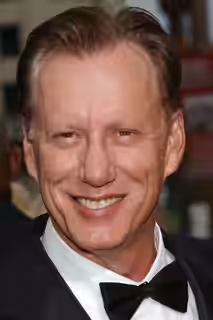
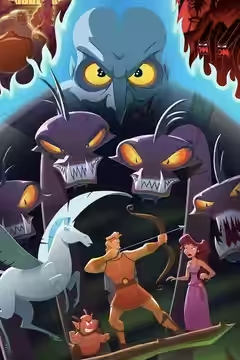
James Woods is the reason to watch it. His Hades is a fast-talking salesman, all “babe” and “name your price”, and Woods plays him as a man who has been stuck in a dead-end job for several thousand years and knows exactly whose fault it is. We laughed out loud, more than once, at nothing more than the speed of his complaining when a plan goes wrong. Bobcat Goldthwait and Matt Frewer, as Pain and Panic, are his shape-changing stooges and get the best physical gags; a scene in which they turn up wearing the hero’s own merchandise is the film’s neatest joke about itself.

Alan Menken’s songs are the other good reason. Instead of an orchestra and a princess he gives the film gospel: the Muses, five women in white, open the story by telling the stuffy narrator to sit down, and “Zero to Hero” is the best number, built to be sung along to in the car. Susan Egan, as Meg, gets “I Won’t Say (I’m in Love)” in a garden of statues, with the Muses turned to stone cherubs and singing back at her. We were more moved by it than we expected to be. Meg is the only character with anything to hide, and Egan sings like a woman who has been let down before and would rather not discuss it.

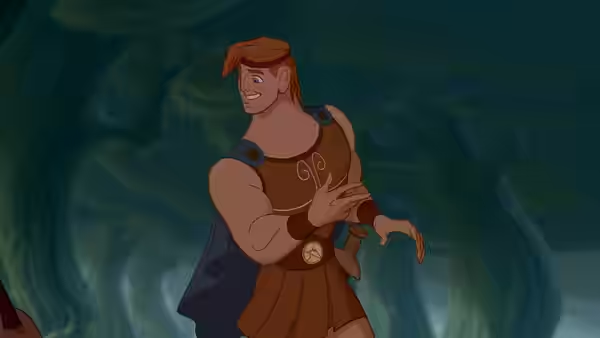
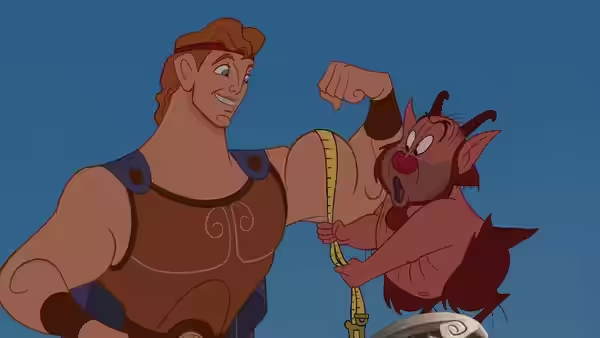
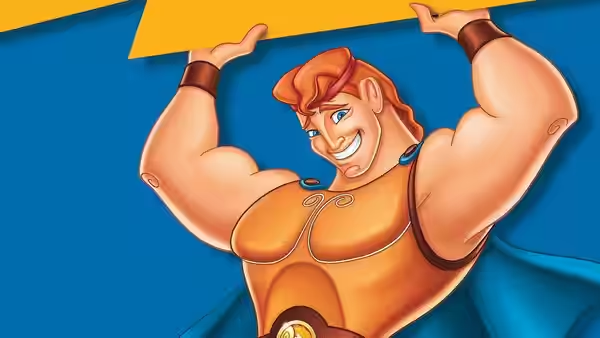
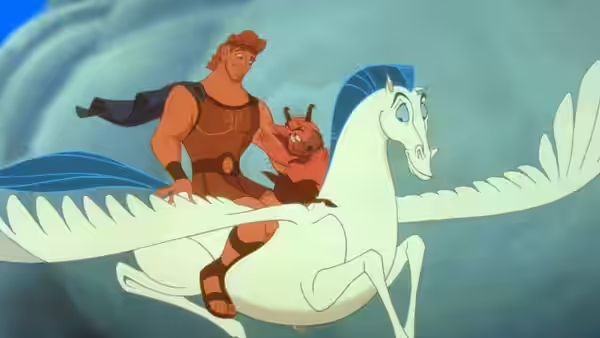
The hero is the problem. Tate Donovan’s Hercules is amiable, gangly and blank; he wants to be a hero because the film needs him to, and once Danny DeVito’s Philoctetes, a goat-legged trainer with a rasp and a whistle, has knocked him into shape, there is not much left to learn about him. DeVito is good value, but he is doing the sidekick job Robin Williams did in Aladdin, and doing it smaller. Then there is the satire. Thebes fills up with Hercules sandals, Hercules drinks and a Hercules Store, and the joke is that fame is a racket. We laughed, and then felt slightly used, since the joke was being told by a company that knows a great deal about selling sandals.

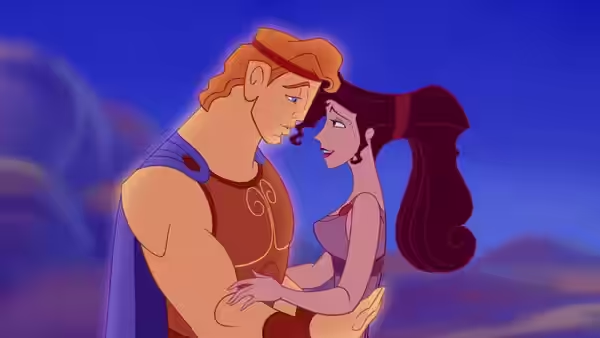
Kate Bergh is credited with costume design, which in a cartoon means deciding that Meg wears purple slit to the hip and Hades a robe that hangs like smoke, and both decisions are right. Against the directors’ own work the film sits below Aladdin and The Little Mermaid, both of which had a lead you cared about. Most critics land roughly where we do, and the affection the film has gathered since is mostly for Woods and Scarfe, which seems fair.

It is a U, and it earns it: nothing here will frighten anyone, and the Underworld is a place of green light and grumbling rather than dread. Put it on for children who like their heroes loud, and stay on the sofa for the villain. He is the only one on screen who seems to be enjoying himself.
Critical consensus AI synthesised

77
Positive
9
Mixed
4
Negative
0

Most critics like Hercules, and the praise clusters in two places. The first is Gerald Scarfe’s angular, caricatured designs, which several reviewers call the freshest thing Disney animation had attempted in years. The second is James Woods’ fast-talking Hades, named as the chief attraction for adults by nearly every review that discusses the voice cast. David Zippel’s lyrics, the gospel chorus and the brisk handling by directors John Musker and Ron Clements also draw warm words.

The reservations are about tone. The mixed reviews find the film cheeky rather than funny, working too hard to amuse grown-ups and leaning on gags that assume some classical knowledge. The Independent argues the anachronisms make the myth accessible at the cost of its weight, and Empire calls it noisy and relentless where it should be charming. Collider ranks it lowest among Musker and Clements’ films. Nobody dislikes it outright; the spread runs from admiring to lukewarm, and the later retrospectives divide much as the reviews of the time did.

Vulture
25 July 2014
91*

The critic calls the 1997 Disney animated film an underrated masterpiece and their favorite Disney movie, praising its blend of hero story and rom-com elements along with a standout soundtrack.

Read the full review →
Los Angeles Times
25 June 1997 · Kenneth Turan
90*

This free-spirited show-biz version of Greek mythology ranks with the best of modern Disney animation. The critic singles out the snappy musical patter by David Zippel, the wisecracking aura combined with romantic poignancy, and the deft mix of comic tone with traditional Disney life lessons.

Read the full review →
The New York Times
13 June 1997 · Janet Maslin
90*

The ingenious new animated Hercules is pretty divine, with Disney animation back in top form. The critic singles out the inspired intuition bringing together ancient lore, gospel singing, girl-group choreography, and free-floating mischief into a jubilant pastiche, plus wild visual ideas from production design by Gerald Scarfe.

Read the full review →
Variety
16 June 1997 · Leonard Klady
90*

Hercules displays the muscle and charm to dominate family and kid biz for the season as a winning tall tale, cleverly told and wonderfully voiced. The critic singles out the forceful and amusing melding of character animation with the screen personae of the actors voicing the roles, particularly Danny DeVito and James Woods, plus the vitality and insouciance from directors John Musker and Ron Clements.

Read the full review →
Time Out
23 April 2014 · TJ
89*

The critic praises the film as another benchmark achievement by the Aladdin team of Musker and Clements, noting its infectious humour that appeals across ages and the great craft in Gerald Scarfe's angular visual design. They single out the likeable but dim-witted grown-up Herc, James Woods' cigar-chomping Hades as the chief attraction for adults, and the gospelling divas of the chorus.

Read the full review →
IndieWire
16 August 2022 · Carlos Aguilar
80*

The critic argues that the 1997 Disney animated film, despite underperforming at the box office, was a key creative success in the studio's 1990s renaissance with enduring strengths in its reimagining of Greek myth.

Read the full review →

Straight answers AI written, from our review

Is Hercules worth watching?
Hercules is worth watching for families who like their Disney loud and fast, and we scored it 75. James Woods's fast-talking Hades and Alan Menken's gospel-flavoured songs carry it; Tate Donovan's hero is amiable and blank, and the film sags whenever the villain leaves the screen. Children will not need persuading.
How long is Hercules, and what is it rated?
Hercules runs 1h 33m. It is an animation and family film.
Where can I watch Hercules in Iceland?
Hercules is streaming on Disney+ in Iceland. Availability is checked daily; the links above go straight to each service.
How does Hercules compare to Aladdin?
Hercules is the lesser of the two, though it comes from the same directors and works the same trick of a scene-stealing comic voice beside a straight hero. Aladdin has a lead you care about and a Genie who fills every scene; Hercules has the stronger villain and a bolder look in Gerald Scarfe's designs, but a hero who barely registers.
What should I watch after Hercules?
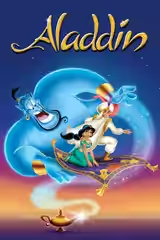
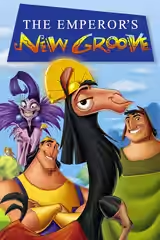
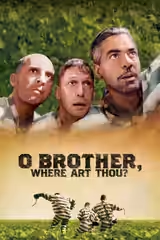
After Hercules, try Aladdin (1992, Fi1m 82): The same directors and the same trick, with a hero and villain who both earn their songs. Then The Emperor's New Groove (2000, Fi1m 80): Disney at its most flippant; the villain’s sidekick again walks off with the film; and O Brother, Where Art Thou? (2000, Fi1m 82): The Odyssey in Depression-era Mississippi, with gospel and bluegrass doing the Muses’ work.

Cast

Awards

Annie Award for Best Animated Feature, 1997

Nominated
Annie Award for Best Animated Feature

If you liked this, try…

  1. Aladdin (1992, Fi1m 82)The same directors and the same trick, with a hero and villain who both earn their songs.

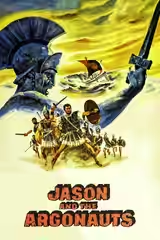
  2. Jason and the Argonauts (1963) · not on Fi1m yetGreek myth played straight, with Ray Harryhausen’s skeletons and gods who watch from Olympus.

  3. The Emperor's New Groove (2000, Fi1m 80)Disney at its most flippant; the villain’s sidekick again walks off with the film.

  4. O Brother, Where Art Thou? (2000, Fi1m 82)The Odyssey in Depression-era Mississippi, with gospel and bluegrass doing the Muses’ work.

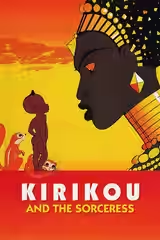
  5. Kirikou and the Sorceress (1998) · not on Fi1m yetA West African hero’s tale in flat colour and folk music, with no merchandise in sight.