A man leans over another person beside a dining table
Film review

High-Rise

2015 · Directed by Ben Wheatley · 1h 59m

In a sentenceA building full of people we would take the stairs to avoid

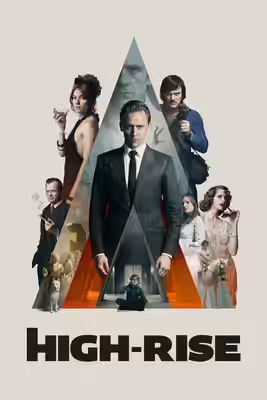
Dr. Robert Laing (Tom Hiddleston) lives in a residential tower where money and social standing shape relations between neighbours. Around him are Charlotte Melville (Sienna Miller), Anthony Royal (Jeremy Irons) and Richard Wilder (Luke Evans), all sharing the building without sharing the same interests. Mirrored lifts connect interiors that mark out differences between classes. The doctor must find his place among residents whose divisions extend beyond their surroundings. Behind the promise of an ordered community, resentments gather, and the business of living alongside one another becomes a source of conflict.

Plays from YouTube when you press play; nothing loads from them until then.

Fi1m review

Ben Wheatley’s High-Rise has an unsettling building, an assured Tom Hiddleston and too little dramatic momentum. The production design keeps rewarding attention long after the class satire starts repeating itself.

Ben Wheatley makes the building the main attraction in High-Rise, his adaptation of the novel by J.G. Ballard. That is an effective way into a story about class resentment, but it becomes a problem when the residents need to hold our attention. This is a sharply designed, intermittently funny film whose descent into disorder is too abrupt to carry much dramatic force. It establishes an unpleasant society, then spends too long showing us how unpleasant it can become.

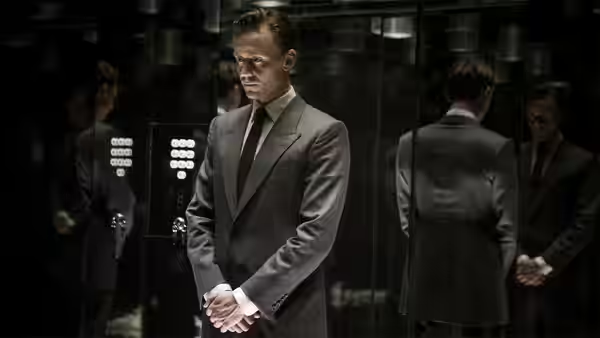
Production designer Mark Tildesley gives that society an immediately legible home, with interiors that make differences in status visible before anyone has to explain them. The mirrored lifts are especially effective, making a communal space feel like somewhere to inspect both yourself and the competition. We felt uneasy there, because the reflections make even standing beside another person seem uncomfortable. The building earns the attention it receives; the difficulty is getting equally interested in the people occupying it.

Laurie Rose’s cinematography gives the class divisions distinct colours and keeps the images restless enough to suggest that the apparent order will not last. The individual compositions remain arresting even when the story starts to drift. Clint Mansell’s score sustains a sense of unease, although music cannot supply the missing steps between social friction and collective chaos. These are strong contributions, and the film gives us plenty of time to notice them as its dramatic momentum falters.

Tom Hiddleston is well suited to Dr. Robert Laing, maintaining a composed presence amid the confusion without making the performance seem effortful. His restraint gives us someone to watch when the film becomes difficult to follow. Luke Evans, as Richard Wilder, has a more immediate force, and the scenes around him briefly make the conflict feel urgent again. But there is a limit to what either performance can do when the relationships keep getting overtaken by the next disturbance.

Amy Jump’s screenplay has a dry, nasty sense of humour, particularly when social distinctions become excuses for cruelty. As editors, Amy Jump and Ben Wheatley push the film into disorder before the residents’ behaviour has prepared us for it. The montage passages make the escalation brisk, but they also leave too little time for one change in the community to register before the next arrives. We grew impatient because the film kept increasing the commotion without making the people caught in it more interesting.

Class satire need not provide sympathetic characters, and there is no reason this one should reassure us about human nature. It does, however, need to make the differences between its people matter beyond the decor. Here the visual distinctions are clearer than the competing interests, and we lose track of what the residents want from one another. The black comedy offers occasional relief, but repetition reduces its bite and leaves the cast too little room to surprise us.

At 119 minutes, High-Rise gives its disorder more room than it needs. There is enough craft here for viewers with a particular interest in abrasive satire, but not enough drama for us to recommend it more broadly. The early unease promises a more troubling evening than the film delivers. If sustained tension matters more than the decor, choose something else.


Critical consensus AI synthesised

57
Positive
10
Mixed
6
Negative
7

The reviews are divided on High-Rise, with admiration for its craft offset by frustration with its storytelling. Praise clusters around the production design and cinematography: the tower, its interiors and the use of colour impress even several detractors. Supporters also value Ben Wheatley’s dark humour and unruly energy, finding the excess appropriate to the class-war premise. Performances attract less consistent attention, though Tom Hiddleston earns praise across otherwise conflicting assessments.

The central disagreement is whether the disorder serves the satire or makes it harder to follow. Even favourable reviews acknowledge uneven pacing and weak cohesion; harsher assessments find the film tedious, detached or politically blunt. The spread is wide rather than mildly mixed. HeyUGuys praises the clarity of its class divisions and its fidelity to Ballard, while Variety argues that both the class allegory and narrative logic break down.

Total Film
14 March 2016 · ★★★★ · Kevin Harley
80

Harley gives the film a positive verdict, despite its wobbly plot. He praises its singular style, dark wit, and striking production design.

Read the full review →
IndieWire
14 September 2015 · B · Eric Kohn
77

Kohn finds the film messy and incohesive but anarchically entertaining, with a vivid class-war premise. He especially praises its colorful production design and rock soundtrack.

Read the full review →
Empire
14 March 2016 · Nev Pierce
75*

Pierce finds the adaptation bold, troubling and visually dazzling, though its story can become monotonous. He especially praises Wheatley and cinematographer Laurie Rose’s restless, arresting imagery.

Read the full review →
Los Angeles Times
11 May 2016 · Justin Chang
75*

Chang praises the film’s unruly excess as fitting its ambition, despite its incoherent storytelling. He singles out the tower’s striking design and the increasingly beautiful spectacle of its destruction.

Read the full review →
Screen Daily
14 September 2015 · Fionnuala Halligan
64*

The accessible page does not reveal the critic’s verdict or any specific praise or complaint. It identifies Ben Wheatley’s 2015 film as the subject of a review.

Read the full review →
Radio Times
★★★ · Stephen Carty
60

The review is critical of the film’s shift into chaos, finding it too sudden. It singles out that abrupt turn as a key weakness.

Read the full review →

Straight answers AI written, from our review

How long is High-Rise, and what is it rated?
High-Rise runs 1h 59m. It is a drama film.
Where can I watch High-Rise in Poland?
High-Rise is not on any streaming or rental service in Poland at the moment. It is available in 24 other countries; change your country at the top of the page to see where. Availability is checked daily.
What should I watch after High-Rise?
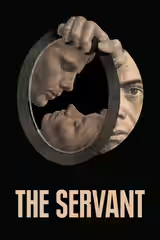
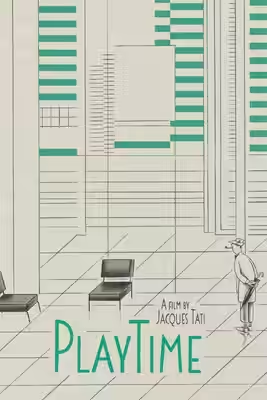
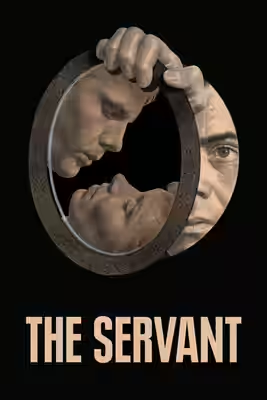
After High-Rise, try The Exterminating Angel (1962, Fi1m 87): Enforced proximity exposes the cruelty beneath respectable manners, with more patience for absurdity. Then Playtime (1967, Fi1m 88): Modern architecture makes ordinary social contact difficult, though the comedy is considerably gentler; and The Servant (1963, Fi1m 89): Domestic space becomes contested territory in a patient, uncomfortable examination of class and dependence.

Cast

Awards

IFFR audience award, 2016

Nominated
IFFR audience award

If you liked this, try…

  1. The Exterminating Angel (1962, Fi1m 87)Enforced proximity exposes the cruelty beneath respectable manners, with more patience for absurdity.

  2. Playtime (1967, Fi1m 88)Modern architecture makes ordinary social contact difficult, though the comedy is considerably gentler.

  3. The Servant (1963, Fi1m 89)Domestic space becomes contested territory in a patient, uncomfortable examination of class and dependence.

  4. The Platform (2019) · not reviewed yetAnother vertical society, with unequal access to food making its class divisions brutally clear.

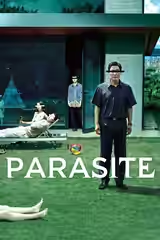
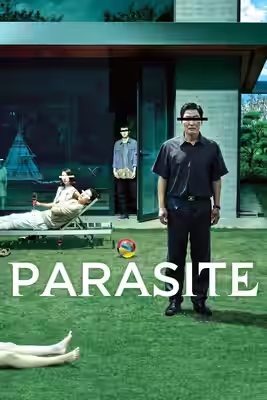
  5. Parasite (2019, Fi1m 91)Rooms, stairs and manners give its class conflict a precise, unnerving physical shape.

Free account

Know what to watch tonight

Two lists that know where things are streaming, collections you can share, your own score beside ours, and Discover that remembers what you have seen.

  • Want to see, sorted by what is streaming now
  • Seen, with your score out of ten
  • No adverts, ever